
Creating a daily study routine for kids sounds simple until real family life gets involved. Some days, children may come home ready to complete homework, while on other days the same task can feel frustrating because they are tired, hungry, distracted, or simply ready for play.
A good routine should not feel like punishment or another responsibility parents have to constantly enforce. The goal is to create a predictable pattern that helps children understand when it is time to focus, when they can relax, and what is expected from them.
Every child and family will have a different routine, but the most effective study habits usually come from consistency, flexibility, realistic expectations, and understanding your child’s individual needs.
Quick Answer: How Do You Create a Good Study Routine for Kids?
A productive daily study routine for kids should be simple, predictable, and flexible. Choose a study time that matches your child’s energy level, create a comfortable place for learning, reduce unnecessary distractions, include short focused study sessions with regular breaks, and gradually help your child take more responsibility for managing their own routine.
Why a Daily Study Routine Is Helpful for Children
Children generally handle responsibilities better when they know what is coming next.
When homework happens at a completely different time every evening, children may resist because they never know when playtime will suddenly be interrupted. A predictable routine removes some of that uncertainty.
For example, if your child learns that the usual pattern is:
Come home → snack → relax → homework → playtime
they begin to understand that studying is simply one part of their afternoon rather than an unexpected demand.
A consistent routine can also help children develop useful habits such as time management, organization, responsibility, and independent learning.
The goal is not to make every minute of your child’s afternoon scheduled. Children still need plenty of time for play, conversation, rest, hobbies, and simply doing nothing.
The routine only provides enough structure to prevent homework from becoming something that gets postponed until everyone is tired.

Start by Understanding Your Child’s Natural Rhythm
Before creating a timetable, watch your child for a few days.
When do they seem energetic?
When do they become irritable or tired?
Do they concentrate better immediately after school, or do they clearly need some downtime first?
Many children need a transition period after spending several hours following instructions at school. Coming home and immediately hearing, “Get your homework out,” may lead to resistance even when the child is perfectly capable of completing the work.
Instead, some children benefit from 30–60 minutes to eat, talk, move around, or play before sitting down again.
Other children prefer finishing homework immediately so that the rest of the evening feels free.
Neither approach is automatically better.
The most successful study schedule for children is usually one that works with the child’s energy levels rather than forcing them into a schedule that looks ideal on paper.
How to Create a Daily Study Schedule
A good schedule should be simple enough that your child can actually follow it.
You do not need a complicated timetable filled with different colors, subjects, timers, and activities. Begin with the basics.
Decide approximately when study time will begin, how long it will last, and what usually needs to be completed.
For example, an elementary-school routine might look like this:
- 3:30 p.m. – Arrive home and have a snack
- 4:00 p.m. – Free play or rest
- 4:30 p.m. – Homework or reading
- 5:00 p.m. – Short break
- 5:10 p.m. – Finish remaining schoolwork
- 5:30 p.m. – Free time
The exact times matter less than the predictable sequence.
Whenever possible, involve your child in creating the routine.
Instead of announcing, “Homework starts at 4:00 every day,” try asking:
“Would you rather do homework after your snack or have half an hour to play first?”
You are still setting boundaries, but your child gets some control over how the routine works.
That small amount of choice can reduce resistance because children are more likely to cooperate with a plan they helped create.
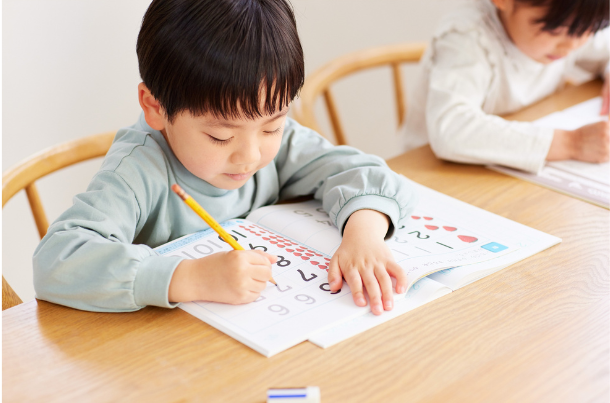
Keep Study Sessions Appropriate for Your Child’s Age
More study time does not automatically mean more learning.
Children can sit at a desk for an hour while actually concentrating for only fifteen minutes. That is why shorter, focused study sessions are often more productive than forcing children to remain seated for long periods.
Younger children may work well in blocks of around 15–30 minutes, depending on the task and the individual child.
Older children may manage longer sessions but can still benefit from breaks between subjects.
Watch the quality of your child’s attention rather than focusing only on the clock.
If they are repeatedly rereading the same sentence, making careless mistakes, staring into space, or becoming unusually frustrated, their brain may simply need a break.
Learning should involve effort, but it should not regularly reach the point where the child is mentally exhausted.
Study Effectively at Home
One important part of helping children study effectively at home is creating a place where their brain begins to associate the environment with focused work.
This does not mean buying an expensive study table or creating a picture-perfect homework room.
A quiet corner of the dining table can work perfectly well.
Try to keep commonly used supplies nearby, such as:
- pencils and erasers,
- notebooks,
- rulers,
- colored pencils,
- a sharpener,
- school books,
- and any materials regularly needed for assignments.
When children have to get up every few minutes to find something, distractions multiply quickly.
Good lighting is also important. Natural daylight is helpful when available, but a comfortable desk lamp can work just as well during evening study sessions.
For some children, complete silence helps concentration. Others may work better with very soft background noise.
The goal is to notice what actually helps your child focus instead of trying to create someone else’s version of the “perfect” study environment.
Reduce Distractions
Distractions are one of the biggest reasons a short homework task can stretch into an entire evening.
Phones, televisions, toys, siblings, conversations, notifications, and even clutter on the table can compete for a child’s attention.
To reduce distractions during kids’ study time, start by removing the most obvious ones.
If a phone or tablet is not needed for schoolwork, keep it somewhere else during the study session.
Turn off the television nearby and ask family members to keep unnecessary interruptions to a minimum.
But distractions are not always external.
Sometimes a child looks distracted because the assignment feels too difficult, too long, or confusing.
A worksheet containing twenty math problems can feel overwhelming when viewed as one large task.
Instead of saying:
“Finish the entire worksheet.”
try:
“Let’s do the first five problems, then we’ll check how you’re doing.”
Breaking schoolwork into smaller steps gives children a clear starting point and makes difficult assignments feel more manageable.
Create Study-Time Ritual
One surprisingly effective strategy is creating a small ritual that signals the beginning of study time.
It might be:
wash hands → get water → open school bag → check homework list → begin with the easiest task.
Repeating the same sequence helps reduce the daily question of, “What am I supposed to do now?”
Older children can use a simple checklist:
- Check homework assignments.
- Decide which task comes first.
- Gather the materials needed.
- Complete one task at a time.
- Pack finished work back into the school bag.
Eventually, this process can help children become more independent rather than relying on a parent to constantly remind them what comes next.
Motivate Kids
Many parents wonder how to motivate kids to follow a study schedule, especially when homework regularly leads to complaining.
The first thing to remember is that children will not always feel motivated.
Adults do not always feel motivated to work, clean, exercise, or cook either. We often do these things because they have become part of our routine.
Children develop habits in much the same way.
Instead of trying to make every study session exciting, focus on helping your child begin.
Sometimes the hardest part is simply opening the notebook.
You might say:
“Let’s work for ten minutes and see how much you can finish.”
Once children get started, resistance often decreases.
A visible timer can also help because it gives the task a clear ending.
Rather than hearing, “You need to study,” the child hears:
“We’re going to focus for twenty minutes, then you can take a break.”
Twenty minutes feels much more manageable than an undefined amount of homework time.
Praise Study Habits
Children need to know that effort matters even when the final answer is not perfect.
If praise appears only after good marks, children may begin believing that being “smart” matters more than trying, practicing, or improving.
Notice specific behaviors instead.
You could say:
“I saw that you went back and checked those math problems when you weren’t sure.”
or:
“You stayed with that reading assignment even when it became difficult.”
Specific praise helps children understand exactly what they did well.
It also teaches them that persistence, organization, and concentration are skills that can improve with practice.
Building a routine is easier when children also understand the habits behind effective learning. Parents can explore more healthy study habits for kids to help children develop consistency, focus, and greater independence over time.
Reward System
Small rewards can sometimes make it easier to establish a new habit.
For younger children, a sticker chart may work well. Older children might enjoy earning extra time for a favorite activity after completing responsibilities.
But try not to turn every homework task into a transaction.
If children begin expecting candy, toys, or money every time they study, motivation can become dependent on rewards.
Instead, rewards can be occasional encouragement while the routine itself becomes the normal expectation.
Simple privileges are often enough:
“Once homework is finished, you can choose what game we play.”
or:
“When your schoolwork is packed away, you can have your free time.”
The How to Establish a Productive Daily Study Routine for Kids: A Parent’s Guide
Getting children to sit down and study at the same time every day sounds straightforward until real family life gets involved. Some days, your child may come home from school, finish a snack, open their books, and complete homework without much resistance. On another day, the same child may suddenly need water, another pencil, a bathroom break, a different chair, or five more minutes of play before even looking at the first question.
For parents, this can become frustrating very quickly. You may start wondering whether you need to be stricter, offer more rewards, remove more distractions, or completely change the schedule. In most cases, however, creating a productive daily study routine for kids is not about controlling every minute of the afternoon. It is about developing a predictable pattern that makes studying feel like a normal part of the day rather than a daily negotiation.
A good study routine should help children understand when it is time to focus, what they are expected to do, and when they can return to play or relaxation. At the same time, it should be realistic enough to work around school, meals, extracurricular activities, family time, and the occasional difficult day.
The right routine will look different in every home, but the principles behind it are surprisingly simple: understand your child, create consistency, keep expectations realistic, reduce unnecessary distractions, and make room for breaks and flexibility.

Why a Daily Study Routine Is Important for Children
Children often feel more comfortable when they know what is going to happen next. A predictable routine creates that sense of structure. When homework happens at a completely different time each day, a child may feel that their free time can be interrupted at any moment. This often leads to repeated questions such as, “Do I have to do it now?” or “Can I do it later?”
A regular study schedule for children removes some of that uncertainty. For example, if your child knows that they usually come home, eat a snack, relax for thirty minutes, and then begin homework, there is less need to debate the timing every afternoon. Study time simply becomes another familiar part of the day, much like dinner, bath time, or getting ready for bed.
The benefits can also extend beyond homework. Following a routine helps children practice important life skills such as planning, managing time, completing responsibilities, organizing materials, and learning how to begin a task even when they are not particularly excited about it. These skills become increasingly valuable as children move into higher grades and are expected to manage multiple subjects, projects, tests, and deadlines.
However, the goal should never be to create an overly packed schedule. Children still need time to play, move their bodies, spend time with family, rest, explore hobbies, and simply relax. A productive routine gives study time a place in the day without allowing it to take over the entire afternoon or evening.
Start With What Already Works for Your Child
Before creating a timetable, spend a few days simply observing your child. Parents often assume that homework should begin immediately after school because it seems efficient, but that timing does not work for every child.
Some children return home with enough energy to complete their schoolwork immediately. They may actually prefer getting homework finished early because they can then relax for the rest of the evening without thinking about it.
Other children are mentally tired after spending several hours listening, concentrating, following instructions, interacting with classmates, and moving between lessons. For them, asking for another period of focused work the moment they walk through the door may naturally lead to resistance.
Notice when your child seems most alert and cooperative. Are they more focused after eating something? Do they need twenty or thirty minutes of physical play before they can sit comfortably? Does concentration become much harder after dinner? Do they perform better when difficult homework is done first?
These patterns can help you decide where study time fits best.
Instead of trying to force your child into a schedule copied from another family or an online template, build the routine around their natural energy when possible. A daily study routine is much easier to maintain when it works with your child’s rhythm rather than constantly competing with tiredness, hunger, or the need to move.
How to Create a Daily Study Schedule for Children
A daily study schedule for children does not need to include every fifteen minutes of the afternoon. In fact, complicated schedules often fail because they are difficult for both parents and children to maintain consistently.
Start with a few important anchors. Decide when your child usually gets home, when they will have time to eat and decompress, when study time will usually begin, and what needs to happen afterward.
For example, a simple routine could look like this:
- Arrive home and put away school things.
- Have a snack and some water.
- Take 30–45 minutes for free play or rest.
- Begin homework or reading.
- Take a short break after one focused study session.
- Complete any remaining work.
- Pack the school bag for the next day.
- Move on to free time, dinner, or another family activity.
You do not necessarily need exact clock times for every child. Some families do better with a predictable sequence rather than a strict timetable.
It is also helpful to involve your child in creating the routine. Children are often more cooperative when they have some input instead of feeling that every decision has been made for them.
For example, you might ask, “Would you rather start homework right after your snack or take half an hour to play first?” You are still setting the overall expectation that homework needs to be completed, but you are giving your child an age-appropriate choice about how the routine works.
This small amount of participation can make the schedule feel more like a family plan and less like a rule being imposed on them.
Keep Study Sessions Realistic for Your Child’s Age
Long study sessions are not automatically productive. A child can sit at a desk for an hour while spending half of that time staring at the page, playing with a pencil, asking unrelated questions, or thinking about what they would rather be doing.
For younger children, shorter periods of focused work are often much more effective. Depending on the child’s age, schoolwork, and attention span, even 15 to 30 minutes of genuine concentration can be valuable.
Older children may be able to work for 40 minutes, 45 minutes, or longer, especially when they are preparing for tests or completing projects. Even then, expecting uninterrupted concentration for hours is rarely realistic.
Instead of measuring success only by how long your child sits at the table, look at the quality of the work. Is your child still reading carefully? Are they able to understand instructions? Are they making mistakes they normally would not make? Are they becoming increasingly frustrated?
These signs can tell you more than the clock.
If your child has clearly lost concentration, a short reset may help much more than insisting that they remain seated for another thirty minutes.
How to Help Kids Study Effectively at Home
One of the most important parts of helping children study effectively at home is giving them a place where focused work can happen consistently.
That does not mean you need a separate study room or an expensive desk setup. A corner of the dining table, a small desk in the bedroom, or a quiet section of the living room can all work well.
What matters is that the area supports concentration.
Try to keep essential supplies nearby so your child does not need to search the house every time they need a pencil, ruler, eraser, notebook, or colored pen. Repeatedly getting up to look for materials makes it very easy for children to become distracted along the way.
Lighting also matters. If your child studies in the afternoon, natural light can make the space comfortable. In the evening, make sure the area is bright enough that your child is not straining to read or write.
You can also think about how much noise your child can comfortably handle. Some children need a very quiet environment, while others are not bothered by normal household sounds. There is no need to demand complete silence if your child is already concentrating well.
The best study environment is simply one that reduces unnecessary interruptions and makes it easier for your child to begin working.
How to Reduce Distractions During Kids’ Study Time
Learning how to reduce distractions during kids’ study time can make a major difference, particularly when a simple assignment seems to take much longer than expected.
Start with the most obvious distractions. Turn off the television near the study area, silence unnecessary notifications, and keep toys or entertainment devices out of immediate reach.
If your child needs a tablet or computer for schoolwork, try to keep unrelated games, videos, and apps closed during the session.
Family members can help as well. If possible, let siblings know that homework time requires fewer interruptions. Of course, a perfectly quiet household is not realistic for every family, especially when younger children are at home. The goal is simply to reduce avoidable distractions rather than trying to create complete silence.
It is also important to understand that a distracted child is not always a bored child.
Sometimes children begin looking around the room, asking unrelated questions, or leaving the table because the work feels too difficult or overwhelming.
Imagine being handed a worksheet with thirty problems and being told, “Finish all of this.” For a child who is already tired or unsure of the topic, the assignment may feel enormous.
Breaking the task into smaller steps can make it more manageable.
Instead of saying, “Complete the whole page,” try saying, “Let’s do the first five questions, then we’ll check how you’re doing.”
This gives your child a clear, achievable starting point and can reduce the urge to avoid the task completely.
Create a Simple Study-Time Ritual
Children often move more smoothly into homework when there is a familiar routine that signals it is time to begin.
A study-time ritual does not need to be complicated. It could simply be:
Have water → use the bathroom → gather supplies → check homework → start with the first task.
Repeating the same steps every day reduces decision-making. Instead of repeatedly asking, “What am I supposed to do?” your child begins to know how study time starts.
For older children, a small checklist can be especially useful. They might check which assignments are due, choose what to complete first, gather the necessary materials, work through one subject at a time, and then place finished homework directly back into the school bag.
Over time, this kind of routine can reduce the number of reminders parents have to give.
That is important because the long-term goal is not for parents to manage homework forever. The goal is to gradually teach children how to organize and manage their own work.
How to Motivate Kids to Follow a Study Schedule
Parents often want to know how to motivate kids to follow a study schedule when their child would clearly rather be doing almost anything else.
One helpful mindset is to stop expecting motivation to appear before the work begins.
Children, just like adults, do not always feel enthusiastic about responsibilities. Sometimes motivation develops only after the task has started and the child realizes that it is manageable.
Instead of asking your child to feel motivated, help them get over the first hurdle: starting.
You might say, “Let’s work on this for ten minutes and then see where you’re up to.”
For a child who is resisting homework, ten minutes can feel much less overwhelming than being told they need to sit down and finish everything.
Timers can also work well because they create a visible end point. A child may be much more willing to focus when they know, “I am working for twenty minutes,” rather than feeling as though homework will continue indefinitely.
For some children, a version of the Pomodoro approach can be useful, such as twenty or twenty-five minutes of study followed by a short break. Younger children may need even shorter intervals.
The exact timing matters less than having a clear work period followed by a predictable pause.
Use Praise That Builds Better Study Habits
Praise can be a powerful part of a study routine, but what parents praise matters.
If children hear praise only when they receive high marks, they may begin to believe that results are the only thing that counts. This can make difficult work feel threatening because mistakes begin to feel like failure.
Instead, notice the process.
You might say:
“I noticed you kept trying even when that question was difficult.”
“You checked your answers before packing your homework away.”
“You got started without being reminded twice today.”
“You stayed focused until the timer finished.”
This type of feedback shows children which habits are helping them succeed.
It also teaches them that concentration, persistence, organization, and problem-solving are skills they can practice rather than qualities they either have or do not have.
Should Parents Use a Reward System?
A small reward system can sometimes help when a new routine is being established, particularly for younger children.
For example, your child might earn a sticker for starting homework on time or completing their routine without repeated reminders. After several stickers, they might choose a family game, a special activity, or what to watch on movie night.
Rewards do not always need to involve candy, toys, or money. In fact, simple privileges often work better.
However, be careful not to turn every study session into a negotiation.
If the child begins asking, “What do I get if I do my homework?” every day, the reward may be becoming more important than the habit itself.
It can help to use rewards as temporary encouragement while the routine is becoming established and gradually rely more on natural benefits such as having free time once responsibilities are finished.
The Importance of Breaks in Children’s Study Routines
Parents sometimes worry that if a child stops working, they will never want to start again. Because of this, they may encourage children to finish everything in one sitting.
But the importance of breaks in children’s study routines should not be overlooked.
Concentration requires mental effort. When children have been reading, solving problems, writing, or memorizing for a while, their attention may naturally decrease. Continuing to push through that tiredness can lead to careless mistakes, frustration, and slower work.
A short break allows the brain and body to reset.
The best breaks are often simple. Your child might stretch, walk around, drink water, have a snack, look outside, or do a few minutes of physical movement.
Try to be thoughtful about screen-based breaks. For some children, watching videos or playing games for “just five minutes” makes returning to schoolwork much harder because the break becomes more stimulating than the task they need to return to.
A timer can help keep breaks clear and predictable.
You might say, “Take ten minutes to move around. When the timer rings, we’ll finish the last part.”
That way, the child knows both when the break starts and when it ends.
Know the Difference Between Avoiding Work and Struggling With Work
Not every homework battle is about poor behavior or lack of discipline.
Sometimes a child avoids a subject because they genuinely do not understand it.
If a homework task that should reasonably take twenty or thirty minutes regularly stretches into more than an hour, it is worth looking more closely at what is happening.
Ask your child where they are getting stuck. Watch whether the difficulty appears mainly in reading, writing, math, following instructions, or organizing their thoughts.
You might ask:
“Which part feels hardest?”
“Can you show me the first question that confused you?”
“Did this make sense when you learned it at school?”
These questions can help you identify whether the problem is attention, understanding, tiredness, or something else.
If the same struggle continues, it may be useful to speak with the teacher. Your child may need additional explanation, more practice, or a different way of approaching the material.
Increasing study time is not always the answer. Sometimes the child needs better support, not longer sessions.
Help Your Child Become More Independent
When children are young, parents naturally provide a lot of help during homework. You may read instructions, find supplies, explain questions, check answers, and remind them what needs to be packed for school.
As children grow, however, the routine should gradually shift toward independence.
If a parent sits beside the child for every minute of every assignment, the child may begin believing that they cannot work unless an adult is present.
Instead, give enough support to help your child begin and then step away when possible.
You might say, “You understand what to do for these first six questions. Work through them and call me if you get stuck.”
Later, you can check the work together.
This teaches the child an important lesson: help is available, but they are also capable of completing tasks independently.
Eventually, a productive study routine should require less daily management from parents, not more.
Tools and Apps to Help Parents Organize Kids’ Study Time
There are many tools and apps to help parents organize kids’ study time, but you do not need to use all of them.
For older children, Google Calendar or Apple Reminders can be useful for homework deadlines, test dates, reading goals, and project reminders.
A simple timer can help children work in focused intervals.
Teacher communication platforms such as ClassDojo or Seesaw may also help parents keep track of classroom updates when a school uses those services.
Some families enjoy focus apps because they make concentration feel slightly more playful. However, technology should simplify the routine rather than becoming another distraction.
In many homes, a basic whiteboard or wall calendar works just as well.
You might write:
Today’s tasks
- Finish math worksheet
- Read 15 pages
- Learn spelling words
- Pack library book
- Put completed homework in school bag
A visible list can help children understand what needs to be done and enjoy the feeling of crossing tasks off one by one.
The best organizational tool is not the most advanced one. It is the one your family can use consistently without creating extra work.
Common Challenges in Establishing Study Routines and How to Overcome Them
Even carefully planned routines will have difficult days. Understanding the common challenges in establishing study routines and how to overcome them can prevent parents from assuming the whole routine has failed when one afternoon goes badly.
Your Child Says, “I Don’t Want to Study”
Trying to argue your child into wanting homework usually creates a bigger battle.
Instead, acknowledge the feeling while keeping the expectation.
You might respond, “I know you would rather keep playing. Homework still needs to be done. Do you want to start with reading or math?”
This gives your child some control without removing the responsibility.
Sometimes offering a choice about the order of tasks, the pencil they use, or where they sit can reduce resistance.
Your Child Takes Forever to Finish Simple Homework
Before assuming your child is being lazy, try to understand what is slowing them down.
They may be distracted, confused, tired, worried about making mistakes, or struggling to organize the assignment.
Observe rather than immediately correcting.
If they are constantly leaving the table, perhaps the session needs to be shorter. If they spend ten minutes staring at the same question, they may not understand what is being asked.
Different problems need different solutions.
One Missed Day Turns Into Several
Family routines are never perfect.
A birthday, school event, late appointment, tired child, or busy evening may interrupt the usual schedule.
Do not try to compensate by doubling homework time the next day.
Simply return to the normal routine.
Consistency does not mean never missing a day. It means returning to the habit regularly enough that one unusual day does not become the new pattern.
Parents Become Exhausted From Constant Reminding
Parent burnout is another real challenge.
If every afternoon involves ten reminders, repeated arguments, and constant supervision, the routine may need simplifying.
Use visible checklists, timers, regular study times, and clear expectations so your child does not rely entirely on verbal reminders.
Older children can gradually take more responsibility for checking assignments and preparing school materials.
Your role should slowly shift from directing every step to providing support when needed.
Make Room for Flexibility
A routine should provide structure, but it should not become so rigid that family life revolves around maintaining it perfectly.
There will be days when your child comes home unusually tired. There may be family functions, sports practice, doctor appointments, school events, or unexpected plans.
On those days, adjust the routine without abandoning it completely.
For example, you might say, “Today is busy, so instead of our usual homework time, we’ll do twenty minutes of reading after dinner.”
This teaches children that responsibilities can still be managed when plans change.
Flexibility can actually make a routine more sustainable because it prevents children and parents from feeling that one disrupted afternoon means they have failed.
Protect Sleep, Play, and Family Time
A productive child is not necessarily one who spends the longest time studying.
Children need adequate sleep, physical activity, free play, and meaningful time with family. These are not distractions from healthy development; they are part of it.
If a child comes home from school and moves directly from tutoring to homework to dinner to another lesson before going to bed, there may be very little time left to relax.
Overloading the afternoon can eventually reduce concentration rather than improve it.
When building your child’s daily study schedule, consider the whole day.
Ask whether they are getting enough rest. Make sure they still have time to play and move. Avoid keeping them awake late at night simply to complete additional study when they are too tired to learn effectively.
Balance helps children approach schoolwork with more energy and less resentment.
Let the Study Routine Change as Your Child Grows
A routine that works well in early elementary school may need to change completely a few years later.
As children grow, homework becomes more complex, assignments become longer, and they may have more extracurricular responsibilities.
Their ability to manage time also improves.
Review the routine every few months and involve your child in the conversation.
Ask questions such as:
“Is homework time still working for you?”
“Which subject usually takes the longest?”
“Do you concentrate better before dinner or after?”
“Is there anything we could change to make school nights easier?”
These conversations help children become aware of their own learning habits.
Over time, they may begin noticing things themselves, such as, “I should finish math first because I’m more tired later,” or, “I focus better if I have a snack before I start.”
That self-awareness is one of the most valuable outcomes of a healthy study routine because it helps children eventually manage their learning without constant adult direction.
Frequently Asked Questions
How Long Should Kids Study Every Day?
Short, focused study sessions are often more effective than expecting children to sit and work for long periods. The goal is meaningful learning, not simply spending more time at a desk.
Should Kids Study Immediately After School?
The best approach is to notice when your child is most ready to learn and create a routine that fits their natural rhythm.
How Can I Motivate My Child to Follow a Study Routine?
Breaking work into smaller steps, offering limited choices, using predictable study times, and praising effort can help children develop better habits without turning homework into a daily argument.
Are Study Breaks Important for Children?
A break does not need to be complicated. Stretching, drinking water, walking around, having a snack, or taking a few minutes away from the task can help children recharge.
What If My Child Struggles With Homework Every Day?
Instead of only increasing study time, try to understand what part of the process feels difficult. If the problem continues, speaking with your child’s teacher can help identify the right support.
Conclusion
Establishing a productive daily study routine for kids takes time. Most families will need to experiment with different study times, break lengths, work spaces, and expectations before finding a routine that feels comfortable.
Start by understanding when your child has the most energy and how much downtime they need after school. Create a simple and predictable schedule, provide a comfortable study space, and learn how to reduce distractions during kids’ study time without turning the home into a strict classroom.
Remember that children do not need to be motivated every single day. When parents wonder how to motivate kids to follow a study schedule, the answer often lies in making the routine manageable enough that beginning does not feel overwhelming. Short focused sessions, meaningful praise, clear expectations, and regular breaks can all help.
Most importantly, watch your child rather than focusing only on the schedule. If homework regularly creates intense frustration, find out whether the work is too difficult, the child is too tired, or additional support may be needed.
A successful routine should gradually teach children to organize their time, complete responsibilities, ask for help when necessary, and become more independent.
There will still be off days, forgotten assignments, last-minute projects, and evenings when the usual schedule simply does not work. That does not mean the routine has failed.
What matters is creating a pattern your family can return to, one that helps your child learn consistently without making study time the center of family life.
For more practical parenting tips, child development guidance, and helpful ideas for everyday family routines, explore more resources at Little One Haven.
Resources
- Six Steps to Smarter Studying – Nemours KidsHealth
Practical guidance on planning ahead, breaking study material into smaller chunks, asking for help, taking breaks, and getting enough sleep. - Tips to Support Healthy Routines for Children and Teens – CDC
Guidance for parents on healthy routines, including sleep, physical activity, screen-time habits, and other lifestyle factors that support children’s overall well-being and learning.
Disclaimer
This article is for general educational and informational purposes only. Every child has different learning needs, attention patterns, school expectations, and developmental abilities. If your child regularly struggles with homework, concentration, learning, or school performance, consider discussing your concerns with their teacher, pediatrician, or another qualified education or child-development professional.
About the Author
Geeta Yogi writes practical, parent-friendly content about children’s learning, study habits, development, routines, and everyday family life. She focuses on sharing realistic strategies that help parents create calmer study routines, encourage healthy learning habits, reduce homework stress, and gradually support greater independence in children.