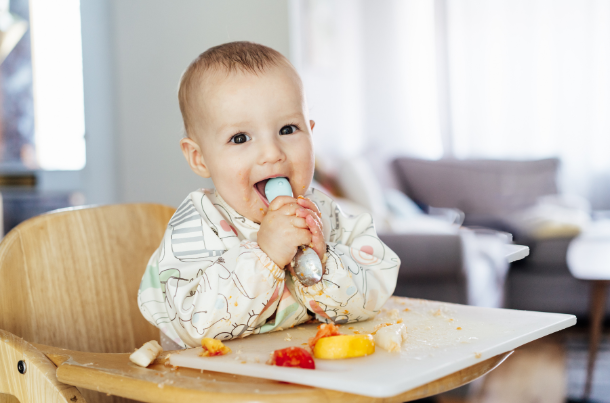
Watching your baby pick up a piece of food and bring it to their mouth may seem like a small milestone, but it is an important step toward independence. Baby self-feeding helps children learn how to handle food, recognise their hunger and fullness cues, and feel more confident during mealtimes., recognize their hunger and fullness cues, and feel more confident during mealtimes.
Of course, baby self-feeding is rarely neat. Food may land on the floor, spoons may become toys, and some meals may involve more exploring than eating. This mess is a normal part of learning. With patience, age-appropriate foods, and a safe mealtime routine, you can gradually teach your baby to feed themselves.
What Is Baby Self-Feeding?
Baby self-feeding means allowing your child to participate actively in eating instead of being fed every bite by an adult. Depending on their age and development, this may include:
- Picking up soft finger foods
- Holding and exploring a spoon
- Bringing a preloaded spoon to the mouth
- Drinking from an open or straw cup
- Using a spoon or fork independently
- Choosing between a few nutritious foods
Self-feeding does not have to be an all-or-nothing approach. You can continue helping your baby while also giving them opportunities to practise. For example, you might offer one spoon for your baby to hold while using another spoon to help them eat.
Why Is Baby Self-Feeding Important?
Learning to eat independently supports several areas of a child’s development. It is about much more than simply getting food into their mouth.
Encourages Independence
Self-feeding gives children an age-appropriate way to make decisions and do something for themselves. Picking up food, holding a spoon, and deciding whether they want another bite can build confidence and a sense of accomplishment.
Develops Fine Motor Skills
Reaching for food, grasping it, and guiding it toward the mouth require coordination. These actions strengthen the small muscles in the hands and fingers while supporting hand-eye coordination.
As babies grow, moving from a whole-hand grasp to picking up small pieces between the thumb and index finger also helps develop their pincer grip.
Supports Healthy Eating Habits
When children have some control over eating, they can pay attention to their natural hunger and fullness signals. Parents decide what foods to offer and when to serve them, while the child can decide whether and how much to eat.
This responsive approach may help children develop a healthier and less pressured relationship with food.
Introduces Different Textures
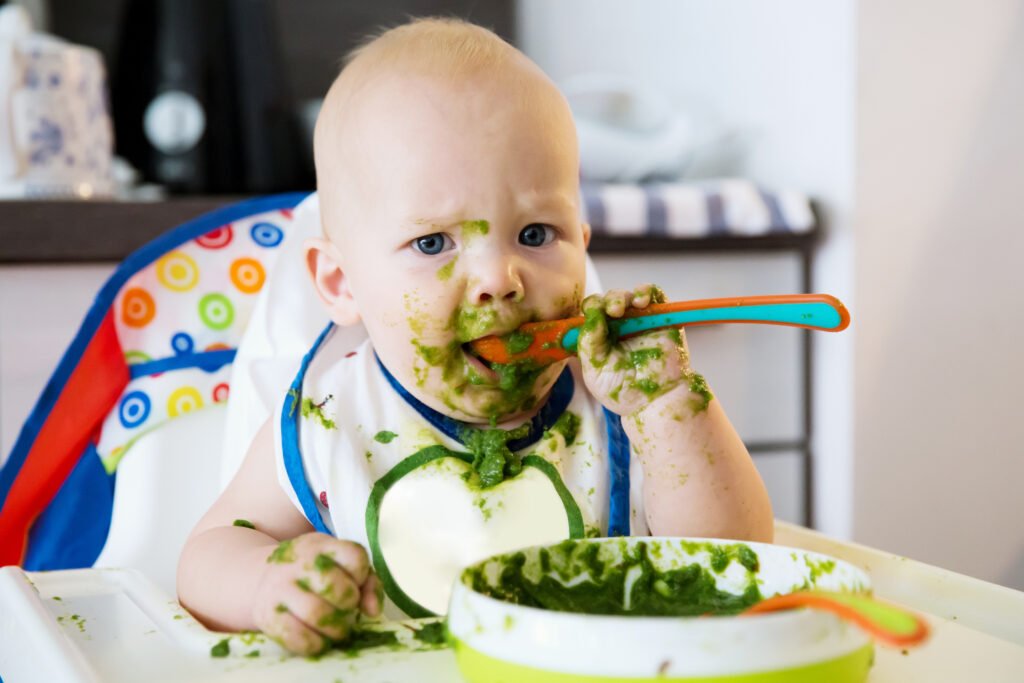
Baby self-feeding allows children to touch, smell, squeeze, lick, and taste food. Although this exploration can be messy, it helps them become familiar with different textures and flavours.
A child may need to see or try a food several times before accepting it, so initial rejection does not always mean they permanently dislike it.
Makes Family Meals More Inclusive
When your baby sits with the family and eats suitable versions of the same foods, mealtimes can feel more connected. Children also learn by watching, so seeing family members use utensils and enjoy different foods can encourage them to try.
When Should a Baby Start Self-Feeding?
Many babies begin exploring solid foods at around six months, but readiness matters more than reaching an exact birthday. Before offering solid foods, your baby should generally be able to sit upright with good head control, bring objects to their mouth, reach for food, and swallow food rather than automatically pushing it out.
Some babies begin picking up larger pieces of soft food with their whole hand. Later, as their finger control improves, they can manage smaller pieces.
Spoon skills usually develop more gradually. The CDC notes that babies may begin using a spoon themselves at approximately 10 to 12 months, although they will continue improving for a long time. Spills and dropped utensils are expected during this stage. CDC guidance on fingers, spoons, forks, and cups
Remember that every child develops at a different pace. Premature babies or children with feeding, oral-motor, or developmental difficulties may need individualized guidance from a pediatrician or feeding specialist.
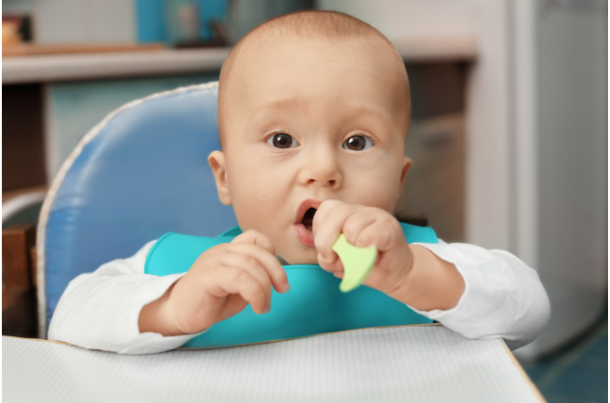
How to Teach Your Baby to Feed Themselves
You do not need a strict training program to develop self-eating habits in kids. Small, regular opportunities are usually more helpful than expecting immediate independence.
1. Look for Signs of Readiness
Your baby may be ready to participate in feeding when they:
- Sit upright with stable head and neck control
- Reach toward food or your spoon
- Bring toys and other objects to their mouth
- Grasp food and attempt to lift it
- Show interest when other people eat
- Close their lips around a spoon
If your baby repeatedly turns away, becomes upset, or appears tired, pause and try again later. Self-feeding practice works best when a child is alert and comfortably hungry.
2. Begin With Soft Finger Foods
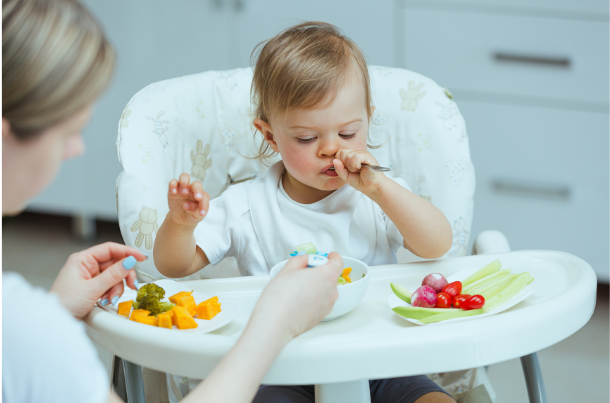
Start with foods that are soft enough to squash easily between your thumb and finger. For younger babies, larger finger-shaped pieces are often easier to hold because part of the food can remain visible above their closed fist.
Suitable options may include:
- Soft banana or ripe pear
- Avocado slices
- Well-cooked broccoli florets
- Soft roasted sweet potato
- Omelette strips
- Well-cooked pasta
- Toast fingers with a thin spread
- Soft pieces of ripe peach
- Shredded tender chicken
- Soft-cooked beans flattened with a fork
Offer only a few pieces at a time. An overcrowded tray can distract or overwhelm a baby who is still learning.
3. Introduce a Preloaded Spoon
Learning to scoop food independently can be difficult at first. Make it easier by putting a small amount of thick food on a baby-friendly spoon and placing it on the tray or handing it to your child.
Good foods for practising with a spoon include:
- Thick oatmeal
- Mashed potato
- Full-fat plain yogurt
- Mashed avocado
- Thick lentil or vegetable puree
- Soft scrambled egg
Short, lightweight spoons with thick handles are generally easier for little hands to grip. Your baby may hold the spoon upside down or use their other hand to remove the food. That still counts as useful practice.
4. Use the Two-Spoon Method
During the transition from spoon feeding a baby to independent eating, give your child one spoon while you keep another. Your baby can explore and practise while you offer help when needed.
Avoid quickly taking control whenever food spills. Give your child time to solve small problems, even if the process is slow.
5. Eat Together Whenever Possible
Sit with your baby and demonstrate how to pick up food, chew, and use utensils. Babies naturally copy the people around them.
You can exaggerate the action slightly by slowly lifting your spoon to your mouth. Keep the atmosphere relaxed and avoid turning every bite into a performance or test.
Sit with your baby and demonstrate how to pick up food, chew, and use utensils. Babies naturally copy the people around them. This social learning may also explain why some kids eat better at daycare than at home, where they regularly watch other children eating and following the same mealtime routine.
6. Allow Your Child to Touch the Food
Touching, squeezing, and smearing food are part of sensory learning. Constantly wiping your baby’s hands or face may interrupt their exploration and make the meal feel stressful.
Place a washable mat under the highchair, use an easy-to-clean bib, and save most of the cleaning for the end of the meal.
7. Offer Choices Without Preparing Separate Meals
Giving children some choice can support independence, but too many options may feel overwhelming. Try offering two nutritious choices, such as:
“Would you like banana or avocado?”
For toddlers, serve at least one familiar food alongside foods they are still learning to enjoy. There is no need to prepare a completely different meal each time your child hesitates.
8. Follow Hunger and Fullness Cues
Your child may be hungry if they reach for food, open their mouth, become excited when food appears, or point toward the tray.
They may be full when they:
- Turn their head away
- Close their mouth
- Push food or the spoon away
- Slow down significantly
- Drop food repeatedly
- Become restless and want to leave
Avoid forcing “just one more bite.” Respecting these signals helps children learn to trust their bodies.
9. Keep Mealtimes Calm and Screen-Free
Turn off the television and put phones or tablets away during meals. Screens can distract children from their food and make it harder for them to notice whether they are hungry or full.
A predictable routine can also help. Serve meals and snacks at generally consistent times, but keep the routine flexible enough to match your child’s needs.
10. Be Patient With the Mess
At first, your baby may miss their mouth frequently or throw food on the floor. Instead of becoming upset, use simple and calm language:
“Food stays on the tray.”
If throwing continues, your child may be full or finished. End the meal without punishment and offer food again at the next planned meal or snack.
Self-Feeding Foods by Stage
The following examples are general guidelines rather than strict rules. Food size and texture should always match your child’s individual abilities.
| Stage | Helpful self-feeding practice | Food examples |
|---|---|---|
| Around 6–9 months | Grasping large, soft pieces | Avocado slices, banana, broccoli florets, soft potato wedges and omelette strips |
| Around 9–12 months | Picking up smaller soft pieces and holding a preloaded spoon | Soft pasta, flattened beans, ripe fruit pieces, shredded meat and thick yogurt |
| Around 12–18 months | Scooping with a spoon and practising with a fork | Oatmeal, rice dishes, soft vegetables, scrambled eggs and bite-sized fruit |
| 18 months and older | Increasing utensil use and drinking more independently | Family foods modified for safe size, texture, salt and sugar content |
These ages are approximate. A younger child may develop a skill early, while another may need considerably more time.
Important Self-Feeding Safety Tips
Self-feeding should always happen under close adult supervision. Stay nearby and watch your child throughout the meal so you can quickly notice coughing, choking, or difficulty managing food. Avoid leaving them alone, even for a moment.
Seat Your Baby Upright
Place your child in a stable highchair with suitable foot and body support. They should be awake and sitting upright rather than reclining, crawling, walking, or eating in a moving vehicle.
Prepare Food Safely
Cook firm vegetables until soft, remove hard stones and seeds, and modify round foods. For example, grapes and cherry tomatoes should be cut lengthwise into smaller pieces rather than served whole.
Avoid common choking hazards such as:
- Whole nuts
- Popcorn
- Hard candy
- Whole grapes or cherry tomatoes
- Large chunks of meat or cheese
- Raw, hard pieces of apple or carrot
- Coin-shaped sausage pieces
- Spoonfuls of nut butter
- Foods containing bones or hard pits
The CDC explains that the shape, size, and texture of food can affect choking risk and recommends preparing food according to a child’s development. CDC choking-hazard guidance
Understand Gagging and Choking
Gagging can be noisy and may involve coughing, retching, watery eyes, or pushing the tongue forward. It is a protective response that is common while babies learn to manage new textures.
Choking may be quiet because the airway is blocked. A child may be unable to cough, cry, or breathe. Parents and caregivers should learn age-appropriate first aid rather than relying on online instructions during an emergency. The NHS provides a helpful explanation of the differences between gagging and choking.
Common Mistakes to Avoid
While teaching your child to eat independently, mistakes and mess are completely normal. However, avoiding these common habits can make the learning process easier and more positive.
Expecting Perfect Spoon Use Too Soon
Using a spoon requires grip, balance, and hand-eye coordination. Let your child practise at their own pace, even if they spill food or sometimes prefer using their fingers.
Feeding Every Bite to Avoid a Mess
Taking over the entire meal may keep things clean, but it reduces opportunities for self-feeding practice. Offer help when needed while allowing your child to manage some bites independently.
Pressuring Your Child to Eat
Forcing, bribing, or insisting that your child finish everything can make independent eating stressful. Offer nutritious foods and allow your child to decide whether and how much they want to eat.
Comparing Your Child With Others
Every child learns self-feeding skills at a different pace. Focus on small improvements, such as holding a spoon better or bringing food to the mouth more accurately.
Avoiding Messy Foods
Sticky, crumbly, and saucy foods help children explore different textures and practise using utensils. Serve small portions and prepare for spills instead of avoiding these foods completely.
When Should You Seek Professional Advice?
Speak with your pediatrician or a qualified feeding professional if your child:
- Frequently coughs or chokes while eating
- Has difficulty swallowing
- Regularly vomits during meals
- Appears unable to move food around their mouth
- Refuses most textures beyond the expected learning stage
- Is losing weight or not growing as expected
- Shows very little interest in eating or self-feeding
- Suddenly loses feeding skills they previously had
Early support can help identify oral-motor, sensory, medical, or developmental concerns.
Final Thoughts
Baby self-feeding takes time, repetition, and plenty of patience. Begin with safe finger foods, introduce child-friendly utensils gradually, model eating as a family, and allow your baby to explore without pressure.
Some days your child may eat independently, while on other days they may want more help. Both are normal. The goal is not perfectly clean or completely independent meals. It is to help your child feel safe, capable, and comfortable around food while building skills that will support healthy eating habits for years to come.
Looking for more simple and practical guidance as your little one grows? Explore TotAdvice for helpful tips on baby care, feeding, development, and everyday parenting.
FAQs
At what age should a baby start eating independently?
How do I encourage my baby to self-feed?
What are the best foods for baby self-feeding?
Can I combine spoon feeding and baby self-feeding?
What if my baby only plays with food?
How long does it take for a child to learn to use a spoon?
Disclaimer
This article is for general educational and informational purposes only and is not a substitute for personalised medical advice. Every baby develops at their own pace. If you have concerns about feeding, swallowing, growth, choking, or your child’s development, consult a qualified healthcare professional.
About the Author
Geeta Yogi writes warm, practical, and parent-friendly content about baby feeding, child development, nutrition, and everyday parenting. She focuses on helping parents understand their child’s changing needs and build positive, confident mealtime habits with simple guidance.