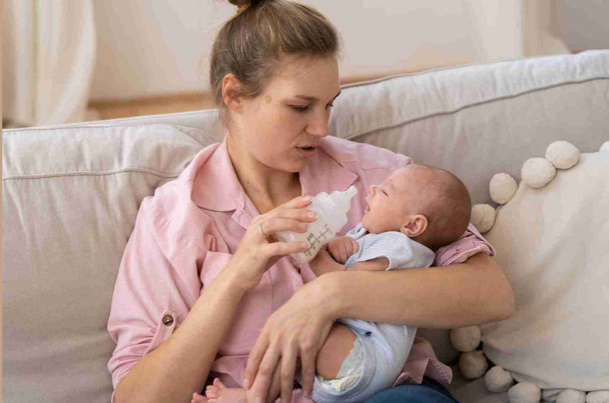
The baby has been feeding, your toddler wants another cuddle, and someone is tugging at your shirt while you try to make dinner. Then your partner reaches for a hug, and your first thought is, “Please, nobody touch me.” If you recognize yourself as a touched out mom, that feeling can come with guilt.
Here is something parents do not always get space to say aloud: you can love your children deeply and still need space around your body.
That need deserves attention. Let’s talk about what feeling touched out can mean, how to find manageable relief, and when extra support may help.
What Does Being a Touched Out Mom Mean?
“Touched out” is an everyday phrase people use to describe feeling overwhelmed by physical contact and wanting a break from it. It is not a medical diagnosis.
You might enjoy cuddling your baby in the morning but find another hand on your body difficult by evening. You may want closeness while also wanting nobody to climb, pull, feed, or lean on you for a little while.
For some mothers, it feels like irritability. For others, it’s an urge to move away, a feeling of being crowded, or a strong wish to sit alone.
The phrase can help name your experience, but it doesn’t explain every possible cause. Pain, exhaustion, emotional distress, or an unwanted kind of touch may also need attention.
Why You Might Feel Overwhelmed by Touch
Your Body Is Needed Throughout the Day
Caring for a young child can involve feeding, lifting, carrying, dressing, rocking, and settling—often with very little time between tasks.
Even affectionate contact can become difficult when it feels continuous or you have little choice about when it happens.
Pay attention to the pattern rather than judging the feeling. Is it strongest after bedtime, during long feeds, or when several people need you at once?
That information can help you plan a break before you reach your limit.
Touch May Arrive Alongside Noise and Demands
Sometimes it isn’t one hand on your shoulder that feels overwhelming. It’s the hand arriving while the television is playing, dinner is burning, and two people are asking questions.
The whole situation may feel crowded.
You may find that reducing one demand makes contact easier to tolerate. Turning off background noise or letting another adult handle dinner could create more breathing room than trying to change your feelings about cuddles.
You Have Too Few Opportunities to Choose
There is a difference between reaching for a hug and feeling constantly grabbed or climbed on.
Wanting some control over your body is understandable. You can respond to your child’s need for care while also teaching them gentler ways to approach you.
The goal is an arrangement that meets essential needs and gives your own comfort a place in the day.
Discomfort May Be Adding to the Load
If feeding, carrying, or physical contact hurts, don’t assume you simply need to become more patient.
Pain deserves its own attention. Ask for appropriate medical or feeding support, and explain exactly what hurts and when.
You also don’t have to accept unwanted adult touch to avoid disappointing someone. Consent matters within an ongoing relationship, including after becoming a parent. If a partner repeatedly ignores your boundaries or you feel afraid to say no, consider confidential support from a healthcare professional or a local relationship-safety service.
Signs You May Need More Breathing Room
You might notice yourself:
- Feeling tense when someone approaches for a cuddle.
- Becoming irritated by clothing being pulled or hair being grabbed.
- Wanting to sit alone after your children are settled.
- Avoiding adult affection because you expect it to lead to more touch.
- Feeling guilty about needing physical space.
- Snapping more often during busy caregiving moments.
These experiences don’t establish a diagnosis. They are reasons to pause and ask what support or adjustment would help.
If the feelings are intense, persistent, or accompanied by broader changes in mood, seek professional guidance rather than relying only on small lifestyle changes.
How to Find Relief When You Feel Touched Out
1. Say What You Need Before You Reach Your Limit
You don’t need a perfect explanation. Start with something clear:
“I’ve had a lot of physical contact today. I need ten minutes without anyone touching me.”
Or:
“I want to spend time with you, but I don’t want a hug right now.”
A specific request gives the other person something practical to respond to. You can explain more later if you want. Before stepping away, make sure your child has safe care; a request for space does not mean leaving a young child unsupervised.
2. Ask for a Complete Handover
When another trusted caregiver is available, ask them to take responsibility for a defined period.
“I need you to handle the children until 6:30. Please manage snacks and questions too.”
A break is harder to use if you remain the person organizing everything from the next room.
Agree on what the other adult needs to know, then let them take over appropriate care. Your pause doesn’t need to become another period of supervision.
3. Choose a Break That Actually Meets the Need
If you want physical space, use the available time for physical space.
You might sit alone, shower, stretch, or walk outside while someone else cares for the children. You don’t have to make the break productive.
Notice what leaves you feeling a little more comfortable. Scrolling through parenting advice may be less useful than a quiet cup of tea if your mind already feels full.
A brief pause may help in the moment, but ongoing overload usually needs practical support too.
4. Set Small Boundaries With Your Toddler
Keep the message simple and offer an alternative when possible:
“I won’t let you pull my hair. You can hold my hand.”
“My lap needs a break. You can sit beside me.”
“I don’t want to be climbed on. Let’s sit together on the floor.”
Your toddler may protest. You can acknowledge that disappointment while maintaining the limit calmly.
If you’re too overwhelmed to offer another kind of closeness immediately, say so gently: “I need a little space. I’m staying nearby.”
5. Change One Difficult Part of the Routine
Look for a repeatable pressure point.
Could another caregiver handle dressing after a breastfeed? Could a toddler have a safe place beside you while you prepare food? Could bedtime responsibilities be shared differently?
Choose one adjustment rather than redesigning the whole day.
Aim for something you can actually repeat. A modest change that reliably happens can be more useful than an ambitious plan nobody can maintain.
6. Address Practical Needs Alongside Emotional Ones
Ask yourself whether you’ve had food, water, a bathroom break, and an opportunity to rest.
Meeting these needs won’t solve every difficult feeling. Still, they deserve a place in your care plan rather than being postponed indefinitely.
If exhaustion is persistent, discuss ways to share nighttime or early-morning responsibilities where possible. Seek medical advice if fatigue feels unusual or remains severe.
Make a Small Plan Before the Hardest Part of the Day
If the same time of day repeatedly feels overwhelming, plan for it while things are calmer. You do not need to predict every demand; identifying one pressure point is enough to start.
| A difficult moment | One practical adjustment |
|---|---|
| Several children need contact during a feed | Arrange a supervised activity nearby or ask another caregiver to help. |
| Evening touch feels overwhelming | Explain beforehand whether you want conversation, company, or time alone. |
| You become irritable during dinner preparation | Simplify the meal or share the task where possible. |
| You keep losing your planned break | Agree who is responsible for care and when you will return. |
These are options to adapt, not extra responsibilities you must manage perfectly. If there is nobody available to help, keep safe care as the priority and tell a trusted person or clinician what daily life is actually like. A plan that depends on support you do not have needs adjusting, not more self-blame.
What If You Feel Touched Out While Breastfeeding?
You can value breastfeeding and find the physical demands difficult.
Begin by checking for pain or positioning problems. If feeding hurts, ask a qualified breastfeeding professional or clinician for help.
For contact that happens around feeding—such as an older baby pinching or a toddler pulling your clothing—you can gently block the action and redirect their hand.
You may also want to discuss changes to the feeding routine. Depending on your wishes and your child’s needs, options could include additional support, combination feeding, reducing feeds, or weaning.
You don’t have to decide while overwhelmed. If you choose to stop, plan suitable replacement feeding for your child’s age and reduce gradually when possible. For babies under one, dropped breastfeeds generally need replacing with suitable infant formula unless expressed breast milk is provided. Solid foods, water, or ordinary cow’s milk do not replace those milk feeds. If your child has medical or growth concerns, ask for an individualized plan.
How to Explain It to Your Partner
Choose a relatively calm time to talk, rather than waiting until a hug has already upset you.
You might say:
“By the evening, I feel overloaded by physical contact. I still want connection, but I need you to ask before touching me and help me get some time alone.”
Be specific about what feels welcome. Perhaps you want conversation, a shared meal, or company without physical contact. Perhaps you need solitude first.
Your partner can have feelings about the change, but those feelings don’t create an obligation for you to accept touch or sex.
If contact is painful, frightening, or consistently distressing, seek appropriate professional support. You deserve to discuss it without pressure.
What to Do in an Overwhelming Moment
If you feel close to losing control, make safety the immediate priority.
For a baby, place them on their back in an empty cot or crib with a firm, flat sleep surface and a fitted sheet. Step away briefly to calm yourself, remain nearby, and check back.
A brief break with your baby safely placed down is safer than continuing to hold them when you feel close to losing control. This is a short safety reset, not a plan to ignore feeding, illness, or other needs.
For an older child, arrange age-appropriate safe supervision or ask another trusted adult to take over. Stay close enough to supervise a toddler and avoid leaving them alone near water, stairs, cooking, or other hazards.
Never shake or handle a baby roughly. If you cannot keep yourself or your child safe, seek emergency help and involve a trusted person immediately. If a baby has been shaken or injured, get emergency medical care even if they initially seem well.
When You Need More Than a Break
Feeling touched out does not automatically mean you have postnatal depression. However, persistent irritability can occur alongside depression or other difficulties.
Speak with a healthcare professional if you also experience ongoing sadness, anxiety, loss of enjoyment, hopelessness, difficulty bonding, or trouble managing everyday tasks. Persistent symptoms, worsening distress, or difficulty coping are reasons to seek help, even if you are not sure what to call the experience.
You don’t need to wait two weeks if symptoms are severe. Ask for support promptly.
Tell a professional about frightening or unwanted thoughts rather than managing them alone. If you think you might act on thoughts of harm, cannot maintain safety, or experience hallucinations or severe confusion, seek emergency care immediately. You do not need to decide on a diagnosis before getting help.
Pain, distress linked to past experiences, or continuing discomfort with touch also deserve assessment. A professional can help you understand the pattern without assuming every mother’s experience has the same cause.
Frequently Asked Questions
Is feeling touched out a sign that I don’t love my children?
No. Needing physical space does not tell us how much you love someone. You can continue meeting your child’s needs while arranging support and setting appropriate limits around your body.
Can I feel touched out if I’m not breastfeeding?
Yes. Carrying, cuddling, being climbed on, and managing repeated physical demands can be part of the experience. Breastfeeding is not a requirement for feeling overwhelmed by touch.
Is it okay to say no to a hug?
Yes. You can decline affection kindly: “I don’t want a hug right now.” With a young child, offer another form of connection when you can, such as sitting nearby or talking together.
What if I have nobody to take over?
Start with safe, supervised opportunities for space: sit beside your playing child rather than holding them, or put your baby safely down for a brief reset. Also tell a healthcare professional or trusted person that you need more practical support.
How long does feeling touched out last?
There is no fixed timeline. It may vary with daily demands and available support. Persistent distress or difficulty functioning is a reason to seek guidance rather than waiting for it to disappear.
What can I do after snapping at my toddler?
Once you’re calm, repair simply: “I shouted. I’m sorry. I needed space, and I’m going to ask more calmly.” Then consider what would help you respond earlier next time.
Is Being Touched Out the Same as Postnatal Depression?
No. Feeling overwhelmed by contact is not a diagnosis and can happen for different reasons. However, it can coexist with depression, anxiety, pain, or exhaustion. Look at the wider pattern, including mood, enjoyment, functioning, and safety. Persistent distress deserves assessment rather than assuming a short break will solve it.
What if My Toddler Cries When I Ask for Space?
Acknowledge the feeling and keep the limit simple: “You wanted my lap. My body needs a break. You can sit beside me.” Stay available for safe care and comfort in ways you can manage. Your child may need repeated practice; disappointment does not mean the boundary is unkind.
Do I Have to Stop Breastfeeding to Feel Better?
Not necessarily. More practical help, changes around feeds, addressing pain, or reducing other demands may help. You can also discuss partial breastfeeding or weaning if that matches your wishes. Avoid making feeding changes without a plan for your child’s nutrition and your breast comfort.
Can I Still Feel Touched Out After My Children Are Older?
Yes. The phrase describes a feeling rather than a stage limited to infancy. Your needs may change with caregiving demands, pain, stress, and available support. If touch is consistently distressing, painful, or affecting relationships and daily life, seek guidance rather than waiting for a particular parenting stage to end.
A Gentle Reminder for the Mom Who Needs Space
You don’t have to welcome every cuddle, climb, or hand on your body to be a caring mother.
You can ask for help. You can say, “Please sit beside me.” You can need quiet after a day spent responding to everyone else.
Start with one honest request and one manageable change. If the feelings remain heavy, seek support. Your family’s needs matter, and your comfort belongs in that conversation too.
For today, choose one clear request: a supervised handover, company without touch, or help with one demanding task. You are allowed to work toward care that meets your child’s needs and gives your body room to recover too.
Resources
American Academy of Pediatrics: Is It OK to Need a Break From My Kids?
American Academy of Pediatrics: How to Calm a Fussy Baby