

You settle into a comfortable chair and gently offer the bottle. Your baby turns away. Later, someone else offers that same bottle, and they drink. If your baby refuses a bottle from mom but drinks with someone else, it can feel confusing, frustrating, or a little hurtful.
It helps to remember that this is not a judgment on your relationship. Feeding behavior doesn’t measure your baby’s love or your ability to care for them.
For a breastfed baby, expectations around nursing may play a part. But timing, technique, milk flow, and discomfort also deserve attention. Here’s how to approach the situation gently while making sure your baby gets the nutrition they need.
Why Does Your Baby Refuse a Bottle From Mom?
The first useful question is whether your baby refuses bottles generally or mainly refuses them from you.
A baby who drinks comfortably with another caregiver may need a different introduction with mom. A baby who struggles with everyone needs a broader look at bottle-feeding.
Breastfed babies may be more willing to accept a bottle from someone other than their mother.
That is one possible explanation, rather than a reason to dismiss every refusal as preference.
They May Expect to Breastfeed With You
If nursing is familiar, being held by you may signal that a breastfeed is coming.
Another caregiver may offer a context that feels different from the familiar expectation of nursing. Smell is one possible contributor, but it cannot explain every feeding refusal.
This doesn’t mean you can never bottle-feed your baby. It means the context may influence what they expect.
If your baby has never breastfed, this explanation may not fit. Look instead at the differences between feeding attempts.
They May Not Be Ready for That Feed
Your baby might be full, tired, upset, or not yet interested.
Notice when the successful bottle happens. Is it offered at a different point in the day, or after a longer interval? Does the other caregiver begin when your baby is calmer?
Avoid turning that observation into a plan to withhold milk. The aim is to recognize a suitable opportunity, not create intense hunger.
The Technique May Feel Different
Small differences can matter: how your baby is supported, how quickly the teat enters their mouth, or how steadily milk flows.
Watch a comfortable feed with the other caregiver. Compare practical details without treating either person’s approach as a failure.
You may discover something simple to adjust. If you’re unsure, ask a feeding professional to observe both attempts.
Something May Be Uncomfortable
Repeated crying, coughing, gulping, or pulling away deserves attention.
A sudden feeding change can also happen when a baby is unwell. Illness, pain, or changes in the feeding experience can contribute to refusal and may need assessment.
Don’t assume your baby is simply “holding out” for someone else, especially if they are taking less milk overall.
First, Check Whether This Is a Preference or an Intake Problem
If your baby breastfeeds effectively or takes adequate milk comfortably from another caregiver, the situation differs from refusing all feeds.
Consider:
- Does your baby accept milk in another way?
- Are wet nappies consistent with their age and usual pattern?
- Do they seem alert and otherwise well?
- Is their growth being monitored appropriately?
- Is feeding painful or difficult with anyone?
These observations help you decide what to discuss with your clinician.
A newborn feeding poorly, or any baby taking substantially less milk than usual, needs prompt advice. Don’t spend several days experimenting while intake falls.
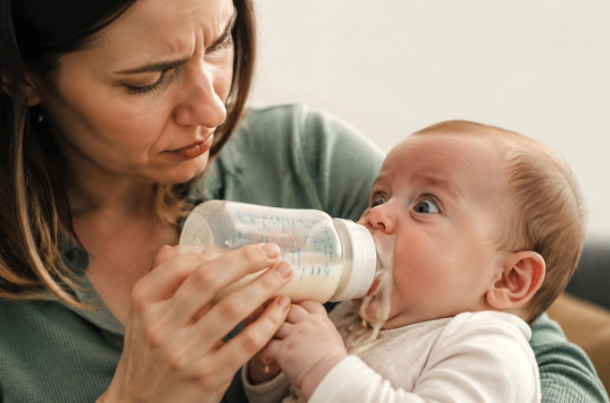
Gentle Ways to Help Your Baby Accept a Bottle
When your baby turns away from a bottle, it can leave you feeling worried or frustrated—especially when you’re preparing to return to work or need someone else to share feeding duties. Give yourself and your little one room to learn, with gentle offers and attention to their comfort.
1. Start When Your Baby Is Calm
Choose a moment when your baby is comfortable and showing interest in feeding, rather than already crying intensely.
A calmer opportunity may make an introduction easier than an attempt during intense crying.
You don’t need to wait for the perfect mood. Simply avoid making an already difficult moment harder.
Start with a small amount of appropriately prepared milk, so there is less pressure around an unfinished bottle.
2. Let Them Accept the Teat
Hold your baby securely and brush the teat against their lips. Give them time to open their mouth and draw it in.
Let your baby accept the teat rather than pushing it into their mouth.
If they turn away, pause. Repeatedly following their mouth with the bottle can make the interaction more distressing.
Your goal is a comfortable opportunity to drink, not getting the teat past their lips at any cost.
3. Check Position and Bottle Angle
Support your baby in a semi-upright position, with their head and body comfortably aligned.
Keep the bottle almost horizontal, slightly tipped, so the flow is manageable. Allow pauses and enough time to respond to your baby’s cues.
Never feed with a propped bottle or leave your baby unattended.
If you’re uncertain about positioning, ask your midwife, pediatrician, or qualified feeding professional for a demonstration.
4. Let Another Trusted Caregiver Try
If your baby is breastfed, another familiar caregiver may have more success with the first bottles.
You might step into another room if that suits you. You don’t have to leave home or stay away while your baby becomes distressed.
Explain the approach beforehand: offer calmly, allow pauses, and stop rather than forcing.
Another person’s success gives you useful information about what your baby can manage. It doesn’t reduce your place in their life.
5. Try a Different Familiar Setting
If your usual nursing chair seems to prompt an expectation of breastfeeding, try another comfortable place.
For some babies, another caregiver and a location different from the usual breastfeeding spot may make an early bottle easier to try.
Keep the surroundings calm enough to observe your baby’s cues.
Change one thing at a time where practical. That makes it easier to notice what helped.
6. Check the Teat Without Constantly Switching Products
Inspect the teat for damage, blockage, or incorrect assembly, following the manufacturer’s instructions.
If your baby repeatedly coughs, gulps, leaks milk, or appears frustrated, ask for advice about flow and technique.
A faster teat is not automatically the answer. Don’t enlarge the hole yourself.
No bottle or teat can be guaranteed to solve refusal for every baby.
Try to avoid buying several new systems before identifying what is actually difficult.
7. Stop When Your Baby Is Distressed
Pause if your baby cries, pushes the bottle away, or repeatedly turns their head.
Settle them, check their needs, and use an effective feeding method if they need milk. You can revisit bottle practice later with support.
Never withhold breastfeeding or another suitable feed to make refusal “stop working.”
If bottles are necessary and your baby continues refusing, seek a feeding plan promptly rather than escalating pressure. If your baby is refusing all milk or taking very little, get urgent clinical advice now rather than waiting for dehydration signs.
Compare Comfortable Feeds Without Blaming Yourself
If another caregiver feeds your baby comfortably, observe the details together. The aim is to share useful information, not decide who is better at feeding.
| What to compare | What it may help you notice |
|---|---|
| Timing | Whether hunger, tiredness, or a recent feed differs. |
| Position | How the head, neck, and body are supported. |
| Starting the feed | Whether your baby has time to open their mouth and accept the teat. |
| Pauses and flow | Whether swallowing seems comfortable or there is coughing, gulping, or stress. |
| Ending | Whether turning away or fullness cues are respected. |
Change one manageable detail at a time rather than repeatedly replacing equipment. A comfortable feed with someone else is reassuring information, but it does not rule out a problem if overall intake, growth, or comfort is changing. An observed feed with a qualified professional can help when the pattern is unclear.
If You Need Bottles for Work, Rest, or Weaning
A deadline can make every attempt feel urgent.
Contact a qualified feeding professional early and explain what you need: when separation begins, how your baby currently feeds, and what happens with bottles.
Ask them to observe a feed if possible. Depending on age and circumstances, they may discuss another suitable feeding method and show you how to use it safely.
If your baby is under one, solid food alone cannot replace their milk needs. A baby who stops breastfeeding generally needs appropriate infant formula unless suitable expressed breast milk is provided.
If you want to maintain breastfeeding while feeds are replaced, discuss expressing and milk supply. If you’re weaning, ask about a gradual plan for your comfort and your baby’s nutrition.
Keep Milk Preparation and Storage Safe
When attempts are brief or interrupted, track when a bottle was prepared and first used.
For prepared formula kept at room temperature, use it within two hours of preparation and within one hour after feeding begins, whichever limit comes first. Discard leftover formula from a used bottle.
Under CDC guidance, leftover expressed breast milk from a bottle your baby has used may be used within two hours after they finish feeding, then discarded. Any earlier limit based on warming, thawing, or time at room temperature still applies. Local guidance or your baby’s clinical plan may be stricter, so follow the handling plan relevant to your situation.
Follow preparation instructions exactly. Don’t dilute formula, add extra powder, or sweeten milk to encourage acceptance. Do not add cereal, honey, or flavorings as a bottle-training strategy.
Use clean feeding equipment, and do not top up a partially used bottle with fresh milk to extend its use. Do not save leftover formula in the refrigerator for another feed. Never microwave milk; uneven heating can cause burns.
When Bottle Refusal Needs Medical Attention
Contact your baby’s clinician promptly for ongoing refusal, reduced overall intake, feeding pain, recurrent coughing or choking, vomiting, or concerns about growth.
Reduced urination, a dry mouth, and unusual sleepiness can indicate dehydration. Nappy expectations vary during the first days after birth, so ask what is appropriate for your baby’s age.
Seek emergency medical help immediately if your baby has difficulty breathing, looks blue or grey, is difficult to wake, or seems seriously unwell. A baby under three months with a temperature of 38°C (100.4°F) or higher needs immediate medical assessment. Do not wait to see whether another bottle attempt helps.
Trust a significant change. You don’t need to try every bottle tip before asking for help.
A Gentle Word About Feeling Rejected
It can sting when someone else feeds your baby successfully after you’ve struggled.
Try separating that moment from what it means about you. Your baby is responding to a feeding situation, not assessing your motherhood.
You can still enjoy closeness before and after the bottle. Hold them, talk, respond, and take part in the care that works for your family.
And if another caregiver handles some bottles, let that be support you can use rather than another standard to measure yourself against.
Frequently Asked Questions
Why will my baby take a bottle from dad but not me?
A breastfed baby may expect nursing when held by mom. Timing, position, and technique may differ too. Compare comfortable feeds and seek support if the pattern continues.
Should I leave the room during bottle practice?
You can try if your baby is comfortable with a trusted caregiver. You don’t need to leave them distressed. Agree that feeding will remain responsive and that another effective option will be available when needed.
How often should I practice?
There is no universal schedule. Keep attempts calm and avoid repeatedly offering through distress. Ask for an individualized plan if bottles are necessary soon or intake is affected.
Should I change formula if my baby refuses?
Refusal alone doesn’t establish that the formula is unsuitable. Check timing and technique, and discuss symptoms with a clinician before switching to specialist formulas.
Can I wait until my baby is very hungry?
Avoid deliberately delaying needed feeds to force acceptance. A distressed baby may find learning harder. Offer at a calm opportunity and protect adequate intake.
Will my baby eventually accept a bottle from me?
Some babies do, but there is no guaranteed timeline. If refusal persists, seek help to understand the cause and plan a safe, workable feeding approach.
Does Taking a Bottle From Someone Else Mean My Baby Is Rejecting Me?
No. Feeding behavior does not measure love or attachment. Your baby may respond differently to the timing, setting, position, or expectation of breastfeeding. Keep offering closeness in ways that work, and use another caregiver’s success as practical support while you explore the difficulty.
Can We Use a Cup Instead of a Bottle?
Depending on your baby’s age, abilities, and circumstances, a professional may recommend cup feeding or another method. Ask for a demonstration and a feeding plan rather than pouring milk into your baby’s mouth. The alternative must safely meet nutritional needs, particularly when direct breastfeeding is unavailable.
Should I Offer the Bottle While My Baby Is Asleep?
Do not put milk into the mouth of a sleeping or unresponsive baby. Your baby needs to be responsive enough to feed safely, and you need to remain awake and attentive. If feeds only seem possible when your baby is very drowsy, discuss the pattern with their clinician rather than relying on sleep to overcome refusal.
Should I Stop Breastfeeding Until My Baby Takes a Bottle?
Do not withhold an effective feed to force bottle acceptance. If you want or need to reduce breastfeeding, plan replacement nutrition and milk-supply changes with appropriate support. A baby taking too little milk needs prompt assessment, not a prolonged contest between feeding methods.
Finding a More Comfortable Way Forward
If your baby refuses a bottle from you, begin with curiosity: what changes with the timing, caregiver, setting, or technique?
Keep feeds responsive, protect your baby’s intake, and ask for help when the pattern isn’t improving. You don’t have to turn every attempt into a test.
Your relationship includes far more than one feeding method. There is room to find an approach that nourishes your baby, supports your needs, and feels gentler for both of you.
For your next attempt, choose one small adjustment and keep a suitable feeding option available. If intake is falling or attempts remain distressing, contact your baby’s healthcare professional for a practical plan.
Resources
CDC: About Feeding From a Bottle
NHS: How to Combine Breast and Bottle Feeding