
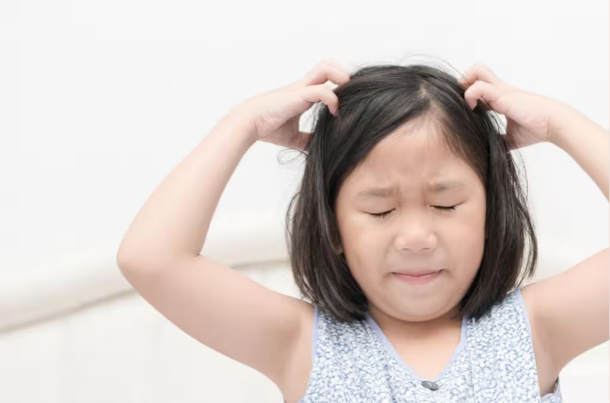
Dandruff in children can cause loose flakes, itching, and irritation, but not every flaky scalp is dandruff. Dry skin, eczema, product irritation, head lice, and scalp ringworm can sometimes produce similar symptoms.
A flaky scalp does not mean you have done anything wrong with your child’s hygiene. The useful first step is to look at their age, their symptoms, and whether anything has changed in their hair-care routine. Babies’ scalp scales often need different care from dandruff in an older child.
This guide explains what parents can check, how to keep scalp care gentle, and when to ask for help.
What does dandruff look like in children?
Dandruff in children can cause loose flakes in the hair or on clothing, sometimes accompanied by scalp itching.
It is not contagious and is not simply a sign of poor hygiene. Yeast that normally lives on skin and conditions such as seborrheic dermatitis can contribute to flaking.
However, flakes alone do not confirm dandruff. An irritated scalp, eczema, head lice, or scalp ringworm can also cause symptoms. Avoid choosing a treatment based only on how the flakes look.
What else can cause an itchy scalp?
Several conditions can resemble dandruff in children, so the details you notice can help your child’s doctor identify the cause.
- Product irritation: Itching that begins after a different shampoo, conditioner, or styling product may be a reaction to that product.
- Eczema or psoriasis: A persistent rash or thick, scaly patches may need an examination and a specific treatment plan.
- Head lice: These can cause itching. A clinician or pharmacist can help you check if you are unsure what you are seeing.
- Scalp ringworm: Scaling with broken hairs or patches of hair loss needs medical assessment. Despite its name, ringworm is a fungal infection.
Tell the doctor when the symptoms started and whether your child has a rash elsewhere. You do not need to diagnose the problem yourself.

4 Gentle Care Tips for Dandruff in Children
1. Keep washing comfortable
Use lukewarm water and massage gently with your fingertips. Avoid scraping flakes with your nails or scrubbing until the skin feels sore. Rinse thoroughly.
Washing frequency should suit your child’s hair and scalp rather than a fixed rule for every family. If washing stings, or the scalp looks inflamed, ask for advice instead of repeatedly changing the routine.
2. Pause a possible trigger
If symptoms started after a new hair product, stop using it. Keep the routine simple while you work out what is happening. Several new products used at once make it harder to identify a trigger.
A short note about what you used and when the itching started can be helpful at an appointment.
3. Reduce scratching
Keep your child’s nails short and encourage gentle touching rather than digging at the scalp. A clean, cool, damp cloth may provide temporary comfort. It will not treat the cause of the itching.
If scratching interrupts sleep, causes sores, or keeps returning, arrange an assessment rather than relying on comfort measures alone.
4. Ask before starting medicated treatment
Anti-dandruff shampoo can help when dandruff is the cause, but suitability and directions vary. Ask a pharmacist or pediatrician about an option appropriate for your child’s age. Follow the instructions they give, including how often to use it and how long to leave it on.
Do not copy an adult’s treatment schedule or assume every dandruff shampoo is suitable for a young child. Stop and seek advice if a treatment causes burning or a new rash.
Are home remedies safe for a child’s itchy scalp?
Parents often hear about coconut oil, aloe vera, tea tree oil, vinegar, lemon juice, or baking soda. These should not be treated as proven cures for childhood dandruff.
For a closer look at these remedies, our guide to home remedies for dandruff and an itchy scalp explains their limitations and potential irritation risks. Check with your child’s pediatrician before trying treatments intended for adults.
Avoid experimenting with acidic mixtures or undiluted essential oils on a child’s irritated scalp. “Natural” ingredients can still irritate skin or cause allergic reactions. There is no need to try every home remedy before getting advice.
Care for a baby’s cradle-cap scales is a separate situation. Follow guidance appropriate for babies rather than applying adult dandruff remedies.
What about flakes on a baby’s scalp?
Greasy white or yellow crusts may be cradle cap, a common condition that generally does not itch or hurt. It often clears over time.
Gently wash with an unperfumed baby shampoo and use a soft brush to loosen scales. Do not pick crusts or use adult shampoo. Ask a pharmacist about a suitable emollient if the scales need softening.
Have your baby checked if the skin is swollen, bleeding, leaking fluid, or has not improved after a few weeks of care. If your baby seems uncomfortable or keeps rubbing an itchy rash, do not assume it is ordinary cradle cap.
When should you get medical advice?
Arrange an appointment if your child’s scalp is very itchy, red, swollen, or has persistent scaly patches. Get prompt assessment for painful swelling, pus, open sores, or patchy hair loss.
Scalp ringworm needs a different approach: it usually requires prescription antifungal medicine taken by mouth. Shampoo alone will not cure it.
If a healthcare professional has recommended dandruff treatment and it is not helping after about four weeks of correct use, follow up. Do not wait that long if symptoms worsen or treatment irritates the skin.
Your usual doctor or pediatrician can be the first point of contact. They may recommend a dermatologist when the cause is unclear or the problem persists.
Frequently asked questions
Can children get dandruff?
Does dandruff mean my child is not washing properly?
Can I use my dandruff shampoo on my child?
Can coconut oil cure dandruff in children?
Is dandruff contagious?
Why is my child’s scalp still itchy after washing?
Should I remove my baby’s cradle-cap crusts?
Final thoughts
A few flakes can leave you wondering whether you should wash more, try a remedy, or book an appointment. Start with gentle care and pay attention to the pattern. Your child’s comfort, age, and other symptoms matter more than removing every visible flake immediately.
If the scalp stays itchy, becomes sore, or develops patches of hair loss, ask for help. Finding the cause makes care more effective and avoids unnecessary trial and error.
For more practical guidance on children’s health, hair care, baby care, and everyday parenting, explore Little One Haven.
Trusted resources
American Academy of Dermatology: How to Treat Dandruff
American Academy of Dermatology: Reasons Your Scalp Itches
Disclaimer
This article is for general educational and parenting information only and does not replace medical advice from your child’s pediatrician, dermatologist, pharmacist, or another qualified healthcare professional. Seek medical advice if your child’s scalp is very itchy, red, swollen, painful, develops pus or open sores, has persistent scaly patches, or shows areas of hair loss. Ask a healthcare professional before using medicated dandruff treatments or adult scalp products on a child.
About the Author
Geeta Yogi writes practical and supportive parenting content about children’s health, hair and scalp care, baby care, development, and everyday family concerns. She focuses on clear, parent-friendly guidance that helps families understand common childhood symptoms and recognize when professional advice may be useful.
