
As a mom, I’ve had quiet moments where I found myself wondering, “Am I really doing enough to help my child express what’s inside their little heart?” If you’re here searching for how to improve your child’s communication skills, I want to gently remind you, you’re already on the right path. The fact that you care, that you’re noticing, that you want to help… that alone is such a beautiful beginning for your child.
Every child grows and learns in their own time. Some little ones talk nonstop, filling the room with their stories, while others observe quietly, taking everything in before they’re ready to speak. And honestly, both are perfectly okay. We’re not aiming for perfection here, we’re building connection, not perfection.
So let’s walk through this together, slowly and simply… just like two moms chatting over a warm cup of tea.
Simple Ways to Improve Your Child’s Communication Skills at Home
Helping your child communicate better doesn’t require complicated methods or expensive tools. In fact, the most effective ways to improve your child’s communication skills happen naturally at home, through everyday moments and simple interactions.
These communication skills for kids develop gradually as they listen, observe, and respond to the world around them. By creating a warm, responsive, and language-rich environment, you can gently support your child’s speech and language development without pressure.
Whether it’s talking during daily routines, listening with patience, reading together, or encouraging play, each small effort adds up over time. These simple habits not only improve child communication skills but also build confidence, emotional connection, and a sense of security.
Remember, you don’t need to be perfect. Just being present, responsive, and engaged is more than enough to help your child grow into a confident communicator.
These simple tips to improve your child’s communication skills help build confidence, language development, and emotional connection in early childhood.
Why Communication Skills Matter in Early Childhood
Communication isn’t just about speaking clearly or knowing lots of words. It’s about how our little ones share what’s in their hearts, their needs, their feelings, their tiny observations about the world. It’s how they tell us they’re hungry, excited, upset, or proud of something they’ve done.
When a child starts to communicate in their own way and feels truly heard, something beautiful happens, they begin to feel safe, understood, and confident. And that confidence slowly grows from within.
Strong communication skills help children in so many gentle but powerful ways. Resources from the National Institute on Deafness and Other Communication Disorders also explain how speech and language development play an important role in emotional expression, learning, and social connection during childhood. They’re able to express their emotions instead of getting overwhelmed or frustrated. They find it easier to connect with other children and build friendships. As they grow, it also helps them learn better in school because they can ask questions, share ideas, and understand others more clearly. Most importantly, it shapes their self-confidence, helping them believe that their voice matters.
And the most comforting part for us as moms? These skills don’t need pressure or perfection. They grow naturally in a home filled with love, patience, and simple everyday conversations. Just by being present and responsive, you’re already helping your child more than you realize.
The way we communicate as parents also plays an important role in a child’s emotional development. Research shows that frequent yelling can affect a child’s stress response and emotional wellbeing. You can learn more here: what yelling does to a child’s brain.
These communication skills for kids develop naturally through everyday conversations and simple interactions.
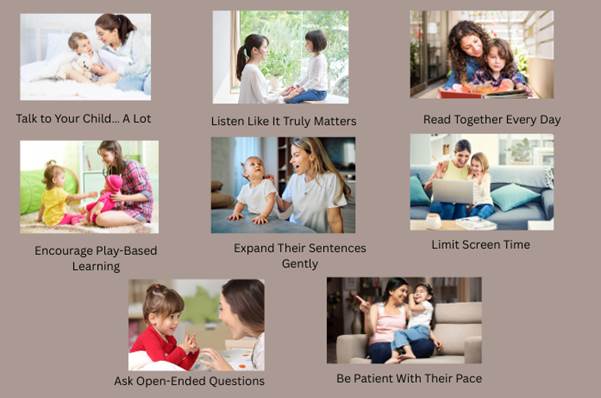
How to Improve Your Child’s Communication Skills (Simple Tips That Really Work)
Let’s keep this simple and real, because as moms, we already have enough on our plates. You don’t need expensive toys, strict routines, or “perfect” methods. It’s the small, everyday moments that truly shape your child’s ability to communicate.
Here are some gentle, practical ways that really work:
1. Talk to Your Child… A Lot
It may sound basic, but it’s one of the most powerful things you can do.
Just bring your child into your daily life through words. Talk while cooking, folding clothes, or going for a walk. Describe little things:
“Mommy is cutting apples… they’re so crunchy and sweet!”
Even if your child isn’t replying much yet, they are soaking it all in. They’re learning how language sounds, how sentences flow, and how communication works.
Tip: Try to make eye contact and keep your words simple and clear.
2. Listen Like It Truly Matters
This one changed things for me.
When your child tries to say something, even if it’s unclear or just sounds, pause and really listen. Put your phone down. Look into their eyes.
Instead of correcting them right away, respond with curiosity:
“Oh, you’re telling me about your toy? I’d love to hear more!”
When children feel heard, they feel important. And when they feel important, they try more.
3. Read Together Every Day
Reading isn’t just about books, it’s about bonding, imagination, and language, all coming together.
Whether it’s a colorful picture book or a short bedtime story, it all helps. And don’t just read, talk about the story too.
Ask simple questions like:
- “What do you see here?”
- “What do you think will happen next?”
These little conversations help your child think, imagine, and express their thoughts more freely.
4. Encourage Play-Based Learning
Honestly, this is where the magic happens.
The importance of play based learning in early childhood education is something every parent should know. Children don’t just play for fun, they learn how to talk, express emotions, and connect with others through it.
Simple pretend play can do wonders:
- Talking to dolls
- Playing kitchen
- Acting out little stories
These moments naturally build language skills without your child even realizing they’re “learning.”
Tip: Sometimes, just sit and join their play. Let them lead, and follow their little world.
5. Expand Their Sentences Gently
You don’t need to “teach” in a strict way. Just build on what your child says.
If your child says:
“Ball!”
You can respond softly:
“Yes, that’s a big red ball!”
You’re not correcting them, you’re showing them how to say a little more. This is one of the easiest ways when thinking about how to help your child improve communication skills in a natural, pressure-free way.
6. Limit Screen Time (Gently, Not Strictly)
Let’s be honest, screens are part of our lives. And that’s okay.
But real communication grows through real connection. Children learn best when they:
- See your facial expressions
- Hear your tone
- Experience back-and-forth conversations
Try to create small no-screen moments during the day, like mealtime or bedtime. Even a few minutes of real conversation can make a big difference.
7. Ask Open-Ended Questions
Instead of questions that only need a “yes” or “no,” try ones that invite your child to think and speak.
For example, instead of:
“Did you have fun?”
Try:
“What was your favorite part of today?”
They might take time to answer, and that’s okay. Give them space. That pause is where learning happens.
8. Be Patient With Their Pace
This is something every mom needs to hear.
Some children start talking early. Some take a little longer. It doesn’t mean anything is wrong.
Focus on progress, not perfection.
Celebrate the little things:
- A new word
- A clearer sentence
- Even a small attempt to communicate
Because in the end, you’re not just building vocabulary, you’re building confidence.
These small, loving efforts may not feel like much in the moment… but over time, they create a safe space where your child feels comfortable to speak, share, and grow. And that’s what truly matters.
Everyday Activities That Build Communication Skills
Here’s the comforting truth, you don’t need to set aside extra hours in your day to teach your child communication. It’s already happening in the little moments you’re living every single day.
It’s in the kitchen, in the backyard, in the bathroom during bath time. These ordinary moments? They quietly become the most powerful learning spaces for your child.
During Mealtime
Mealtime is more than just feeding, it’s a chance to connect.
Talk about what’s on the plate, how it feels, how it tastes:
“This rice is warm… do you like it?”
These simple conversations help your child learn new words and express their preferences. And slowly, they begin to respond in their own way.
While Playing Outside
The world outside is full of things to talk about.
Point out little details:
“Look at that bird! It’s flying so high in the sky.”
When you name things around them, you’re helping your child connect words to the real world. It builds both vocabulary and curiosity at the same time.
During Bath Time
Bath time can turn into such a fun learning moment.
Add playful words and expressions:
“Splash! The water is a little cold… let’s pour it slowly.”
These fun, relaxed interactions make your child feel comfortable experimenting with sounds and words without any pressure.
The most beautiful part? These tiny conversations may feel small to you, but for your child, they mean everything.
They add up slowly, day by day, building confidence, language, and connection in the most natural way possible.
Signs Your Child Is Improving (Even If It Feels Slow)
As moms, we have a habit of overthinking everything, I know I’ve been there too. We look for big changes and quick results, and when we don’t see them, we start to worry. But the truth is, progress in communication often shows up in the smallest, quietest ways.
You might notice little things like:
- Your child trying to say new words, even if they’re not perfect
- They respond more when you talk to them
- They use gestures, facial expressions, or sounds to express themselves
- They get excited when they’re able to communicate something
These may seem like tiny steps, but they are actually beautiful signs that your child is learning and growing. Sometimes, it’s not about how much they say, but about how much they’re trying.
When to Seek Extra Support
At the same time, it’s important to trust your instincts. As a mom, you know your child better than anyone else.
If something doesn’t feel right, it’s okay to pause and seek guidance. Understanding the early signs of speech and language difficulties can also help parents know when professional support may be beneficial. You might consider speaking to a professional if:
- Your child doesn’t respond to sounds or voices
- They aren’t using any words even after a certain age
- They seem frustrated often when trying to communicate
Reaching out for help doesn’t mean you’ve done anything wrong. It doesn’t mean your child is “behind.” It simply means you care enough to support them in the best possible way.
Sometimes, a little extra guidance can make a big difference, and taking that step is just another form of love.
Families looking for additional support may also find these speech therapy and speech delay support tips helpful for encouraging communication at home.
A Gentle Reminder for Every Parent Reading This
If you’re sitting there wondering how to help your child improve communication skills, I want to gently remind you of something important, you don’t have to be perfect.
Your child doesn’t need perfect words, perfect routines, or a perfect parent. What they truly need is you, your presence, your voice, your patience.
There will be days when things feel slow… when your child doesn’t respond much, or when communication feels a little difficult. And there will be messy days too, where nothing seems to go as planned. But even on those days, something meaningful is still happening.
Every little conversation you have, every smile you share, every time you pause to listen… it’s all quietly building your child’s confidence and ability to express themselves.
So take a deep breath, be kind to yourself, and trust the process.
You’re doing more than enough, and your child is learning something beautiful from you every single day. Top of FormBottom of Form
Frequently Asked Questions (FAQs)
1. How can I improve my child’s communication skills?
Talk regularly, listen actively, read together, and encourage play-based learning.
2. At what age should a child start talking clearly?
Children develop at different paces, but most start forming words between 12–18 months.
3. Do screen-free activities help communication skills?
Yes, real conversations and interactions are much more effective.
4. When should I worry about speech delay?
If your child shows no response to sounds or isn’t attempting words after a certain age, consult a professional.
5. What is the best way to support language development?
Consistent interaction, patience, and creating a safe environment for expression.
Final Thoughts from One Mom to Another
At LittleOneHaven, we truly believe that parenting isn’t about getting everything right all the time. It’s about showing up, with love, patience, and care, again and again, even on the hard days.
If your child is struggling to find the right words, don’t rush them… just sit beside them. Your calm presence speaks louder than anything else.
And if your little one is chatting endlessly about something that may not make complete sense to you, pause and listen, like it’s the most important story in the world. Because in their little heart, it truly is.
Communication doesn’t grow through pressure or correction. It grows through connection, through those quiet moments of understanding, and through feeling safe enough to express.
So take a deep breath, trust yourself a little more, and keep going at your own pace.
You’re doing better than you think, and your child feels it every single day.
If this article helped you, explore more gentle parenting tips, child development guides, and real-life support on Little One Haven, where every small moment matters.