
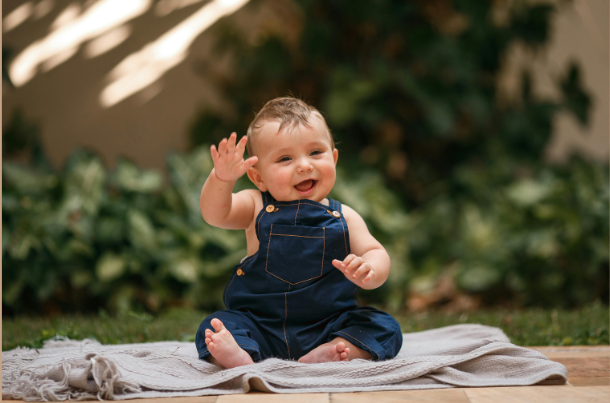
WheWhen Do Babies Sit Up on Their Own? Signs, Stages, and How to Help
Watching another baby sit independently can make it completely natural to wonder whether your own little one is developing as expected.
The reassuring answer is that babies learn to sit at different times. Sitting is not a skill that suddenly appears overnight. It develops gradually as your baby builds head control, trunk strength, balance, coordination, and confidence.
Some babies begin sitting independently earlier than others. What matters most is looking at your baby’s overall developmental progress rather than comparing one milestone with another baby’s timeline.

When Do Babies Sit Up on Their Own?
Babies usually learn to sit in stages.
Before sitting independently, babies often practise being upright with support. By around 6 months, many can lean on their hands while sitting. By around 9 months, many can sit without support. These ages are general guides, not deadlines every baby must meet.
You may first notice your baby sitting while leaning forward with both hands on the floor. This is sometimes called tripod sitting because the hands provide an extra point of support while balance develops.
Over time, your baby may begin lifting one hand, then both hands, while staying upright for longer.
At first, sitting can look very wobbly.
Your baby may stay upright for only a few seconds before tipping sideways or forward. With safe opportunities to practise, those movements usually become more controlled.
Learning to sit is less like flipping a switch and more like watching balance and strength gradually come together.
Sitting Is a Collection of Smaller Skills
Sitting may look simple, but several developmental skills are working together.
Your baby needs enough head and neck control to stay upright. Their trunk muscles help support the body, while their hips and legs create a stable base.
At the same time, your baby is learning how their body responds when they lean, reach, turn, or begin to lose balance.
That is why sitting often develops in small steps.
One week your baby may topple over almost immediately. Later, they may stay upright long enough to reach for a toy or turn toward your voice.
Progress is not always perfectly smooth.
Signs Your Baby May Be Getting Ready to Sit
There are often clues that sitting skills are developing.
You may notice:
- Better head control when your baby is held upright
- Stronger pushing during supervised tummy time
- More reaching for toys
- Greater interest in being upright
- Sitting with less help when supported
- Using the hands on the floor for balance
These signs do not predict an exact date when your baby will sit independently, but they can show that the skills involved are developing.
Why Do Some Babies Sit Earlier Than Others?
Babies do not follow identical developmental schedules.
Some babies spend lots of time moving, rolling, reaching, and exploring during floor play. Others may practise new positions more gradually.
Differences in movement opportunities, body proportions, health, and overall development can all affect how sitting looks from one baby to another.
Premature babies may also be assessed using corrected age rather than birth age when tracking early milestones.
The American Academy of Pediatrics notes that corrected age is often used for developmental milestones in babies born early, especially during the first two years.
This is one reason comparing babies month by month can create unnecessary worry.
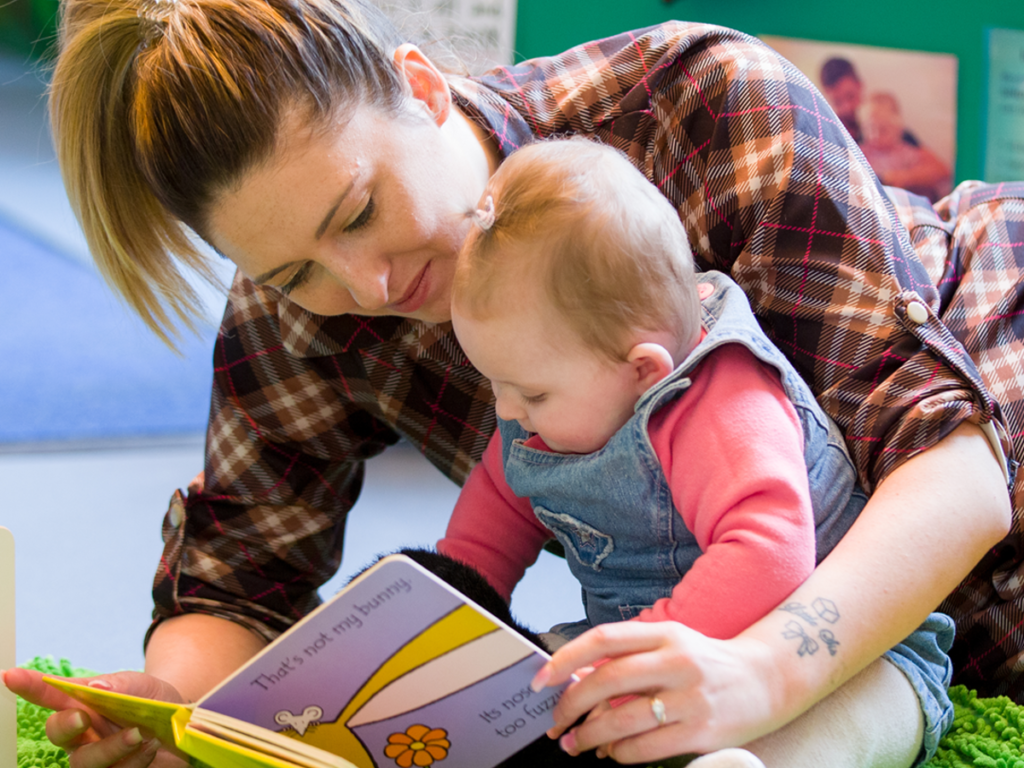
What Unsupported Sitting May Look Like at First
The first attempts at independent sitting rarely look graceful.
Your baby may lean forward with both hands planted between their legs. Their back may look slightly rounded, and they may sway from side to side.
Then they may suddenly topple.
Some wobbling and toppling can be expected while babies are learning to sit, as long as practice happens on a safe, supervised floor-level surface.
Over time, babies often begin using their hands less for support.
Eventually, they may be able to hold a toy while sitting instead of using both hands to keep themselves upright.
That is a meaningful change because their hands are becoming free for play while their body manages balance.
How to Help Your Baby Learn to Sit
You do not need complicated exercises or special sitting equipment.
Simple opportunities to move and play are usually enough.
Give Your Baby Regular Floor Time
A safe floor-level play area gives your baby room to kick, roll, reach, push up, and shift their weight.
Use a firm, flat surface away from stairs, sharp edges, pets, cords, and small objects.
Offer regular opportunities for supervised floor play throughout the day.
Your baby does not need a structured exercise program. Reaching for a toy or turning toward you can naturally give them opportunities to practise movement.
Keep Tummy Time Part of the Day
Tummy time helps babies practise the muscles and movements involved in early motor development.
The American Academy of Pediatrics recommends tummy time while babies are awake and supervised.
If your baby dislikes being on their tummy, try shorter sessions.
You can lie down face-to-face, sing, place a toy nearby, or use a baby-safe mirror.
You can lie down face-to-face, sing, place a toy nearby, or use a baby-safe mirror. For more everyday play ideas that support movement and learning, see our guide to simple activities for baby development.
The most important safety rule is simple:
Tummy time is for awake, supervised play only.
For sleep, babies should be placed on their backs.
Let Your Baby Practise Sitting Between Your Legs
Sit on the floor and position your baby between your legs.
Your legs can provide a soft boundary while your baby practises staying upright.
Keep your hands close at first. As your baby’s balance improves, you can reduce the amount of support you provide.
Always stay within arm’s reach and practise on the floor, not on a sofa, bed, table, or other raised surface.
Place Toys Slightly to the Side
Once your baby can sit briefly, place a toy just slightly to one side.
This gives your baby an opportunity to practise reaching and shifting their weight naturally.
Keep the toy close enough that the activity remains manageable.
The goal is not to challenge your baby as much as possible. It is simply to give them safe opportunities to explore movement.
What Not to Rush When Teaching a Baby to Sit
It can be tempting to prop your baby upright because they look adorable sitting.
But if your baby cannot yet hold their head steadily or continually collapses forward, they may simply need more time.
There is no need to turn sitting into a training program.
Babies still benefit from plenty of supervised floor time where they can move freely and practise skills at their own pace.
Think of your role as creating opportunities rather than forcing a position.
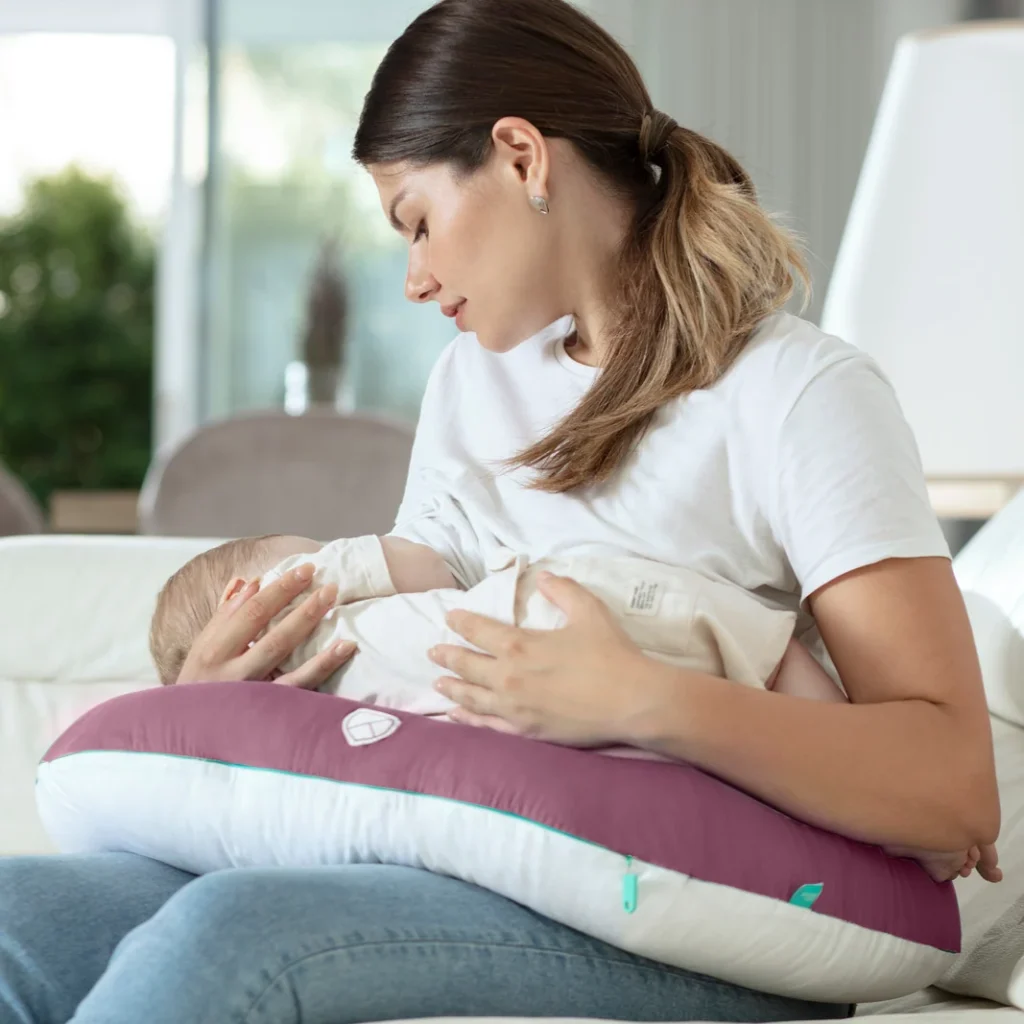
Should You Use Pillows Around a Baby Learning to Sit?
Falling over is part of learning balance.
Practising on a safe floor-level surface such as a play mat can make small tumbles more comfortable.
Some parents place cushions nearby during closely supervised play. If you do, stay beside your baby and make sure the area does not create a suffocation or entrapment risk.
Most importantly, pillows and cushions used during play should never be left in your baby’s sleep space.
The AAP recommends that babies sleep on their backs on a firm, flat surface with no pillows, loose blankets, soft objects, or positioners in the sleep area.
Avoid placing a baby who is learning to sit on beds, sofas, countertops, or other raised surfaces.
Babies can suddenly move in ways you were not expecting.
Does Sitting Come Before Crawling?
Many babies develop stronger sitting skills before crawling, but motor milestones do not always happen in exactly the same order.
Some babies sit confidently for a while before showing much interest in moving across the floor.
Others quickly begin leaning forward onto their hands and knees.
Some babies scoot on their bottoms.
Others roll everywhere.
Some crawl briefly before pulling themselves toward standing.
There is more than one normal way for movement skills to unfold.
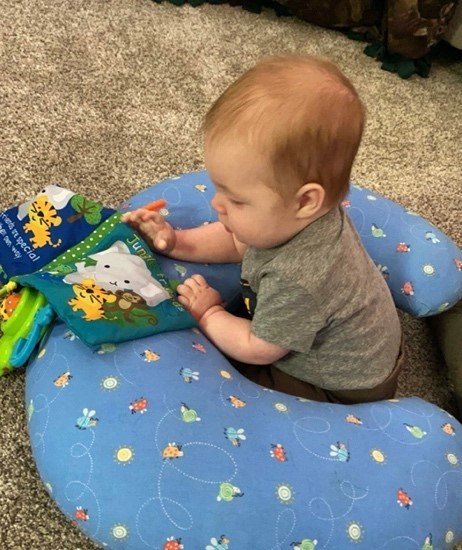
What If My Baby Keeps Falling Over While Sitting?
Some wobbling is expected during early sitting practice.
At first, your baby may not be able to correct their balance once they begin tipping.
Later, they may put out a hand.
With time, they may shift their weight before they fall.
Stay close during sitting practice and use a safe floor-level environment.
Supervised practice gives babies opportunities to experience balance and movement without needing every wobble prevented.
What If My Baby Is Not Sitting Yet?
It is easy to become worried when another baby the same age appears to be sitting confidently.
But one milestone does not tell the whole story.
Look at your baby’s broader development.
Are they:
- Gaining strength?
- Improving head control?
- Reaching for toys?
- Rolling or attempting to roll?
- Pushing up during tummy time?
- Moving both sides of their body?
- Interacting with you and their surroundings?
Development often happens unevenly.
A baby may spend time working on one skill before another suddenly appears.
If your baby is not showing progress toward sitting, has poor head control, or you are concerned about their overall motor development, discuss it with their pediatrician rather than waiting for a specific deadline.
When Should You Ask a Doctor About Sitting?
You can bring up developmental concerns at any time.
Speak with your baby’s healthcare provider if you notice:
- Very poor or worsening head control
- Unusual stiffness
- Unusual floppiness
- Consistent use of one side of the body much more than the other
- Little progress in movement skills over time
- Loss of a skill your baby previously had
- Any other movement pattern that concerns you
Loss of a previously acquired skill should be discussed promptly with your child’s healthcare provider.
The CDC encourages parents to track developmental milestones and act early when they have concerns rather than waiting to see whether the concern disappears on its own.
A slightly later milestone does not automatically mean something is wrong. Your baby’s healthcare provider can look at development as a whole.
Corrected Age Matters for Babies Born Early
If your baby was born prematurely, milestone timing may look different when measured from their birth date.
Healthcare professionals often use corrected or adjusted age when considering early development.
Corrected age accounts for how early your baby was born.
For example, a baby born several weeks early may appear later reaching a milestone according to chronological age while being on track according to corrected age.
The AAP recommends considering adjusted age when tracking developmental milestones in preterm babies, generally through the early years when appropriate.
Ask your baby’s healthcare provider which age is most useful when discussing development.
Try Not to Compare Your Baby With Social Media
Social media shows snapshots, not complete developmental stories.
You may see a baby the same age sitting perfectly upright, crawling, and clapping while your own baby is happily trying to chew their sock.
What you do not see are the tumbles, practice, or other skills developing behind the camera.
Try to compare your baby with their own progress, not another baby’s highlight reel.
Your baby’s milestones deserve to be celebrated on their own timeline.
Simple Ways to Support Healthy Baby Development
You do not need to fill every hour with developmental activities.
Ordinary interaction gives your baby plenty of opportunities to learn.
You can:
- Talk while changing clothes
- Sing during play or bath time
- Read simple books together
- Let your baby reach for toys
- Offer supervised floor play
- Respond when your baby babbles or smiles
- Give your baby safe opportunities to explore movement
These everyday moments allow your baby to move, communicate, explore, and connect with you.
The most useful thing is not necessarily a complicated toy.
It is a safe environment with opportunities to move and interact.
Frequently Asked Questions
When do babies usually sit up on their own?
What are signs my baby is getting ready to sit?
Is it normal for my baby to fall over while learning to sit?
Should I use pillows to help my baby sit?
When should I ask a doctor about sitting?
A Gentle Reminder From One Mom to Another
If you came here wondering when babies sit up on their own, I hope you leave feeling a little calmer.
Your baby’s first year is full of changes.
First comes one new movement, then another, and it can be easy to spend so much time waiting for the next milestone that you forget to enjoy the stage happening now.
That wobbly sitting stage will not last forever.
Keep offering supervised tummy time.
Keep giving your baby safe floor space.
Keep noticing the small signs of progress.
And if something about your baby’s development worries you, speak with your healthcare professional. Asking a question is part of caring for your child.
Every baby has their own rhythm.
One day, you may place your baby on the floor, take your hands away, and suddenly realise they are sitting there all by themselves.
For more gentle, practical guidance through your baby’s milestones, explore the parenting articles at Little One Haven.
Trusted Resources
American Academy of Pediatrics / HealthyChildren: Your Preemie’s Growth & Developmental Milestones
CDC: 6-Month Developmental Milestones
CDC: 9-Month Developmental Milestones
American Academy of Pediatrics / HealthyChildren: Back to Sleep, Tummy to Play
Disclaimer
This article is intended for general educational and parenting information only and is not a substitute for personalised medical or developmental advice from your baby’s pediatrician or another qualified healthcare professional. Babies reach milestones at different times, and babies born prematurely may be assessed using corrected age. Speak with your baby’s healthcare provider if you notice very poor or worsening head control, unusual stiffness or floppiness, strong one-sided movement, little developmental progress, or loss of a skill your baby previously had.
About the Author
Geeta Yogi writes warm, practical, and parent-friendly content about baby milestones, early development, movement, newborn care, and everyday parenting. She focuses on helping parents understand developmental stages with realistic expectations, safe play ideas, and gentle guidance about when professional support may be useful.
