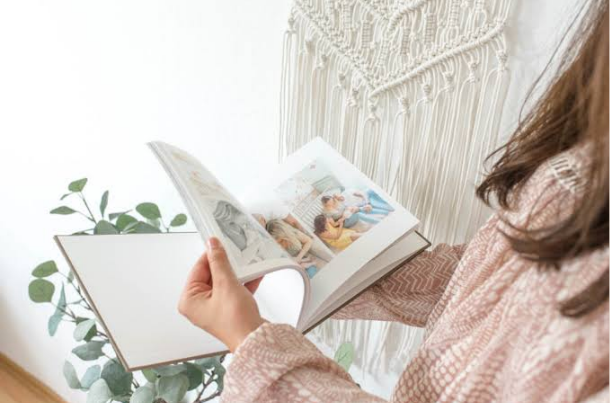
One day, your baby’s tiny clothes fit in the palm of your hand. Before long, you’re folding them away and wondering how they became too small so quickly. If you’re looking for baby memory book ideas, you may be hoping to hold on to a little of that everyday sweetness, the sleepy stretches, the funny expressions, and the way your little one curls against you.
Some of the details worth saving don’t make it into milestone photographs. The song you sing while changing nappies. The nickname that appeared without anyone planning it. The ordinary afternoon you wish you could visit again.
A memory book can give those moments somewhere to live, without becoming another task you feel guilty about finishing.
Baby Memory Book Ideas That Begin With Your Real Life
You don’t need to record everything from pregnancy onward or fill every page in order.
Start with a moment you remember clearly. Add a photograph, a few sentences, or something that reminds you of that day.
Choose a format that makes it easy to begin: a notebook, a photo album with writing space, a scrapbook, or a digital collection you can print later.
Leave room for imperfect entries. “Sometime in early June” can be enough when the exact date has slipped away. The story still matters.
Before choosing a format, think about how you already save things. If most memories live on your phone, start with one digital folder. If you enjoy handwriting, keep a notebook where you usually sit. You can change the format later; there is no need to buy supplies before recording your first memory.

1. Write a Letter to Your Baby
A letter makes a lovely opening page because it explains who you are at the beginning of your relationship.
Tell your baby what you’re wondering about, what you hope to share, or what you want them to know about their arrival.
You could begin:
“Dear little one, I’m still learning what your different sounds mean. You love being held while we walk around the living room, and I’m starting to recognize the face you make just before a sneeze.”
You don’t need grand promises. A few specific observations can feel deeply personal.
If writing is difficult, speak into a voice note first and use those words.
You can also include memories from before your baby arrived, such as a nickname you used, a moment you felt movement, or something you imagined doing together. For more gentle ways to record that chapter, explore our guide on how to enjoy your pregnancy and choose an idea that feels personal to you.
2. Tell the Story of Their Arrival
Include the details you feel comfortable preserving: the date, place, who was there, and what you remember about meeting your baby.
There is no requirement to make the birth story sound joyful from beginning to end. You can acknowledge that it was emotional, unexpected, or difficult without sharing more than you want.
Some parents may prefer to write, “Your arrival took a different path from the one we imagined.”
For adoptive families or those welcoming a baby through another route, tell the story of becoming a family in your own words. The book should fit your experience.
Consider which details belong to your child’s private history or to another person. You can make a child-friendly page for the main book and keep sensitive information separately. Being truthful does not require including every medical detail, private message, or part of someone else’s story.
3. Capture an Ordinary Day
A page called “A Day With You” can preserve routines that change before you notice.
Describe a typical morning, where you sit during feeds, what happens during a walk, or how you spend the evening together.
Try a simple entry:
“This morning, we watched the rain from the window. You stared at the curtain while I drank my tea. Later, you fell asleep just as lunch was ready.”
These details may seem too ordinary now. That is part of what can make them worth saving.
4. Keep a Small Collection of Firsts
You can include a first smile, laugh, outing, or taste of food—but you don’t need a page for every possible milestone.
Choose the moments you actually noticed and remember.
Alongside the date, add what happened: who was there, what made your baby laugh, or how you reacted.
Avoid turning the book into a comparison chart. If an event happened gradually, say so. “You’ve been trying this for a while, and today it seemed much easier” tells a fuller story than a date alone.
5. Record Their Favorite Things
Make occasional lists of what your baby enjoys.
Perhaps it’s a particular book, a song, the ceiling fan, or watching an older sibling move around the room.
Include unexpected favorites too. Babies don’t always choose the things adults carefully bought for them.
A page might read:
- The song that catches your attention.
- The toy you reach for most.
- Your favorite place to be carried.
- Something that makes you smile.
- A household sight you could watch for ages.
Add a sentence about each rather than worrying about a polished layout.
6. Save the Nicknames and Family Phrases
Write down the names people use affectionately, along with where they came from.
You may also want to record the little phrases that fill your days: what you say when picking your baby up or the words an older sibling uses to greet them.
Some of these expressions may disappear as your child grows.
Include a little context. “Grandad started calling you this after…” makes the entry meaningful to someone reading it years later.
7. Make a Monthly Page Without a Photo Shoot
A monthly page can be as simple as one photograph and three observations.
You might write:
This month, you enjoyed: watching us cook.
Something we noticed: your expressions keep surprising us.
A moment I want to remember: you laughed while your sister danced.
Use a candid photograph if that is what you have. The picture doesn’t need matching props, perfect lighting, or your baby looking at the camera.
If you miss a month, continue with the next one. There is no need to recreate a younger age.
Keep photographs comfortable for your baby. Take a quick picture during an ordinary awake moment, with appropriate support, rather than trying to make them hold a pose. If they become upset, put the camera down. A memory book is not a reason to continue a photo session your baby is no longer enjoying.
8. Include Messages From Loved Ones
Invite a few people to contribute a short note.
A specific prompt can make this easier: “What would you like our child to know about you?” or “What is a small memory you have of meeting them?”
You can include relatives, close friends, and other important people in your family’s life.
Keep the invitation optional. A few heartfelt messages are enough, and your book doesn’t need contributions from everyone to feel complete.
9. Preserve the Sounds Behind the Photographs
A photograph can show your baby laughing, but a recording preserves the sound.
Save a few short audio or video clips in a clearly labeled folder. In the book, note the filename and what the recording contains.
If you add a QR code, remember that links and services can change. Keep your own copies of the original files and a backup.
Choose privacy settings thoughtfully. A family keepsake doesn’t need to become publicly accessible.
Use a filename you can understand later, such as “2026-10-first-laugh,” and write the same reference in the book. If the date is approximate, say so in the caption. Check occasionally that the recording still opens and that any QR code still reaches the right file. A code is a shortcut, not a backup.
10. Create a Page About Your Home
Photograph the places that form the background of your baby’s early life.
It might be the chair where you feed, the window you look through together, or the corner where an older sibling brings toys.
Write about the sounds and routines too: a neighbor’s dog, morning music, or the familiar noise of someone arriving home.
A home doesn’t have to look tidy or decorated to belong in the book. Your child may one day enjoy seeing where those ordinary days happened.
11. Add Keepsakes Without Overfilling the Pages
A card, a small piece of artwork, or a copy of a meaningful message can sit beside your writing.
For bulkier items, use a separate keepsake box and mention them in the book. A photograph of the object may be easier to include than the object itself.
If you use pockets or envelopes, make sure they are securely attached. Keep the finished book and loose keepsakes away from a baby’s unsupervised reach.
For treasured originals, consider using copies so you can keep the originals separately.
For printed photographs, choose photo-safe sleeves or photo corners rather than ordinary sticky tape or glue on the image. Acid- and lignin-free paper can help protect paper keepsakes. Avoid forcing bulky objects into an album that no longer closes comfortably; photograph them or use a separate box instead.
If an old photograph is stuck, torn, or flaking, do not peel or repair it with household materials. Leave it protected and seek preservation advice before trying to remove it.
12. Write Down Your Own Experience
Your baby’s story includes the people caring for them.
You might describe something you learned, help you appreciated, or a moment that made you feel more confident.
You can be honest without making your child responsible for your feelings. For example:
“We were tired and still finding our routine. A friend brought dinner, and that small kindness made the evening easier.”
Warmth and reality can sit together. You don’t need to erase difficulty to create a loving keepsake.
13. Leave Room for Unexpected Moments
Some of the best baby memory book ideas come from things nobody planned.
Perhaps your baby sneezed during every attempt at a family photograph. Perhaps an older sibling introduced them using a completely different name.
Make a page called “Things That Made Us Smile” and add entries whenever they happen.
A sentence can be enough. The purpose is to catch the moment before it disappears into the next busy day.
How to Keep the Book Manageable
Creating a baby memory book can fit into your life at your own pace. Keeping notes in one place, using a few familiar prompts, and choosing a flexible rhythm can make it easier to save meaningful moments without adding pressure.
Use One Place to Collect Notes
Choose one easy place to record memories, such as a note on your phone or a notebook you keep nearby. When something happens, jot down a few words like “laughed at bath towel” or “first trip to the library.” You don’t need to write the whole story immediately. These short reminders can help bring the moment back when you have time to add it to the book.
Make a Few Reusable Prompts
A few simple questions can help when you’re unsure what to write. Ask yourself: What did your baby enjoy recently? What made you laugh together? What changed in your routine? What small detail would you like to remember? Return to these questions whenever they feel useful. Everyday answers can capture how your baby—and your family, are growing.
Choose a Flexible Rhythm
Update the book whenever it works for you, whether that’s once a month, on a quiet weekend, or when a memory feels worth recording. Choose a rhythm that feels enjoyable and manageable. If several weeks or months pass, begin with what’s happening now. You can revisit earlier memories later or simply let the book reflect the moments you had room to save.
Keeping Your Memory Book Safe and Private
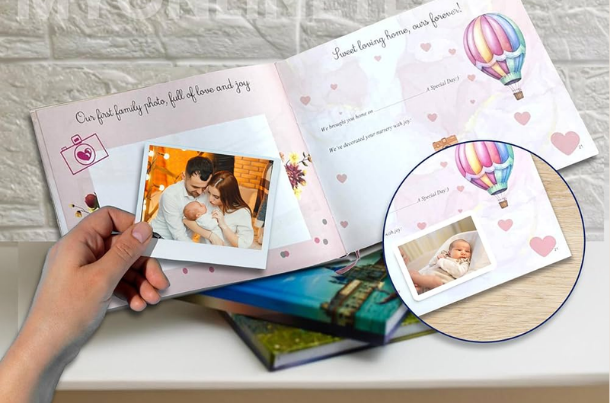
Keeping your baby’s memories organized and private can help you enjoy them with peace of mind. Store your memory book somewhere safe and easy to find. For digital photos and notes, use clearly named folders, keep a backup, and check your sharing settings so you know who has access. A little care now can make these memories easier to revisit and share with the people you choose.
Back Up the Digital Files
Keep an additional copy of your photographs, recordings, and book files in a separate location, such as an external drive or another storage service you control. An album stored only on your phone can be lost with the device. Check that your backup opens, rather than assuming that seeing a folder name means the contents are safe.
If you use a printing service or an online book editor, find out whether you can download the finished pages and original files. Keep those copies before closing an account. You do not need to rely permanently on one company to access your family’s memories.
Separate Saving From Sharing
A picture can belong in a private book without belonging on social media. Be especially thoughtful about bath photographs, health information, identity documents, addresses, or anything your child may later find embarrassing.
Check a digital album’s access settings and avoid treating a shareable link as completely private. Ask before including or sharing photographs of other children. As your child grows, involve them in decisions about which memories remain private and which can be shown to others.
Store the Physical Book Carefully
Keep it in a dry, stable indoor location away from direct sunlight, food, and drinks. Avoid damp basements or hot attics. Store a heavy album flat and support it when opening so that its pages and binding are not strained.
These are useful precautions, not a requirement to create a museum collection. Start by protecting the few items that would be hardest to replace.
What If You’re Starting Months or Years Late?
Begin with what you have.
Look through photographs, calendar entries, saved messages, and notes. Ask someone close to you what they remember.
Be clear when dates are approximate rather than filling in details you aren’t sure about.
A book started later can include the perspective you have now: “I didn’t write this down at the time, but I remember…”
You haven’t lost the chance to make something meaningful because you were busy caring for your child.
Frequently Asked Questions
What should I put in a baby memory book?
Is a digital or printed book better?
How much should I write on each page?
What if I don’t remember an exact milestone date?
Can I make a book without many photographs?
Should I include difficult memories?
What if I never finish it?
How can I include audio and video in a printed book?
Do I need a separate memory book for each child?
Can I include my baby’s hospital bracelet or other small keepsakes?
Final Thoughts
You don’t need to capture every moment to have been present for it. Some days, caring for your baby will take all the time and energy you have, and the memory book can wait.
Let these baby memory book ideas be a gentle starting point. One photograph, one sentence, or one little detail you might otherwise forget is a complete, worthwhile entry. Your family’s real, imperfect moments are worth saving whenever life leaves you room.
For more inspiration, visit Little One Haven and start with one memory that makes you smile.
Resources
American Academy of Pediatrics: Sharenting, 5 Questions to Ask Before You Post
Library of Congress: Care, Handling and Storage of Photographs
National Archives: How to Preserve Family Archives
Disclaimer
This article is for general educational and parenting information only. When creating a baby memory book, keep loose decorations, small keepsakes, cords, albums, and other objects out of your baby’s unsupervised reach. Protect private photographs, identifying information, medical details, and digital recordings by considering carefully where they are stored and who can access them. For valuable or fragile photographs and documents, use appropriate archival materials or seek professional preservation advice rather than attempting repairs with ordinary household tape, glue, or other materials.