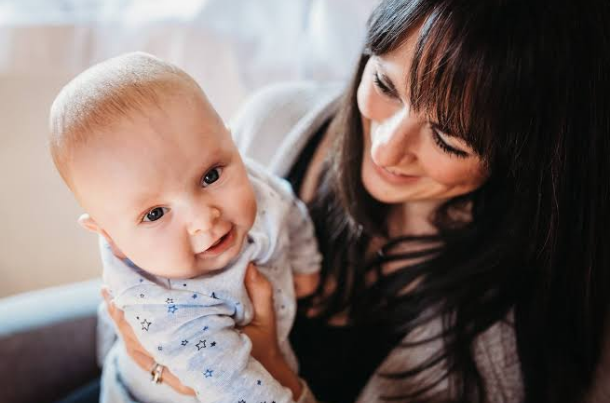
When do babies respond to smiles? If you’ve been leaning over your little one, smiling and waiting for that tiny face to light up, you’re certainly not alone. Many babies begin smiling in response to a familiar face or voice around 6 to 8 weeks. The CDC includes smiling when you talk or smile to your baby as a milestone most babies reach by 2 months.
It is understandable that this moment matters so much. During those early weeks, you give your baby endless care without receiving many obvious responses. A smile can feel like the beginning of a little conversation.
The first attempts may be brief or difficult to recognize. Here’s what to expect, ways to enjoy those early exchanges, and when to ask your pediatrician for guidance.
When Do Babies Respond to Smiles? Understanding the Timeline
A social smile happens during an interaction, for example, when your baby looks toward you and smiles after you speak or smile.
The 2-month milestone refers to a responsive smile during interaction, rather than every fleeting grin you might see in a newborn’s sleep.
That doesn’t mean every baby smiles on the same day or responds every time. At first, you might see one small grin and then spend the rest of the afternoon wondering whether it happened.
Watch during ordinary, comfortable moments rather than repeatedly testing for a response.
Milestones are useful checkpoints, not a demand for a particular expression on an exact day. They also do not replace developmental screening. If you have not seen a responsive smile around the 2-month visit, describe that to your pediatrician and ask what follow-up is appropriate. There is no need to keep trying at home for weeks before raising the question.
The First Weeks: Little Grins Without an Obvious Reason
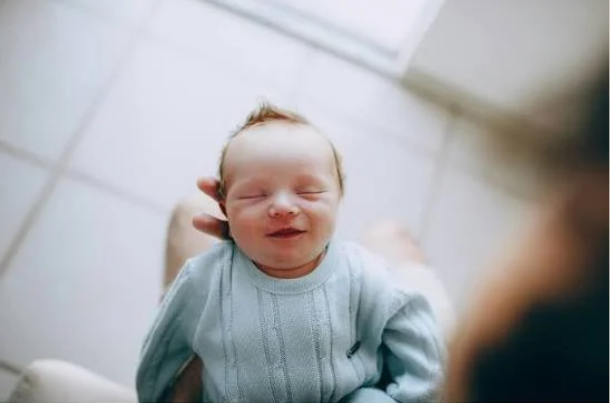
You may notice a fleeting smile while your newborn is sleepy or resting.
These early expressions can be lovely to watch, but they differ from the social smiles that develop later. The American Academy of Pediatrics describes early newborn grins as often random, rather than clearly connected to an interaction.
You don’t need to decide what every expression means. Enjoy the moment, then notice whether a pattern emerges over the following weeks.
Around the Second Month: Smiles During Interaction
Your baby may look at you, hear your voice, and smile.
Sometimes the response is subtle: a slight lift at the corners of the mouth or a brief change in expression. Another time, it may be an unmistakable open-mouthed grin.
The context helps you recognize it. Is your baby awake and engaged with you? Does the smile seem connected to what you just did or said?
You don’t have to capture it on camera for it to count.
Over the Following Weeks: More Back-and-Forth Moments
As interactions develop, you may notice smiles alongside little sounds, movements, and pauses.
You smile, your baby responds, and you answer again. These exchanges don’t need to last long.
These little exchanges can leave you curious about how communication develops beyond smiles. Our guide to when infants say their first word explores the sounds and interactions that come before those first words.
Let the interaction end when your baby seems ready. You don’t have to keep a happy moment going until they become tired.
An Easy Way to Describe What You Notice
| What you notice | How to think about it |
|---|---|
| A brief grin while asleep or drowsy | Enjoy it, while noting that it differs from an awake social exchange. |
| A smile after you speak or smile during calm awake time | This may be the responsive smile you have been waiting for. |
| Smiles sometimes, with a serious face at other times | Consider hunger, tiredness, interest, and the setting. |
| No responsive smile around the 2-month checkpoint | Discuss it with your pediatrician, using corrected age if advised. |
| Loss of a previously established response | Contact the clinician and describe any other changes. |
These observations help explain a concern; they cannot diagnose development on their own.
Why a Social Smile Feels So Special
A smile gives you another way to notice your baby’s response to being with you.
Before this, much of your communication may involve recognizing hunger, tiredness, or discomfort. Now there may be a clearer invitation to share a pleasant moment.
The AAP describes social smiling as part of the developing exchange between babies and caregivers.
Still, your relationship didn’t begin with that first grin. Feeding, holding, changing, and comforting have already given you many opportunities to care for your baby.
A quiet face doesn’t mean those efforts have gone unnoticed.
How Can You Tell Whether It Was a Social Smile?
Look at the whole moment rather than the mouth alone.
Your baby may be awake, looking toward your face, and responding after you speak. You might see a similar reaction during another comfortable interaction later.
A sleepy smile with no clear exchange is different, although equally sweet.
If you’re unsure, describe what happens to your pediatrician: “He watches me while I talk, but I haven’t seen him smile during that yet.”
You don’t need a perfect label. Your observations are useful.
If a smile happens during ordinary play and you already have a short video, you can bring it to an appointment. You do not need to reproduce the response on demand or collect evidence before asking a question. Some babies are less expressive in an unfamiliar clinic than at home.
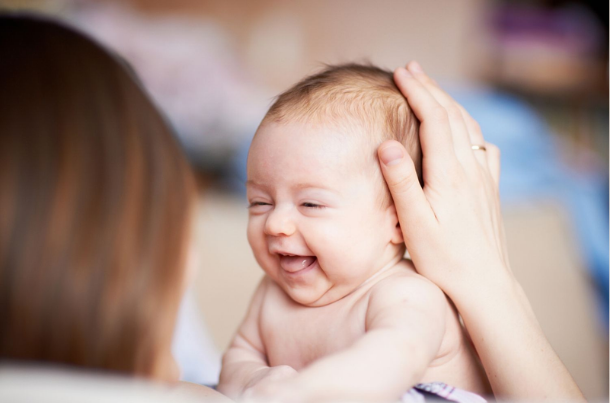
Gentle Ways to Enjoy More Smiling Moments
Your baby’s smile can make an ordinary moment feel special, but you don’t need to spend the day trying to bring one out. Gentle, relaxed interactions give you opportunities to connect while allowing your baby to respond in their own time. Talking, looking at each other, and sharing quiet moments can be enjoyable even when a smile doesn’t follow.
1. Choose a Calm, Awake Moment
Look for a time when your baby is awake, comfortable, and showing interest in what’s around them. If they’re hungry, crying, or getting sleepy, meeting that need may help more than trying to engage them in play.
You don’t need to arrange a special session or wake your baby to practise smiling. Try a brief interaction when they seem settled, and let their response guide how long it lasts.
2. Let Them See Your Face
Hold your baby securely or sit close during supervised awake time so they can comfortably look toward your face. Smile naturally, make a gentle expression, and say a few familiar words.
Give them room to look away and return their attention when they’re ready. Looking away doesn’t mean they aren’t interested in you; it can simply be a cue to pause. There’s no need to move your face repeatedly into their view.
3. Speak in Your Ordinary, Warm Voice
Everyday conversation gives you an easy way to connect. You might say their name, describe the clothes you’re putting on them, or greet them after they wake.
You don’t need to be entertaining or know exactly what to say. A warm tone and a few simple words are enough to begin an exchange. If talking feels awkward at first, choose a familiar phrase and let the conversation grow naturally.
4. Pause After You Smile
After smiling or speaking, wait quietly for a moment. Your baby may respond slowly, and moving quickly from one expression to another can make their smaller reactions easy to miss.
Notice whether they look toward you, move their mouth, make a sound, or change their expression. These moments can be part of a shared interaction too. A smile doesn’t have to be the outcome every time.
5. Respond to Their Sounds and Expressions
When your baby coos, moves their mouth, or looks at you with interest, respond gently. You can copy a soft sound, smile back, or answer with a short sentence.
Then pause again, leaving room for another response. This creates a relaxed back-and-forth exchange. If they begin fussing or seem uncomfortable, stop and check what they need.
6. Include Everyday Care
Connection can happen during ordinary routines, such as getting dressed or having a nappy changed. When your baby is comfortable, try a little conversation, a smile, or a familiar song as you care for them.
There’s no need to turn every routine into a learning activity. Some changes will be hurried, and some will involve crying. You can focus on keeping your baby comfortable and enjoy the pleasant exchanges when they happen.
7. Stop Before the Interaction Becomes Too Much
Follow your baby’s cues rather than continuing until you get a smile. Turning away, fussing, or becoming sleepy can signal that they need a pause, comfort, or rest.
Avoid tickling, repeatedly touching their face, or getting louder to encourage a reaction. Give them space, check their needs, and try again another time. The aim is to enjoy being together, with room for your baby to engage or take a break.
Why Doesn’t My Baby Smile Every Time?
Even after the first clear smile, responses can vary.
Your baby may smile during a quiet morning feed but remain serious when a relative visits. They may be more interested in resting than looking at anyone by evening.
Consider the circumstances before drawing conclusions. Is it a good moment for interaction? Are you seeing a pattern across several days, or judging one tired afternoon?
At the same time, don’t dismiss a persistent concern as personality. Developmental questions deserve a conversation, even when your baby otherwise seems well.
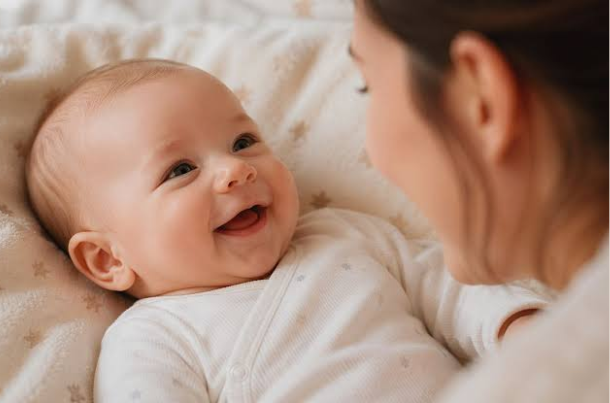
What If My Baby Smiles More at Someone Else?
It can feel unexpectedly personal when you do most of the care but someone else gets the biggest grin.
Try not to turn that moment into a measure of love or attachment. A different expression, voice, or timing may have caught your baby’s attention.
You can enjoy what makes them smile without competing for the response.
Keep some moments camera-free, too. When you aren’t trying to capture an expression, it can be easier to notice the interaction itself.
Does a Smile Tell You Everything About Development?
A social smile is one useful part of the picture. It cannot, by itself, establish that every aspect of development is on track or explain a concern about hearing, vision, movement, or feeding.
Similarly, not seeing a smile during one interaction does not establish a condition or tell you how attached your baby is to you. Look at their responses across ordinary life and share the pattern with their clinician.
For example, you might say: “She watches my face and makes little sounds, but I haven’t noticed a smile back yet.” Or: “He used to smile during changes, and that has stopped along with his usual sounds.” Specific descriptions are more useful than trying to decide whether your baby is a “happy baby.”
What If My Baby Was Born Prematurely?
Your clinician may use corrected age when discussing early milestones.
Corrected age accounts for how many weeks before the due date your baby was born. The AAP explains that this provides useful developmental context during the first two years.
For example, a baby born eight weeks early who is now twelve weeks old has a corrected age of about four weeks.
Ask your pediatrician which age to use. You can still report concerns about looking, listening, interaction, or lost skills whenever they arise.
When Should You Speak With Your Pediatrician?
If you haven’t noticed a smile in response to you by around 2 months, bring it up at your baby’s appointment. Ask how their birth history and corrected age, if relevant, affect the assessment.
The CDC advises discussing missed milestones, lost skills, and other developmental concerns rather than waiting without a plan.
Also mention concerns about looking at faces, responding to sounds, feeding, or general alertness.
One missing behavior cannot establish a diagnosis. A clinician can consider the broader picture, examine your baby, and explain whether screening or follow-up would help.
If your baby had been smiling regularly and then stops, contact their clinician, particularly if other abilities or behavior have changed. One quieter, tired interaction is different from a sustained loss of a response your baby had been using.
Ask what to watch for and when to return if the first assessment is reassuring. If concerns remain, it is reasonable to bring them up again. You do not need to wait for the next routine appointment when a new change worries you.
An unusually unresponsive baby needs urgent attention rather than smiling practice. Seek emergency care if your baby is difficult to wake, has trouble breathing, or becomes blue or grey.
What If You’re Worrying About It All Day?
Waiting for a milestone can make every interaction feel like a test.
If you notice yourself repeatedly checking, put the concern on a short list for your pediatrician. Describe what you see and ask for a clear follow-up plan.
Meanwhile, keep offering ordinary care and comfortable interaction. You don’t need to increase stimulation or spend every awake moment trying for a smile.
Your baby needs support, and you deserve reassurance that is based on their individual development.
If milestone worry is taking over your day or making it hard to rest, tell your own healthcare professional too. You can seek help for your anxiety while still asking appropriate questions about your baby. A clear plan for review may make it easier to step away from repeated checking.
Frequently Asked Questions
When do babies smile back at you?
When do babies start social smiling?
How can I gently encourage my baby to smile?
Is a baby not smiling back always a sign of a problem?
Do smiles during sleep count as social smiles?
Do I need special toys or videos?
Does a first smile mean laughter is coming immediately?
Should I use corrected age for a premature baby’s first smile?
Does smiling more at another person mean my baby prefers them?
What if my baby watches my face but does not smile back yet?
Final Thoughts
A simple smile can carry a surprising amount of hope. After weeks of feeding, changing, and settling, you may be longing for that little response, and it’s understandable to wonder when it will come.
Keep talking, offering comfort, and enjoying the quiet moments alongside the expressive ones. Your connection is already growing through everyday care, even before a clear smile appears.
During your next calm, awake moment, smile naturally, say a few familiar words, and pause. Give your baby room to respond without turning the interaction into a test. If you haven’t noticed a responsive smile around two months, or an established response disappears, discuss it with your pediatrician.
You can celebrate your baby’s progress and ask for guidance at the same time. You deserve clear answers as you get to know your little one.
For more gentle guidance on baby development and everyday care, explore Little One Haven. Find practical ideas to support those small moments of connection, one day at a time.
Resources
American Academy of Pediatrics: When Do Babies First Smile?
American Academy of Pediatrics: Emotional and Social Development, Birth Through 3 Months
Disclaimer
This article is for general educational and baby-development information only and does not replace individualized pediatric or developmental advice. Speak with your baby’s pediatrician if you have not noticed a responsive social smile around the 2-month milestone, have concerns about looking at faces, responding to sounds, feeding, or alertness, or notice a loss of a previously established response or other skill. Corrected age may be relevant for babies born prematurely and should be discussed with your clinician. Seek urgent medical care if your baby is unusually difficult to wake, has trouble breathing, or becomes blue or grey.