
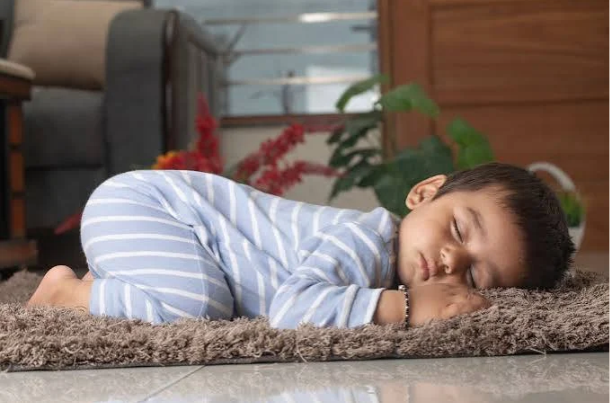
There is something both adorable and slightly puzzling about walking into your baby’s room and finding your baby sleeping with butt in the air, knees tucked underneath, and head turned to one side. It can leave you wondering how that position could possibly feel comfortable. If your baby’s face appears pressed into the mattress or breathing seems affected, check them directly and reposition them; do not assume an unusual pose is safe just because they are mobile.
If you have wondered the same thing, you are certainly not alone. Babies can find the most surprising sleeping positions, especially once they become more mobile.
This curled-up position can be a normal preference in a baby who gets into it independently and can roll comfortably from back to tummy and tummy to back. That ability does not remove the need for a safe sleep environment. However, there are important safe-sleep rules to understand—particularly when it comes to tummy sleeping.
Let’s look at why babies do this, when it is generally normal, and how you can keep your little one’s sleep space as safe as possible.
Why Is My Baby Sleeping With Butt in the Air?
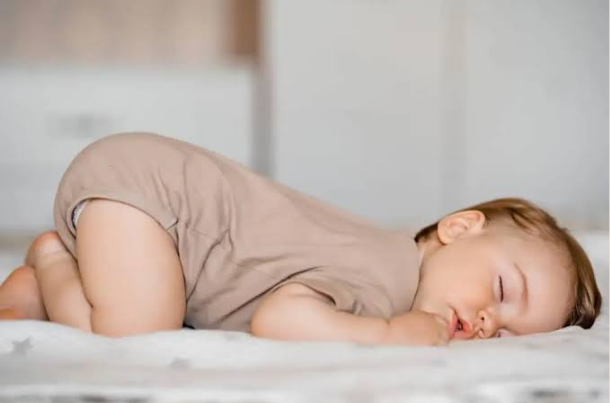
A baby sleeping with butt in the air usually has their knees tucked beneath their tummy, chest resting on the mattress, and bottom raised slightly upward.
It can look like a tiny version of child’s pose from yoga. Some babies stay tightly curled, while others have their knees underneath them with their arms stretched out or tucked beside their face.
As funny as the position may look to us adults, babies are incredibly flexible. A position that would leave us feeling stiff in the morning may feel completely natural and cozy to them.
It also tends to become more noticeable when babies start rolling, sitting, crawling, or experimenting with getting onto their hands and knees.
Why Do Babies Sleep With Their Butt Up?
There is no well-established single explanation for this exact posture. Comfort and growing mobility may contribute, but parents cannot tell what a baby is feeling from the sleeping position alone.
As babies develop, they spend plenty of awake time practicing movements such as rolling, pushing up, getting onto their knees, and eventually crawling. Sometimes those familiar positions seem to follow them right into sleep.
A baby sticking butt in the air while sleeping may simply have curled into a position that feels snug and comfortable.
It Can Feel Cozy
The posture may look snug, and some babies repeatedly settle into it after moving independently. The familiar idea that it recreates the womb is a possible explanation people offer, rather than an established reason for this sleeping position.
Of course, that doesn’t mean your baby’s exact sleeping posture is an intentional recreation of being in the womb. It is simply one possible reason tucked-up positions can feel natural.
Your Baby May Be Practicing New Skills
Have you ever noticed that when your baby learns something new, they seem determined to practice it everywhere?
Rolling becomes an all-day activity. Then comes rocking on hands and knees, pulling up, cruising, and eventually walking.
A baby sleeping on knees and chest may have moved into a familiar position while settling down after a very busy day of practicing new motor skills.
Babies Are Surprisingly Flexible
Adults look at a baby with their bottom in the air and think, My back hurts just looking at that!
Babies, however, have much greater flexibility than we do. Bringing their knees underneath their body can feel perfectly comfortable.
Unless your child appears uncomfortable, has difficulty moving normally while awake, or seems to be in pain, an unusual-looking sleeping position by itself isn’t necessarily a reason to worry.
Is a Baby Sleeping in Child’s Pose Normal?
It can be a normal-looking sleep posture for a baby who reaches it independently and can roll both ways. Crawling, sitting, or getting onto hands and knees alone is not the test for whether you can leave a baby on their tummy during sleep.
You might put your little one into the crib on their back, only to check later and discover a completely different scene. Their knees are tucked underneath them, their bottom is pointing upward, and they look deeply asleep.
It can be tempting to straighten their legs every time you notice it. But the more important question isn’t whether the pose looks unusual, it is whether you are following safe infant sleep practices when you initially put your baby down.
Is It Safe for Babies to Sleep on Their Stomach?
This is where parents need to pay close attention.
Throughout the first year, place babies on their backs for every sleep on a firm, flat, level sleep surface. Back sleeping is the recommended position because it helps reduce the risk of sleep-related infant death.
You should not intentionally place a young baby on their stomach to sleep simply because they appear more comfortable that way.
This is particularly important during the early months when a baby cannot reliably reposition themselves.
What If My Baby Rolls Onto Their Stomach While Sleeping?
This situation causes a lot of anxiety, especially the first few times it happens.
You carefully place your baby on their back, leave the room, and later discover your little acrobat sleeping on their tummy with their bottom sticking up.
If your baby rolls onto stomach while sleeping and can comfortably roll from back to tummy and tummy to back, you generally do not need to spend the whole night repeatedly turning them onto their back.
Still, always begin every sleep by placing your baby on their back.
If your baby can roll only one way, you can return them to their back when you notice they have rolled onto their tummy. If you are unsure about their rolling ability or they repeatedly seem unable to move out of the position, ask your pediatrician for guidance. Do not add anything to hold them in place.
Baby Sleeps on Tummy With Bum in the Air: Should I Move Them?
If your baby sleeps on tummy with bum in the air, what you do depends largely on how they got there.
If you placed your baby in that position, gently return them to their back. Babies should always be placed down for sleep on their backs.
If your older, mobile baby independently rolled over and got into the position, the situation is different. Once babies can confidently roll in both directions, parents don’t generally need to keep repositioning them throughout the night.
You should still make sure the crib itself is set up safely.
And remember, rolling is a sign that swaddling needs to stop. Stop swaddling at the first signs of trying to roll, rather than waiting for a completed roll. Simply leaving the arms out of a tight body wrap is not the same as stopping swaddling. An appropriately sized, nonweighted sleep sack that does not compress the body may be an option.
What Is the Safest Sleeping Position for Babies?
The safe sleeping position for babies is on their back for every nap and nighttime sleep.
Place your baby on a firm, flat sleep surface in a safety-approved crib, bassinet, or other appropriate infant sleep space.
Keep the sleeping area wonderfully boring. Your baby doesn’t need pillows, loose blankets, stuffed animals, crib bumpers, positioners, or other soft objects surrounding them.
It may not look as cozy as the beautiful nursery pictures we sometimes see online, but when it comes to infant sleep, simple really is better.
A Simple Safe-Sleep Checklist
Before leaving your baby to sleep, take a quick look at their sleep space.
- Always place your baby down on their back.
- Use a firm, flat sleep surface with a fitted sheet.
- Keep pillows, quilts, blankets, stuffed toys, bumpers, and other loose or soft items out of the sleep area.
- Stop swaddling when your baby shows signs of trying to roll.
- Avoid overheating your baby.
- Keep your baby’s head and face uncovered during sleep.
- Use suitable sleep clothing or a correctly fitted, nonweighted sleep sack rather than loose bedding if warmth is needed.
- Keep baby in their own sleep space; room-sharing is recommended for at least the first six months.
- Follow the manufacturer’s size and developmental limits, especially when moving from a bassinet to a crib.
- Do not add mattress toppers, extra padding, or weighted sleep products.
These little habits can become second nature surprisingly quickly.
Should I Use a Pillow or Positioner to Stop My Baby Rolling?
No. It might sound logical to put something beside your baby to prevent rolling, but pillows, wedges, rolled blankets, sleep positioners, and similar objects should not be added to the crib.
A clear sleep space gives your baby room to move without soft objects getting near their face.
Do not use straps, rolled towels, or devices to restrain a rolling baby. Do not incline the mattress to manage this posture or suspected reflux.
This is one of those situations where buying another baby product isn’t the solution. A firm, flat, uncluttered sleep space is the better choice.
What If My Baby Keeps Returning to the Butt-Up Position?
You reposition them.
Five minutes later, the little bottom is back in the air.
You reposition them again.
And somehow they return to exactly the same pose.
If your baby is developmentally able to roll both ways and repeatedly chooses this position independently, you usually don’t have to spend your entire night fighting their preferred sleeping posture.
Continue putting them down on their back at the beginning of every sleep and maintain a safe sleep environment.
You may still find yourself checking on them occasionally, because that’s what worried parents sometimes do. But seeing a mobile baby sleeping in a funny position does not automatically mean something is wrong.
Can Sleeping With the Butt Up Mean My Baby Is About to Crawl?
Sometimes the timing overlaps.
Babies preparing to crawl often spend a lot of their awake time pushing onto their hands and knees, rocking backward and forward, or tucking their knees beneath their body.
So you may suddenly notice similar positions appearing during sleep.
However, sleeping with the bottom raised isn’t a reliable milestone test. One baby might sleep like this weeks before crawling, while another crawls without ever adopting the pose.
Enjoy the funny position, but look at your baby’s overall movement and development rather than using their sleeping posture to predict their next milestone.
Could This Position Mean My Baby Has Gas?
Parents sometimes wonder whether a baby pulling their knees toward their tummy is trying to relieve gas.
It is possible for babies with tummy discomfort to draw their legs inward while awake. But a peaceful baby who regularly chooses a butt-up sleeping position isn’t necessarily telling you that their tummy hurts.
Look at the bigger picture.
If your baby is feeding normally, growing well, moving comfortably, and waking in their usual mood, their preferred sleeping pose is more likely to be just that, a preferred pose.
If there is frequent crying, vomiting, feeding difficulty, unusual abdominal swelling, or obvious discomfort, contact your pediatrician rather than assuming the sleeping position is caused by gas.
Tummy Time Is Different From Tummy Sleeping
Give your baby opportunities to explore movement on their tummy while they are awake and you are watching. That is tummy time, rather than a reason to place them tummy-down for sleep.
Keep awake play and sleep arrangements distinct. If your baby falls asleep during tummy time, move them to their appropriate sleep space and place them on their back. Do not practice or arrange the bottom-up pose as a sleep technique.
When Should I Be Concerned?
Most funny sleeping positions are simply part of watching your baby become more mobile. Still, your instincts matter, and there are situations where medical advice is appropriate.
Contact your child’s healthcare professional if your baby seems to be in pain, has unusual stiffness or weakness, suddenly moves differently than usual, cannot reposition themselves normally, or you have concerns about their development.
Call your local emergency number immediately if your baby is not breathing normally, is blue or gray around the lips or tongue, is limp or unresponsive, or cannot be woken normally. Follow the dispatcher’s instructions and begin infant CPR if needed. Do not wait to see whether moving their legs changes the situation.
You never need to feel embarrassed about asking a pediatrician a sleep-safety question. Baby sleep can be confusing, and getting reliable guidance is much better than lying awake worrying.
A Little Reassurance for the Parent Checking the Monitor
There is a stage of parenthood when the baby monitor becomes almost impossible not to check.
You zoom in.
You stare at your baby’s chest.
You wonder whether their neck is comfortable.
Then you wonder how anyone could possibly sleep with their knees underneath them and their bottom pointing toward the ceiling.
That concern comes from love.
Unusual sleeping positions may not be the only thing catching your attention at night. Little whimpers or sudden cries can leave you with questions too. If you have ever wondered what those sounds mean, our guide on can babies have nightmares and why babies cry in their sleep explores another part of baby sleep that parents often find puzzling.
But as your baby becomes stronger and more mobile, their sleep can start looking surprisingly different from the peaceful, perfectly still newborn sleep you remember.
Keep focusing on what you can control: put your baby down on their back, provide a firm and clear sleep space, dress them appropriately, and follow current safe-sleep recommendations.
Once your baby can roll both ways independently, you can generally leave the position they choose after starting sleep on their back. Keep checking that the sleep space remains appropriate, particularly as their mobility changes.
A video or consumer breathing monitor cannot make an unsafe setup safe or reliably rule out a problem. If breathing or responsiveness concerns you, go to your baby and assess them directly rather than relying only on the screen.
Frequently Asked Questions
1. Why does my baby sleep with their bottom raised?
2. At what age can I leave my baby in this position?
3. What if my baby rolls onto their tummy but cannot roll back?
4. Should I straighten their legs during sleep?
5. Can I put my baby down tummy-first if they prefer it?
6. Is crawling enough to make tummy sleeping safe?
7. Can I keep swaddling with the arms out?
8. Would a positioner or special pillow help?
9. Does the pose mean my baby has gas or reflux?
10. Can a baby monitor tell me the position is safe?
Final Thoughts
Seeing your baby sleeping with their bottom in the air can look strange the first few times. For a baby who gets there independently and can roll comfortably in both directions, it may simply be a preferred posture, provided the sleep environment follows safe-sleep guidance.
Your job isn’t to make your baby’s sleeping position look perfect. Your job is to provide a safe environment: always start sleep on the back, use a firm and flat sleep surface, keep the crib free from loose and soft objects, and stop swaddling at the first signs of trying to roll.
And if you find yourself standing beside the crib wondering how those tiny knees could possibly be comfortable tucked underneath that tiny tummy, you’re in good company.
Babies have their own wonderfully funny ways of getting comfortable.
Tonight, give your little one a gentle goodnight, make sure their sleep space is safe, and allow yourself to rest too. You’re watching over someone you love very much, and sometimes that little someone simply prefers sleeping with their adorable bottom in the air.
For more support as you navigate baby care and everyday parenting, explore Little One Haven. Take each new stage one day at a time, with room for questions, cuddles, and those wonderfully funny little moments.
Resources
American Academy of Pediatrics: Swaddling Safety
American Academy of Pediatrics: How to Keep Your Sleeping Baby Safe
NICHD Safe to Sleep: Back Sleeping and Rolling
Disclaimer
This article is for general educational and parenting information only and does not replace individualized medical or safe-sleep advice. Always place your baby on their back for every sleep during the first year and use a firm, flat, level sleep surface with no pillows, loose blankets, bumpers, positioners, weighted products, or other soft items. Speak with your pediatrician if your baby cannot comfortably reposition themselves, has unusual stiffness or weakness, seems to be in pain, or you have concerns about development or sleep safety. Call emergency services immediately if your baby is not breathing normally, becomes blue or gray around the lips or tongue, is limp or unresponsive, or cannot be woken normally.
About the Author
Geeta Yogi writes warm, practical parenting content about baby sleep, infant development, newborn care, feeding, safety, and everyday family concerns. She focuses on clear, reassuring guidance that helps parents understand common baby behaviors while recognizing when professional medical or safe-sleep advice may be needed.
