

Learning how to say no without hurting your child can feel difficult, especially when your little one looks at you with hopeful eyes. But saying “no” does not have to feel harsh or cold. With calm words, gentle boundaries, and a loving tone, you can guide your child while still making them feel safe, heard, and deeply loved.
There’s a moment every parent knows…
Your child looks at you with hopeful eyes and says,
“Can I have this?”
And deep inside, you already know the answer is… no.
But instead of saying it confidently, you hesitate.
Because you’re not just saying no to a request
You’re afraid you might hurt their feelings.
If you’ve ever felt this way, you’re not alone.
Learning how to say no without hurting your child is something every parent struggles with, and the truth is, it’s not about avoiding “no”…
It’s about saying it with love.
Learning how to say no to kids in a calm and respectful way helps build trust and emotional security over time.
Why Saying “No” Doesn’t Make You a Bad Parent
Many parents feel a quiet guilt when they say “no” to their child. It can bring up thoughts like, “Am I being too strict?” or “What if my child feels hurt or rejected?” These feelings are completely natural, because as parents, we want to protect our child’s happiness at all costs.
But here’s something gentle and important to remember: children don’t grow stronger with constant “yes.” They grow with guidance, structure, and safe boundaries.
Saying “no” is not about denying your child, it’s about teaching them. When you set limits, you’re helping your child understand that not every desire can or should be fulfilled instantly. This builds patience, self-control, and the ability to handle disappointment in a healthy way.
Over time, these small moments shape emotional strength. Your child learns how to manage frustration, respect boundaries, and make better choices. These are life skills they’ll carry far beyond childhood.
What truly matters is howyou say no. A calm, respectful tone reassures your child that they are still loved and understood, even when the answer isn’t what they wanted. On the other hand, harsh words or anger can make them feel rejected.
So don’t be afraid of saying no. When done with warmth and care, it becomes one of the most powerful ways to guide your child, not away from you, but toward a stronger, more secure version of themselves.
When you understand how to say no without hurting your child, boundaries begin to feel less like rejection and more like gentle guidance.
The Real Secret: It’s Not “No”… It’s HOW You Say It
The word “no” isn’t the problem, how you say it is.
Children don’t just hear your words, they feel your tone. A harsh or rushed “no” can feel hurtful, but a calm and gentle one feels safe.
When you say no with patience, eye contact, and understanding, your child still feels loved, even if they’re disappointed.
A respectful “no” teaches boundaries while keeping your connection strong.
Because in the end, it’s not the word that matters… it’s the feeling behind it.
This is why how to say no without hurting your child depends more on your tone, timing, and connection than the word “no” itself.
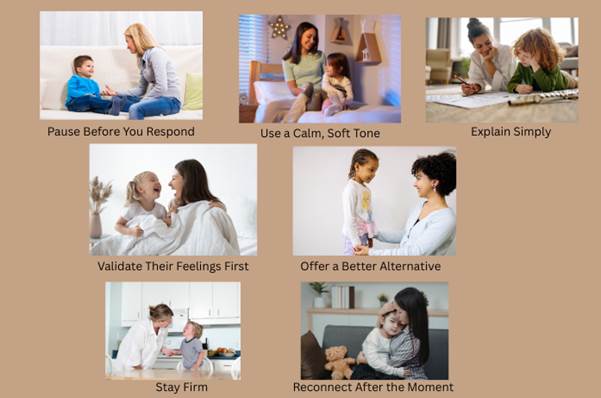
How to Say No Without Hurting Your Child: 7 Gentle Ways
Saying “no” is part of parenting, but it doesn’t have to feel harsh.
When said with calmness and understanding, “no” can guide your child while still making them feel safe and loved.
It’s not about avoiding limits… it’s about expressing them gently.
1. Pause Before You Respond
Before you say anything, take a small breath and give yourself a moment.
As parents, we often react instantly, especially when we’re tired, overwhelmed, or hearing the same request again and again. And in those moments, our “no” can come out sharper than we intend.
But when you pause, even for a few seconds, it helps you shift from reacting to responding.
Instead of saying, “No! How many times have I told you?”You can take a breath… soften your tone… and reply more calmly.
That tiny pause may seem simple, but it changes the entire feeling of the interaction. Your child doesn’t feel scolded, they feel guided.
And over time, this builds a calmer, more respectful connection between you and your child.
2. Use a Calm, Soft Tone
Children don’t just listen to your words, they feel the emotion behind them.
When your tone is sharp or impatient, a simple “no” can feel scary or rejecting. But when your voice is calm and gentle, it reassures your child that they are still safe and loved, even if they don’t get what they want.
A soft tone sends a powerful message: “I’m here with you. I care about you.”
For example, instead of reacting harshly, you can say, “I can’t let you do that, it’s not safe.” This sets a clear boundary while still maintaining warmth and connection.
Over time, this approach helps your child accept limits more easily and builds a sense of trust and emotional security.
3. Explain Simply (But Don’t Over-Explain)
Children don’t need long lectures to understand, they need clear and simple reasons.
When you keep your explanation short, it’s easier for your child to process and accept. Too many words can confuse them or even lead to more resistance.
For example, saying “We can’t buy this toy today”or “It’s bedtime now because your body needs rest”gives them a clear reason without overwhelming them.
Simple explanations build trust. Your child starts to understand that your decisions are thoughtful and consistent, not random or unfair.
Over time, this helps them accept limits more calmly and feel more secure in your guidance.
4. Validate Their Feelings First
This is where many parents find it difficult, we often say “no” quickly, but forget to acknowledge how our child feels.
For a child, emotions come first. When they feel upset, disappointed, or frustrated, they’re not just reacting to the situation, they’re trying to be understood.
By simply recognizing their feelings, you help them feel seen and heard.
You can say things like, “I know you really want that”or “It’s hard when you can’t get what you want.”
This doesn’t mean you’re giving in, it means you’re connecting.
When children feel understood, their resistance naturally softens. They become more open to listening because they don’t feel ignored or dismissed.
This small step is a powerful part of positive discipline, it teaches your child that their emotions matter, even when the answer is still no.
A big part of how to say no without hurting your child is helping them feel understood before you hold the boundary.
5. Offer a Better Alternative
For a child, “no” can feel like everything has suddenly stopped.
But when you add a simple alternative, it turns that “no” into guidance instead of rejection.
Instead of just saying “No jumping on the bed,” you can gently redirect:
“No jumping on the bed… but we can jump outside.”
Or, “No candy right now… but you can have some fruit.”
This helps your child understand what they can do, not just what they can’t.
It keeps the moment positive, reduces frustration, and teaches problem-solving in a natural way. Over time, your child learns that limits don’t mean the end, they just mean finding a better option.
6. Stay Firm (Even When They Cry)
This is often the hardest moment for any parent.
When your child cries, it touches your heart deeply, and the instinct to give in feels very strong. You want to comfort them, to make the tears stop.
But this is where consistency becomes important.
Staying calm and firm doesn’t mean ignoring their emotions. It means holding the boundary while still being emotionally present. You can say, “I understand you’re upset… but the answer is still no.”
This teaches your child an important life skill, how to handle disappointment without everything changing around them.
Over time, your child learns that your decisions are steady and reliable. And that builds real, long-term trust and emotional strength.
Staying firm with kindness is one of the most important parts of how to say no without hurting your child.
7. Reconnect After the Moment
After the emotions settle and the moment passes, take time to reconnect with your child.
A simple hug, sitting close together, or even a warm smile can make a big difference. It reassures your child that even though you said “no,” your love and connection haven’t changed.
These small gestures send a powerful message: “I’m still here for you. I still love you.”
This step helps your child feel secure and emotionally safe. It also strengthens your bond, showing them that boundaries and love can exist together, and that’s what truly builds trust over time.
A Real-Life Parenting Moment (You’ll Relate to This)
Imagine this…
You’re at a store, just trying to finish your shopping. Your child spots a toy, and suddenly, it’s the only thing they want. You say no… and within seconds, the meltdown begins.
Tears, loud cries, people staring, you feel embarrassed, maybe even judged. In that moment, it’s so tempting to give in just to make everything stop.
But instead, you choose connection.
You kneel down, meet your child at their level, and say calmly, “I know you really want this. It looks fun, right? But we’re not buying toys today.”
Your child may still cry, and that’s okay.
What matters is that you stayed calm, you acknowledged their feelings, and you held your boundary with respect.
After a few minutes, the storm passes. Your child settles.
And that moment?
It’s not a failure.
It’s a powerful example of patient, confident parenting.
Because real parenting isn’t about avoiding tears, it’s about guiding your child through them with love, consistency, and calm.

Common Mistakes That Hurt More Than “No”
Sometimes, it’s not the word “no” that hurts a child, it’s how we handle the moment around it.
When emotions run high, it’s easy to fall into reactions like shouting, ignoring their feelings, or giving in just to stop a tantrum. Some parents may even use fear, like “I’ll leave you here!” out of frustration.
But these responses don’t actually teach discipline.
Shouting can make a child feel scared instead of guided. Ignoring their feelings can make them feel unheard. Giving in after a tantrum teaches them that crying changes decisions. And using fear can create insecurity instead of trust.
If you find yourself raising your voice during difficult moments, you’re not alone. Many parents experience this, especially when emotions run high. Exploring gentle ways to discipline a child without shouting can help you handle challenging situations while maintaining a calm and loving connection with your child.
Over time, this can confuse children. They don’t learn clear boundaries, they just learn to react emotionally.
Gentle parenting isn’t about being perfect. It’s about being aware of these patterns and choosing responses that build trust, emotional safety, and understanding.
What Happens When You Say No the Right Way?
When you say “no” with calmness, respect, and connection, something beautiful starts to happen over time.
Your child begins to understand that boundaries are a normal part of life, not something to fight against. They learn that it’s okay to feel upset, frustrated, or disappointed, because their emotions are accepted, not ignored. And most importantly, they feel secure in knowing that your love doesn’t change, no matter what.
Slowly, you’ll start to notice small but meaningful changes.
Tantrums may not disappear overnight, but they become less intense and less frequent. Your child starts trusting your words because they see your responses are consistent and calm. And the connection between you grows stronger, built on understanding rather than fear.
This is how confidence is nurtured.
When children feel safe, heard, and guided with patience, they develop emotional strength and self-control. Using positive discipline techniques and calm communication doesn’t just manage behavior, it helps your child grow into a secure, confident individual over time.
Frequently Asked Questions (FAQs)
1. Is it bad to say “no” to your child often?
No, saying “no” is not harmful when done in a calm and respectful way. Children need boundaries to feel safe and secure. The key is how you say it, not how often.
2. What is the best way to say no to a child without hurting them?
The best way is to:
- Use a calm tone
- Give a simple explanation
- Acknowledge their feelings
- Offer an alternative when possible
This helps your child understand and accept your decision more easily.
3. What should I do when my child cries after hearing “no”?
This is completely normal. Stay calm, acknowledge their feelings, and remain consistent with your decision. Over time, your child will learn how to handle disappointment.
4. Do I always need to offer an alternative after saying no?
Not always, but it helps when you can. Offering an alternative redirects your child’s attention and reduces frustration.
5. Does saying no make a child stubborn?
No, consistent and gentle boundaries actually reduce stubborn behavior. Children feel more secure when they know what to expect.
6. Is it okay to raise your voice when saying no?
It’s better to avoid shouting. A calm and firm tone is more effective and helps maintain trust between you and your child.
7. At what age should I start saying no to my child?
You can start as early as 1–2 years old. At this stage, children begin to understand simple limits and boundaries.
8. What if my child throws tantrums every time I say no?
Stay consistent and don’t give in immediately. Acknowledge their emotions, but keep your boundary firm. Tantrums usually decrease with time and consistency.
9. Will saying no affect my child’s confidence?
No, when done with empathy and respect, saying no actually builds confidence by providing clear boundaries and emotional security.
10. Is saying no allowed in gentle parenting?
Yes, absolutely. Gentle parenting is not about avoiding “no, it’s about saying it in a respectful, calm, and understanding way.
11. How to say no without hurting your child in gentle parenting?
You can say no without hurting your child by using a calm tone, validating their feelings, giving a simple reason, and staying loving but firm.
Final Thoughts: You Don’t Need to Be Perfect
Some days, you’ll respond with calm and patience.
Other days, you might feel overwhelmed and lose your cool.
That doesn’t make you a bad parent, it makes you human.
Parenting isn’t about getting everything right every time. It’s about showing up, learning, and staying connected with your child through both the easy and difficult moments.
When you say “no,” you’re not pushing your child away. You’re guiding them, teaching them, and helping them grow in a safe and secure way.
And that’s what truly matters.
Because in the end, it’s not perfection your child needs, it’s your presence, your love, and your willingness to keep trying.
If you loved this guide and want more simple, real-life parenting advice, visit
littleonehaven
Resources