

Mornings with a 5-year-old can be wonderfully unpredictable. One day, your child is dressed before you’ve finished making breakfast. The next, you’re searching for a missing shoe while they’re deeply concerned about whether dinosaurs ever got hiccups.
If your mornings often feel rushed, creating a simple morning routine for a 5 year old can make a surprisingly big difference. At this age, children are becoming more independent, but they still need plenty of reminders, encouragement, and sometimes a cuddle before they are ready to face the day.
The goal isn’t to create a perfectly timed household where everyone marches through the morning like clockwork. It’s simply to give your child a familiar rhythm so they know what comes next, and to make school mornings feel a little calmer for everyone.
Why Does a Morning Routine Matter for a 5-Year-Old?
Five-year-olds are still learning how to organize themselves. Something as simple as “get ready for school” can actually mean several different tasks: use the bathroom, get dressed, eat breakfast, brush teeth, find shoes, grab a backpack, and remember the water bottle.
That’s a lot for a little brain to manage.
A predictable routine breaks the morning into manageable pieces. Instead of hearing a stream of instructions, your child gradually begins to understand the order of the day.
A good morning routine for kids can also create a sense of security. When children know that breakfast follows getting dressed, or that shoes go on after teeth are brushed, mornings become more familiar and less overwhelming.
And over time, you may notice something lovely happening: your child starts doing a few of those things without being asked.
The same gentle approach can help with routines after school, too. If your child brings home simple reading or homework tasks, our guide to creating a daily study routine for kids offers ideas for balancing learning with rest and play.
A Simple Morning Routine for a 5 Year Old
Every family has a different schedule, so there is no single “correct” routine. Your morning might begin at 6:30 a.m., 7:00 a.m., or much later depending on school hours, travel time, and your family’s needs.
Here’s an example you can adjust to fit your home. It allows one hour from waking to leaving; some families need more or less. Work backward from your actual departure time, and protect enough sleep rather than copying the clock times.
6:45 a.m. – Wake Up Gently
If possible, give your child enough time to wake without immediately rushing them out of bed.
Some children bounce awake ready to talk. Others need several quiet minutes, a cuddle, or a little time staring at the ceiling before they are prepared to move.
Open the curtains, offer a cheerful good morning, and keep the first few minutes simple. Starting calmly can help set the mood for everything that follows.
6:50 a.m. – Bathroom and Getting Dressed
After waking up, encourage your child to use the bathroom and get dressed.
At five, many children enjoy doing things independently but may still need help with buttons, zippers, socks, or clothes that somehow become mysteriously “impossible” to put on when everyone is in a hurry.
Try laying out clothes the night before. It removes one decision from the morning and can prevent a lengthy debate over which shirt to wear.
7:05 a.m. – Eat Breakfast
Breakfast doesn’t have to be elaborate to be worthwhile.
Choose foods your child enjoys while aiming for a balanced meal that helps them start the day comfortably. Depending on your family’s usual foods, that might be oatmeal and fruit, eggs and toast, yogurt with fruit, or another simple breakfast.
Keep a few quick options available for particularly busy mornings. Some days there simply isn’t time for the breakfast you imagined, and that is completely okay. Offer manageable portions and enough seated time to eat, without pressure to finish everything. If breakfast at home is difficult, check whether school offers it and plan accordingly. Do not rush eating or ask your child to eat while walking to the car.
7:25 a.m. – Brush Teeth and Wash Up
After breakfast, it’s time to brush teeth, wash the face if needed, and take care of hair.
Keeping toothbrushes, toothpaste, brushes, and hair accessories in predictable places can save more time than you might expect.
Your child may want to handle everything alone. Let them practice, but help with brushing rather than assuming they can clean every tooth well at five. Brush twice daily with fluoride toothpaste; children aged 3–6 should use a pea-sized amount, with adult supervision and encouragement to spit it out. The morning brush is one part of that routine, not a replacement for bedtime brushing.
7:35 a.m. – Shoes, Backpack, and Final Check
Now comes the part when missing objects seem to develop magical powers.
“Where are your shoes?”
“I don’t know.”
“Where is your water bottle?”
“I don’t know.”
A designated spot near the door for school essentials can make this part of the morning routine for kindergarten much easier. Keep backpacks, shoes, jackets, and other everyday items together whenever possible.
7:45 a.m. – Leave for School
Try to build a small cushion into your departure time.
Leaving five or ten minutes earlier than absolutely necessary can completely change the feeling of a morning. Instead of racing toward the door, you have room for the forgotten library book, the last-minute bathroom trip, or the sudden need to tell you an extremely important story.
That little buffer can make a school morning routine feel less rushed. It cannot prevent every difficult morning, but it leaves room for ordinary delays.
A Simple Morning Checklist for a 5 Year Old
At five, children usually respond better to short, clear instructions than a long list of reminders.
A basic morning checklist might include:
- Wake up and use the bathroom
- Get dressed
- Eat breakfast
- Brush teeth
- Brush or comb hair
- Put on socks and shoes
- Grab backpack and water bottle
- Head out the door
You can make the checklist more child-friendly by adding pictures beside each task. A shirt can represent getting dressed, a toothbrush can mean brushing teeth, and a backpack can signal that it’s almost time to leave.
Keep the list somewhere your child can easily see it. If eight steps feel overwhelming, group them into three pictures: bathroom and clothes, breakfast and teeth, shoes and bag. Point to the current step and help your child start. A chart is a reminder, not a test of whether they can manage everything alone.
Try a Morning Routine Chart for Kids
A morning routine chart for kids can be especially helpful if you feel like you repeat the same instructions twenty times before breakfast.
Instead of constantly saying, “Go brush your teeth,” you can gently ask, “What comes next on your chart?”
That small change puts some responsibility into your child’s hands without expecting them to remember everything independently.
You can even let your child help create the chart. Allow them to draw pictures, choose stickers, or check off each completed task. When children feel involved in a routine, they may be more interested in following it.
How to Get a Child Ready for School Without Constant Rushing
If getting out the door feels stressful every morning, look at what can happen before your child even wakes up.
Packing the backpack, choosing clothes, checking school notices, filling what can be prepared ahead of time, and placing shoes by the door can eliminate several morning decisions.
Think of nighttime preparation as a little gift to your morning self.
You don’t have to prepare absolutely everything. Even doing two or three things ahead of time can make the next morning noticeably easier.

Healthy Morning Habits for Kids Start With Sleep
A peaceful morning often begins the night before.
A child who is tired may understandably find getting dressed, following instructions, and managing small disappointments more difficult. Keeping bedtime and wake-up times reasonably consistent can help children know what to expect.
Children aged 3–5 generally need 10–13 hours of sleep per 24 hours, including any naps. If your five-year-old no longer naps, that sleep needs to fit into the night. For a 6:45 a.m. wake-up, being asleep by 8:45 p.m. provides 10 hours; a child who needs more requires an earlier sleep time. Allow additional time for the bedtime routine and falling asleep.
Try to make evenings predictable too: dinner, quiet play, bath or wash-up, pajamas, teeth, a story, cuddles, and bedtime—whatever sequence works comfortably in your home.
Healthy morning habits for kids aren’t about squeezing lots of “productive” activities into the first hour of the day. Sleep, nourishment, hygiene, connection, and enough time to get ready are already plenty.
Give Your 5-Year-Old Small Responsibilities
Five is such a sweet in-between age. Your child is no longer a toddler, but they are certainly not a big kid who can manage an entire morning alone.
Give them small jobs they can realistically handle.
They might choose between two outfits, put pajamas away, carry their breakfast dish to the kitchen, put on shoes, check their backpack, or mark tasks off their morning chart.
These little responsibilities become part of a healthy 5 year old daily routine and give children opportunities to practice independence.
Just remember that independence develops gradually. Needing reminders at five is completely normal.

What If Your 5-Year-Old Is Very Slow in the Morning?
Sometimes the problem isn’t the routine, it’s the pace.
You might be thinking, “We have plenty of time. Why does putting on one sock take seven minutes?”
Young children don’t experience time the same way adults do. They can become distracted halfway through getting dressed because they noticed a toy, remembered a story, or decided this was the perfect moment to examine something under the bed.
Instead of repeating “Hurry up!” all morning, give specific instructions.
“Please put on your socks and shoes” is much easier to follow than “Come on, we’re going to be late!”
Visual timers can help some children see the time available. Introduce one during a calm moment, explain what happens when it finishes, and keep the interval realistic. If it makes your child anxious, use a picture cue or gentle reminder instead. Avoid turning getting ready into a race or comparing siblings’ speed.
Sometimes the next step needs to be smaller still: “Put one foot into this sock.” Stay nearby to help them begin, then gradually reduce that help when the task becomes familiar.
Keep Choices Small
Choices can encourage independence, but too many choices can slow everything down.
Instead of asking, “What do you want for breakfast?” when you have ten options, try offering two.
“Would you like oatmeal or toast?”
The same approach works with clothes, hairstyles, and other small decisions. Your child still gets some control, while the morning continues moving forward.
Build Connection Into Your School Morning Routine for Children
A routine shouldn’t be only about completing tasks.
Children are often moving from the safety and familiarity of home into a busy school environment filled with people, sounds, expectations, and activities.
A little connection before leaving can help.
Maybe it’s a cuddle while they wake up. Maybe you sit together for breakfast. Perhaps you have a silly goodbye phrase, sing a song in the car, or say, “I love you. Have fun today,” before they walk through the school gate.
Those tiny rituals can become the parts of childhood they remember.
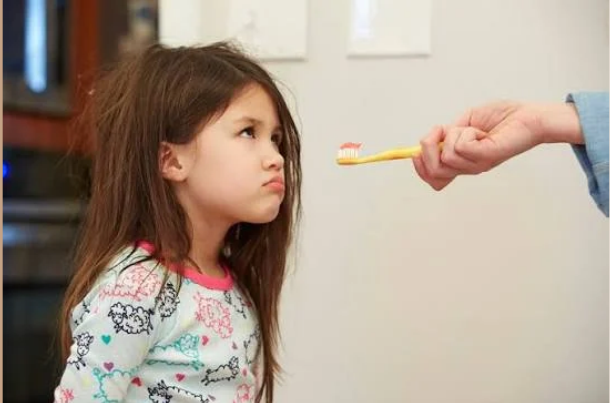
What If My Child Refuses to Follow the Morning Routine?
Resistance doesn’t automatically mean your routine isn’t working.
Your child might be tired, worried about school, frustrated about stopping play, or simply testing their growing independence.
Try to stay calm and keep instructions short. Rather than giving five directions at once, focus on the next task: “First, let’s get dressed. Then we’ll have breakfast.”
If one part of the morning repeatedly causes conflict, pay attention to it.
For example, if getting dressed is a daily struggle, choosing clothes together the night before may help. If breakfast takes forever, simplifying your breakfast choices might solve more than repeated reminders ever could.
Sometimes a small adjustment helps. Repeated distress also deserves curiosity: do clothes feel scratchy, is a task physically difficult, or is your child worried about something at school? Discuss recurring problems at a calm time and involve the teacher when school worries seem to be part of the pattern.
Support can include softer clothing, more time, fewer spoken instructions, or hands-on help. Children with sensory, motor, communication, or developmental differences may need an individualized routine. Needing that support is not misbehavior or a parenting failure.
Don’t Make the Schedule Too Strict
A routine should support your family, not control it.
There will be mornings when your child wakes up grumpy. Someone will spill breakfast. A shoe will disappear. Your child will suddenly announce that today is the day they were supposed to bring something special to school.
Real family life doesn’t always follow a timetable.
Think of your routine as an order of events rather than a minute-by-minute rulebook. Knowing what happens next is often more important than doing everything at exactly 7:12 a.m.
A Sample 5-Year-Old School Morning Schedule
Here’s an easy schedule you can use as a starting point:
6:45 a.m. – Wake up and cuddle
6:50 a.m. – Bathroom and get dressed
7:05 a.m. – Breakfast
7:25 a.m. – Brush teeth, wash face, and do hair
7:35 a.m. – Shoes, backpack, and final check
7:45 a.m. – Leave for school
Adjust these times based on when your child wakes up and when you need to leave.
Some children need more transition time than others. If you move wake-up earlier, adjust bedtime too so you do not reduce total sleep. First look for ways to simplify preparation or remove an unnecessary task; an earlier alarm is not always the answer.
The Best Routine Is the One Your Family Can Actually Follow
It’s tempting to see beautiful routine charts online and think you should add morning stretches, reading practice, affirmations, chores, a homemade breakfast, and ten minutes of educational activities before school.
You really don’t have to.
A good morning routine for kids can be wonderfully ordinary.
Wake up. Get dressed. Eat. Brush teeth. Gather belongings. Share a little love. Leave with enough time that nobody feels like they’re participating in an Olympic sprint.
That’s a successful morning.
What to Do When You Are Already Running Late
Keep a shorter version of the routine for difficult mornings. Focus on getting dressed, bathroom needs, food or a confirmed school-breakfast plan, toothbrushing, essential belongings, and a safe departure. Leave optional hairstyles, chart decorating, or extra chores for later.
Use one calm instruction at a time and help more than usual if needed. You might say, “We have less time today, so I’ll help with your shoes.” That is practical teamwork rather than taking away independence.
Never trade safe travel for punctuality. Use the appropriate car restraint and keep road-crossing supervision consistent. If you will be late, let school know when it is safe to do so. A stressful morning can still end with a brief, reassuring goodbye.
When Morning Difficulties Need Extra Support
Ask your pediatrician about persistent daytime sleepiness, regular loud snoring, observed breathing pauses during sleep, or ongoing difficulty waking despite enough sleep opportunity. These problems may need assessment rather than another routine chart.
If your child repeatedly cries about school, complains of pain, or cannot manage attendance, speak with their teacher and healthcare professional. Look for the reason without assuming they are being difficult. A predictable routine can help, but it does not replace support for sleep, health, learning, or emotional concerns.
Frequently Asked Questions
1. What time should a 5-year-old wake up for school?
2. How long should the morning routine take?
3. Can my child follow a morning routine independently at five?
4. What should a morning routine chart include?
5. What if my child ignores the chart?
6. Should I wake my child earlier if they are slow?
7. How do I handle breakfast refusal?
8. Are timers and rewards necessary?
9. Should the weekend routine be identical?
10. What if every school morning ends in tears?
Final Thoughts
Creating a morning routine for a 5 year old isn’t about raising a child who never needs reminders or making every school morning perfectly peaceful. Five-year-olds are still little. They will get distracted, move slowly, change their minds, and occasionally need you to help with something they managed perfectly well yesterday.
A predictable routine simply gives both of you something steady to return to.
Start small, prepare what you can the night before, give your child age-appropriate responsibilities, and leave a little extra room for the unexpected.
And when a morning completely falls apart? Send your little one off with a hug, reset, and try again tomorrow.
Because a good childhood isn’t made from perfectly organized mornings. It’s made from thousands of ordinary ones filled with patience, connection, laughter, mismatched socks, and a parent who keeps showing up with love.
For more gentle parenting tips and practical ideas for everyday family life, explore Little One Haven. Take what works for your family, one small step, and one school morning, at a time.
Resources
American Dental Association: Fluoride Toothpaste and Age-Appropriate Amounts
American Academy of Pediatrics: The Importance of Family Routines
American Academy of Sleep Medicine: Child Sleep Duration Health Advisory
Disclaimer
This article is for general educational and parenting information only and does not replace individualized medical, developmental, dental, nutritional, or educational advice. Speak with your child’s pediatrician, dentist, teacher, or another qualified professional if morning difficulties are persistent, your child regularly seems excessively tired, snores loudly, has pauses in breathing during sleep, repeatedly refuses school, experiences ongoing pain or distress, or has developmental, sensory, motor, communication, feeding, or learning needs that make everyday routines difficult.
About the Author
Geeta Yogi writes warm, practical parenting content about children’s routines, sleep, learning, development, behavior, and everyday family life. She focuses on realistic, supportive guidance that helps parents build manageable routines while giving young children room to develop independence at their own pace.
