
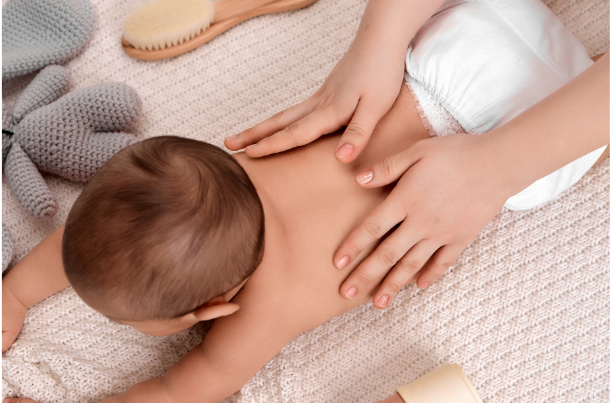
A newborn may not understand words yet, but they understand the warmth of your hands, the comfort of your voice, and the feeling of being held close. Touch is one of the earliest ways parents communicate love and safety, and a gentle oil massage can turn that natural connection into a calming care routine.
Baby massage involves using slow, gentle strokes on your baby’s legs, arms, back, chest, and feet. A small amount of suitable baby massage oil may be used to reduce friction and help your hands move comfortably over delicate skin.
For many Indian families, newborn oil massage is also a tradition passed from one generation to the next. Although tradition can provide useful guidance, every baby is different. The pressure, massage technique, oil, and timing should always be chosen according to your baby’s age, skin, health, and comfort.
When performed safely, the benefits of oil massage for baby may include relaxation, better parent–baby bonding, comfortable movement, and support for dry skin.
relaxation, better parent–baby bonding, improved sleep, comfortable movement, and support for dry skin. Let us explore these potential benefits and learn how to create a safe massage routine.

Is Oil Massage Good for Newborn Babies?
Gentle massage can be a positive experience for many healthy, full-term newborns. It gives parents uninterrupted time to observe their baby’s expressions, movements, and responses while offering comforting physical contact.
However, oil is not responsible for every benefit associated with massage. Many emotional and relaxation benefits come from the gentle touch, eye contact, familiar voice, and focused attention involved in the routine. The oil mainly helps reduce friction and may moisturize the skin when an appropriate product is used.
Premature babies, babies receiving neonatal care, and newborns with eczema, rashes, infections, or other medical conditions may need special guidance. Parents should consult their pediatrician before beginning massage in these situations.
The benefits of oil massage for baby depend largely on gentle touch, a suitable product, and how comfortably your baby responds.
5 Benefits of Oil Massage for Baby
Baby massage can be a simple and comforting way to spend quiet, focused time with your little one. When done gently and with a suitable oil, it may support relaxation, bonding, comfortable movement, mild tummy comfort, and dry skin care. These benefits can vary from baby to baby, so the goal is not to follow a perfect massage routine but to pay attention to your baby’s cues and keep the experience calm, safe, and enjoyable.
1. Creates a Stronger Parent–Baby Bond
One of the most meaningful infant massage benefits is the opportunity it creates for bonding.
During a massage, your baby receives your complete attention. They hear your voice, recognize your smell, make eye contact, and become familiar with your gentle touch. These repeated moments can help your baby feel protected and emotionally secure.
Massage may be especially valuable for a parent who initially feels unsure about handling a tiny newborn. As you begin recognizing when your baby is relaxed, overstimulated, hungry, or ready to stop, you may become more confident in responding to their needs.
Massage does not have to be performed only by the mother. Fathers and other primary caregivers can use it as a quiet way to develop their own loving connection with the baby.
2. May Encourage Relaxation and Better Sleep
Newborn sleep can be unpredictable, and massage is not a guaranteed way to make a baby sleep through the night. Nevertheless, gentle massage may help some babies feel calmer and settle more comfortably.
Slow strokes, a warm room, soft conversation, and close contact can create a relaxing experience. The American Academy of Pediatrics notes that infant massage may help babies feel calmer, relax their muscles, and ease into more restful sleep.
A massage can become part of a simple bedtime pattern:
- Dim the lights.
- Reduce noise and stimulation.
- Give your baby a short, gentle massage.
- Dress them in comfortable sleepwear.
- Continue with feeding, cuddling, or another familiar bedtime step.
Over time, this consistent routine may help your baby recognize that it is time to relax. However, massage should always follow the baby’s cues. If your little one becomes more alert or irritated during an evening massage, try it at a different time.
3. Supports Comfortable Movement and Body Awareness
Babies gradually discover how their bodies move. Gentle massage introduces safe sensory stimulation while allowing their arms and legs to move naturally.
Lightly stroking the limbs and carefully bending and straightening them—without forcing any joint—may help relax the muscles and encourage comfortable movement. The experience can also help babies develop awareness of different parts of their bodies.
Massage is not a replacement for tummy time, free movement, or medical physiotherapy. Parents should never pull, twist, vigorously shake, or press a baby’s limbs in an attempt to make them stronger. A newborn’s bones, joints, and muscles are still developing, so every movement should be slow and gentle.
If your baby appears to have unusual stiffness, weakness, restricted movement, or pain, speak with a pediatrician rather than trying to correct it through massage.
4. May Ease Mild Gas and Tummy Discomfort
Gas is common during the early months because a baby’s digestive system is still developing. Gentle abdominal movements may sometimes help babies release trapped gas and feel more comfortable.
Using light, clockwise circles on the tummy or slowly moving the legs in a bicycle-like motion may offer relief. The pressure should be extremely gentle, and the massage must stop if your baby becomes uncomfortable.
Avoid massaging the abdomen immediately after a feed. A full stomach combined with movement and pressure may lead to discomfort or spit-up. Wait until your baby is comfortable and alert.
Massage should not be considered a treatment for persistent colic, vomiting, constipation, feeding difficulties, or abdominal swelling. Contact your healthcare provider if digestive symptoms are frequent, severe, or accompanied by fever, poor feeding, unusual sleepiness, or fewer wet nappies.
5. Helps Moisturize and Protect Dry Skin
A carefully selected oil may help reduce friction during massage and leave dry skin feeling softer. This can be particularly helpful during cold weather or in dry, air-conditioned environments.
However, newborn skin is thin and sensitive, and “natural” does not automatically mean safe. Fragrances, essential oils, herbal extracts, and strongly scented ingredients may cause irritation in some babies. Evidence about individual plant oils and newborn skin-barrier development is also mixed, so the best oil for newborn massage is not necessarily the one with the longest ingredient list.
A simple, fragrance-free product developed for babies is generally a more cautious choice. If your newborn has eczema, broken skin, an unexplained rash, or a family history of serious allergies, ask your pediatrician which product is suitable.
How to Choose a Baby Massage Oil
The right oil should suit your baby’s delicate skin rather than simply following a popular trend. Look for a product that is:
- Formulated specifically for babies
- Free from added fragrance and perfume
- Free from essential oils
- Made with a short, clearly stated ingredient list
- Suitable for sensitive newborn skin
- Easy to spread without leaving the baby excessively slippery
- Recommended by your pediatrician when skin concerns are present
Before using any new newborn massage oil, apply a very small amount to a limited area of your baby’s skin. Monitor the area for redness, swelling, itching, bumps, or irritation. Stop using the product if a reaction develops.
Do not assume that an oil is safe because it contains herbs or Ayurvedic ingredients. Highly concentrated botanical substances can still irritate a newborn’s skin.
Oils and Ingredients to Avoid
Parents should be cautious with:
- Undiluted essential oils
- Strongly perfumed massage oils
- Products containing harsh dyes or unnecessary additives
- Oils that have passed their expiry date or smell rancid
- Adult massage oils
- Homemade mixtures containing multiple untested ingredients
- Products that have previously caused redness or irritation
The Children’s Hospital of Philadelphia advises against using essential oils on infants under 12 months because these concentrated substances can be dangerous when used incorrectly.
Mustard oil has traditionally been used for baby massage in some households, but research has raised concerns about its potential to irritate or damage the skin barrier. Evidence regarding olive oil and some other plant oils is also inconsistent. Therefore, parents should seek individual advice rather than relying only on family tradition or promotional claims.

How to Massage Your Baby Safely
Choose a time when your baby is awake, calm, and not hungry. Avoid massaging immediately after feeding or when your baby is crying, sleepy, feverish, or unwell.
Follow these simple steps:
- Make sure the room is comfortably warm.
- Place your baby on a clean, secure surface, preferably on the floor, so there is no risk of falling.
- Remove jewellery and make sure your fingernails are smooth.
- Place a small amount of oil in your palms and rub them together. The oil should be warmed only by your hands, not on a stove or in a microwave.
- Begin with the legs or feet, as many babies are comfortable being touched there.
- Use slow, gentle strokes and observe your baby’s reactions.
- Keep oil away from the eyes, mouth, nose, hands, and broken skin.
- Never press the soft spots on your baby’s head or use force on the spine, joints, or abdomen.
- Keep the first few sessions short. Even three to five minutes may be enough for a newborn.
- Maintain contact with your baby at all times and never leave them unattended on a raised surface.
Your baby’s response matters more than completing a routine. A massage can be stopped at any point and tried again another day.
Signs Your Baby Wants the Massage to Stop
Babies communicate through movements, expressions, and sounds. Pause or end the massage if your baby:
- Turns their head or body away
- Stiffens their arms or legs
- Arches their back
- Spreads their fingers suddenly
- Becomes unusually restless
- Yawns repeatedly or appears overwhelmed
- Cries or develops a distressed expression
- Shows redness, swelling, or skin irritation
Stopping when your baby has had enough teaches them that their cues are noticed and respected. This responsive interaction is an important part of bonding.
When Should You Avoid Baby Massage?
Delay the massage or ask a healthcare professional for advice if your baby:
- Was born prematurely
- Is receiving neonatal care
- Has a fever or infection
- Has broken, inflamed, or weeping skin
- Has a new or unexplained rash
- Recently received a vaccination and appears uncomfortable
- Has a medical condition affecting the bones, muscles, joints, or circulation
- Has recently undergone surgery
- Is feeding poorly or behaving unusually
Oil massage should feel gentle and comforting. It should never involve forceful rubbing, pressing, stretching, or attempting to reshape the baby’s head, legs, or other body parts.
Frequently Asked Questions
How soon can I start oil massage for my newborn?
How often should I massage my baby?
What is the best time to massage a baby?
Can oil massage make a baby’s bones stronger?
Does baby massage improve sleep?
Can massage cure gas or colic?
Should I bathe my baby immediately after an oil massage?
Can I use essential oils in baby massage oil?
Final Thoughts
Baby massage does not need to be complicated to feel meaningful. A few quiet minutes of gentle touch can give you time to slow down, notice your baby’s cues, and enjoy a calm moment of connection together.
The possible benefits of oil massage for a baby may include relaxation, bonding, comfortable movement, mild tummy comfort, and support for dry skin, but every baby responds differently. What matters most is using gentle pressure, choosing a suitable baby massage oil, and stopping whenever your little one shows signs of discomfort.
Choose a simple, fragrance-free product, introduce anything new cautiously, and begin with short sessions. If your baby was born prematurely, has sensitive or irritated skin, or has any medical concerns, speak with your pediatrician before starting massage.
When approached with patience and care, newborn oil massage can become more than another part of the daily routine. It can become a gentle ritual of comfort, observation, and connection that both you and your baby can enjoy.
For more gentle baby-care guidance, newborn tips, and practical parenting support, explore the Baby Care resources at Little One Haven and find helpful advice for every stage of your little one’s early development.
Resource
- American Academy of Pediatrics: Benefits of Baby Massage
- Cambridge University Hospitals: Infant Massage
- Children’s Hospital of Philadelphia: Infant Massage Oils and Safety
- Systematic Review of the Effects of Infant Massage
Disclaimer
This article is for general educational and informational purposes only and is not a substitute for personalised medical advice from your pediatrician or another qualified healthcare professional. Baby massage should always be gentle and adapted to your baby’s age, skin condition, health, and comfort. Seek medical advice before massage if your baby was born prematurely, has a fever, infection, rash, broken skin, unusual stiffness or weakness, feeding problems, or another medical concern. Stop immediately if your baby appears distressed or develops redness, swelling, or irritation.
About the Author
Geeta Yogi writes warm, practical, and parent-friendly content about newborn care, baby development, gentle parenting routines, and everyday family life. She focuses on helping parents understand safe baby-care practices, respond to their baby’s cues, and feel more confident during the early months of parenthood.