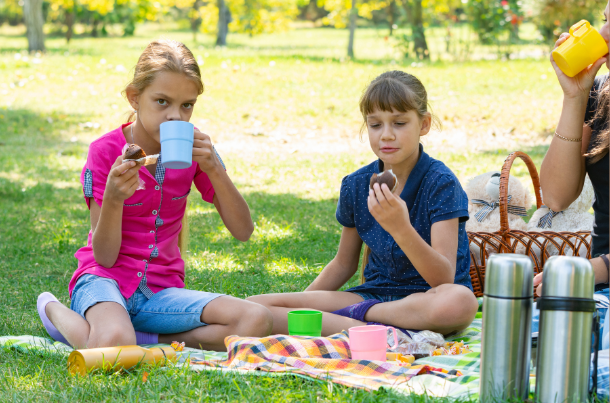
Family picnics have a way of turning an ordinary day into something children remember for years. You do not need a perfect park, an expensive picnic basket, or beautifully arranged food to make the day meaningful. Sometimes a blanket on the grass, a few favorite snacks, and time together are more than enough.
If you have been wondering, what are some ideas for a family picnic, the best place to start is with your own family. Think about what your children enjoy, how long they can comfortably stay outdoors, what foods they actually eat, and what kind of outing feels realistic for you as a parent.
That last part matters more than we sometimes admit.
As moms, we can easily turn a simple family outing into a long list of things to prepare. We think about snacks, extra clothes, sunscreen, toys, wipes, water bottles, napkins, photos, and whether everyone will be happy. Before we know it, the “relaxing picnic” has started to feel like another job.
At Little One Haven, I believe family time should feel warm and doable, not perfect. So instead of trying to create a picture-perfect picnic, focus on making the day comfortable, flexible, and fun enough that you can enjoy it too.
Here are plenty of family picnic ideas you can use, mix, or simplify depending on your children’s ages and your own energy that day.
Family Picnic Ideas: Simple Ways to Enjoy Time Together
A family picnic can be much more than sitting on a blanket and eating sandwiches. You can turn it into a small adventure, a quiet afternoon, a celebration, a game day, or even a simple backyard lunch.
Some families enjoy active picnics with balls, frisbees, and races. Others prefer books, drawing, nature walks, and relaxed conversation. There is no single right way to do it.
The best picnic idea is one that suits your family instead of exhausting everyone.
You might try a traditional park picnic, a themed picnic, a breakfast picnic, a nature scavenger hunt, a teddy bear picnic for younger children, or a sunset picnic for older kids.
Even changing one small detail can make an ordinary meal feel special.
1. Have a Simple Classic Park Picnic
A classic park picnic is still one of the easiest family outings to plan.
Choose a park with shade, restrooms, a safe play area, and enough room for the children to move around. Pack familiar food, a large blanket, water, and one or two activities.
You really do not need more than that.
Sandwiches, wraps, cut fruit, crackers, cheese, muffins, and other easy finger foods work well because children can eat them without much fuss.
After eating, let the kids visit the playground, kick a ball, look for leaves, or simply run around.
The biggest advantage of a park picnic is that the environment provides much of the entertainment for you.
2. Plan a Backyard Picnic
One of my favorite family picnic ideas is also one of the easiest: stay home.
A backyard picnic is perfect on days when you want to do something different but do not have the energy for a full outing.
Spread a blanket outside, carry lunch into the garden, and let the children help set everything up.
For little ones, even eating lunch five steps away from the kitchen can feel exciting because it breaks the usual routine.
Backyard picnics are especially useful for families with babies or toddlers. If you suddenly need a diaper, extra spoon, sweater, bathroom, or forgotten favorite cup, everything is nearby.
You can keep the picnic short or let it turn into an entire afternoon outdoors.
3. Try a Teddy Bear Picnic
For toddlers and preschoolers, a teddy bear picnic can feel magical without requiring much preparation.
Ask your child to choose one or two favorite stuffed animals. Place them on the blanket and pretend they are joining the family for lunch.
You can bring small toy cups, read a story, sing a song, or let your child “serve” pretend food to the teddy bears.
Young children love imaginative play, and this gives them something familiar to focus on while you enjoy the picnic too.
Just try not to bring every stuffed animal in the house unless you want to spend the entire afternoon counting them before leaving.
4. Create a Nature Scavenger Hunt
If your children love exploring, a nature scavenger hunt can turn a simple picnic into a small adventure.
Before you leave, create a short list of things to spot.
You could look for a yellow flower, a smooth stone, a butterfly, a bird, a tiny stick, something heart-shaped, three different leaves, or something that smells nice.
For younger children, keep the list short and visual.
Older kids can take photographs of their finds instead of collecting them. This is also a nice way to teach children to enjoy nature without disturbing plants or wildlife.
A scavenger hunt keeps kids engaged while encouraging them to actually look at the world around them.
5. Bring Bubbles
Sometimes the simplest picnic activities are the ones children enjoy most.
Bubbles are inexpensive, easy to carry, and fun for a wide range of ages.
Toddlers can chase and pop them while older children can take turns blowing them or seeing who can make the biggest bubble.
You can even turn it into a gentle game by asking children to count bubbles or try to keep one in the air.
Just keep the bubble bottle separate from your food because somehow spills always happen at exactly the wrong moment.
If your little one enjoys chasing bubbles and active outdoor play, these toddler exercise activities offer more playful ways to support movement, balance, and coordination.
6. Pack a Ball or Frisbee
A ball is one of the most useful things you can bring to a family picnic because there are so many ways to use it.
Toddlers can roll it back and forth. Older children can play catch, soccer, or simple relay games. Parents can join in without needing complicated rules.
A frisbee works well for older children who have enough open space to throw safely.
The goal does not need to be competition.
A little movement after eating helps children release energy and often makes the rest of the picnic feel more relaxed.
7. Make Your Own Sandwich Station
If your children enjoy choosing their food, try turning lunch into an activity.
Pack bread, wraps, or pita along with a few simple fillings in separate containers.
Children can build their own sandwiches using familiar ingredients such as cheese, cucumber, lettuce, hummus, turkey, avocado, or another favorite filling.
This can make mealtime more interesting without creating extra work.
It also gives picky eaters some control over what goes on their plate.
Just remember to keep foods that require refrigeration safely chilled until you are ready to eat.
8. Pack a Colorful Fruit Box
A colorful fruit box is one of the easiest ways to make picnic food feel special.
You can include strawberries, grapes, blueberries, watermelon, orange slices, melon, or whatever fruits your family enjoys.
You do not need every color of the rainbow.
Even two or three different fruits can look cheerful when packed together.
With younger children, always prepare fruit in age-appropriate sizes and supervise eating.
You can also let older children create fruit patterns or guess the different colors before eating.
Simple food can still feel fun.
9. Plan a Breakfast Picnic
Lunch is not the only meal that works outdoors.
Breakfast picnics can be wonderful, especially during warmer months when mornings are cooler and parks may be quieter.
Pack mini pancakes, muffins, fruit, boiled eggs, toast fingers, or another breakfast your family likes.
Parents can bring coffee or tea, while the children enjoy breakfast on a blanket.
Morning picnics are also useful if your toddler usually becomes tired or cranky around lunchtime.
You can enjoy the outing early and still be home before nap time.
10. Try an Evening or Sunset Picnic
An early evening picnic can feel beautifully different from a daytime outing.
Choose a comfortable park or outdoor space and pack an easy dinner.
Wraps, pasta salad, fruit, sandwiches, or cold snacks can work well.
As the temperature cools, children can play while everyone watches the sky change.
Bring a light sweater or extra layer in case it gets chilly.
If you plan to stay until sunset, make sure the location is safe and check the park’s closing time beforehand.
For older children, watching the sunset can turn an ordinary dinner into something surprisingly memorable.
11. Have Storytime on the Blanket
Not every picnic activity needs to involve running around.
Pack one or two favorite books and create a little storytime after everyone has eaten.
Younger children may enjoy picture books, while older kids can bring their own books and read quietly under a tree.
This can be especially helpful if your child gets overstimulated by lots of activity.
A few calm minutes can help everyone reset.
Sometimes those quiet moments, with children leaning against you while you read, end up being the sweetest part of the day.
12. Watch the Clouds Together
Cloud watching requires absolutely no equipment, which already makes it a parent-friendly activity.
Lie back on the picnic blanket and ask everyone what shapes they can see.
One child might spot a rabbit. Another might see a castle. Someone will probably insist that a cloud looks exactly like a dinosaur eating pizza.
Let the imagination take over.
Cloud watching gives children permission to slow down and notice something that usually passes above them unnoticed.
It is simple, peaceful, and surprisingly fun.
13. Create a Little Art Corner
If your children enjoy drawing, bring a small notebook and a few crayons or colored pencils.
Ask them to draw something they see around them.
It might be a tree, flower, bird, picnic basket, playground, or another family member.
Younger children can simply scribble and color.
Older children might enjoy sketching the scenery.
Keep supplies minimal so you are not carrying a full craft room to the park.
Washable art supplies are especially helpful because picnic tables, little hands, and grass have a way of becoming part of the artwork.
14. Have a Family Photo Challenge
Parents often want a lovely photograph from a family day out, but getting children to pose nicely can quickly become frustrating.
Instead, make photographs part of the game.
Ask each family member to suggest one funny photo.
Take a picture of everyone’s shoes on the blanket, silly faces, hands holding fruit, shadows on the grass, or children jumping together.
These relaxed pictures often capture more personality than carefully posed ones.
Take a few photos, then put the phone away for a while and enjoy the actual day.
15. Plan a Themed Family Picnic
A simple theme can make a picnic feel new without adding much work.
You could have a red picnic with strawberries, watermelon, red napkins, and a red blanket.
Or create a “mini adventure picnic” where children wear hats and carry small backpacks.
You might even plan a storybook picnic inspired by a favorite children’s book.
The important thing is not to buy lots of decorations.
Use what you already have at home.
The theme should add fun, not another shopping list.
16. Let Each Person Choose One Picnic Food
One easy way to involve everyone is to let each family member choose one food to bring.
One child might choose grapes. Another wants crackers. A parent picks the sandwiches, and someone else chooses dessert.
This turns preparation into a shared family activity.
Children also tend to feel more excited about the food when they helped choose it.
If your kids are old enough, they can help wash fruit, pack containers, fill water bottles, or put napkins into the picnic bag.
Even small jobs make them feel included.
17. Have a Friendship Picnic
Invite another family and turn the picnic into an easy social afternoon.
You can ask each family to bring their own lunch or contribute one thing to share.
Keeping food separate is often easier when children have allergies, strong preferences, or different routines.
The kids can play together while parents get a chance to talk.
Try to keep the gathering small enough that it still feels relaxed.
Sometimes one other family is plenty.
More people can be fun, but they can also turn a quiet picnic into a full event.
18. Have a Birthday Picnic
A family picnic can be a lovely alternative to a complicated birthday party.
Pack the birthday child’s favorite foods, bring cupcakes or another simple treat, and add a few outdoor games.
You can decorate lightly with something easy to manage, but remember that parks and windy decorations are not always a great combination.
Children usually care more about playing and eating cake than whether every detail matches.
A birthday picnic can feel joyful and special while being far less stressful than hosting a large party indoors.
19. Turn the Picnic Into an Adventure
Sometimes the journey can be part of the fun.
Walk along a short family-friendly path before stopping to eat.
Ride bikes to a nearby park if it is safe and practical.
Let older children help choose the picnic spot.
For younger kids, you could even draw a basic “treasure map” showing the path to the blanket.
It does not need to be complicated.
Children often love the feeling that they are going somewhere important, even if the destination is simply a shady tree at the end of the park.
20. Bring One Quiet Activity for Tired Moments
Even energetic children eventually slow down.
After running, eating, and exploring, your child may want something calm.
Bring one quiet activity such as a book, a small card game, stickers, or a simple coloring sheet.
You do not need several backup activities.
One option is usually enough to help children settle when their energy changes.
Planning for both active and quiet moments can make the whole outing feel smoother.
21. Try a No-Phone Picnic Hour
A family picnic can be a lovely opportunity for a little screen-free time.
Take the pictures you want at the beginning, then put your phone away for thirty minutes or an hour if that works for your family.
Talk, eat, explore, and play together.
Children notice when our attention is divided, even when they do not say anything.
You do not need strict rules or a dramatic “digital detox.”
Simply being fully present for part of the outing can make it feel more meaningful.
22. Add a Simple Family Game
You do not need special equipment to play games outdoors.
Try “I Spy,” twenty questions, charades, or a simple guessing game.
With younger children, ask them to find something green, something round, or something soft.
Older children may enjoy making up their own clues.
These games are particularly useful while eating or when everyone is resting on the blanket.
They also work well if you forgot to pack any toys.
23. Have a Mini Nature Walk
After eating, take a short walk around the park.
You do not need to call it exercise.
Just explore together.
Notice birds, trees, flowers, insects, or interesting sounds.
Ask children what they can hear or smell.
A nature walk is a simple way to help kids become more observant without turning the outing into a lesson.
Young children often notice tiny details adults walk past every day.
Follow their pace rather than trying to cover a certain distance.
What Foods Work Best for a Family Picnic?
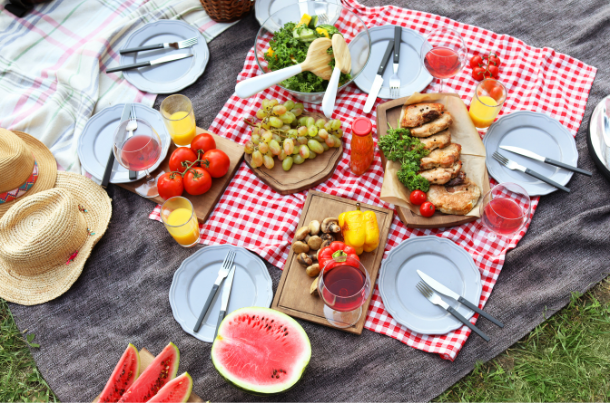
Good picnic food should be easy to carry, easy to eat, and suitable for the weather.
Foods such as sandwiches, wraps, fruit, crackers, muffins, pasta salads, cheese, sliced vegetables, and simple baked snacks are popular because they travel well.
Try to pack foods your children already enjoy.
A picnic may not be the best time to introduce several unfamiliar dishes, especially if you want the day to feel relaxed.
For younger children, choose foods that are easy to handle and prepare them safely for your child’s age.
Perishable food should be kept cold until it is time to eat.
For more guidance on keeping picnic foods safe, you can follow these food safety tips for outdoor meals.
And always bring more drinking water than you think you will need.
Children somehow become extremely thirsty the moment they start running outside.
What Should You Pack for a Family Picnic?
Your picnic bag does not need to contain everything you own.
Start with the essentials.
Bring a large blanket, food, water bottles, napkins, wipes, sunscreen, hats, hand sanitizer, and a trash bag.
For younger children, add diapers or changing supplies if needed and a spare set of clothes.
A small first-aid pouch can also be helpful for minor scrapes.
Then choose one or two activities.
A ball and bubbles might be enough.
The more you bring, the more you have to carry, organize, and take home again.
Simple usually wins.
How Can You Make a Picnic Easier With Toddlers?
Picnics with toddlers can be wonderful, but expectations matter.
Choose somewhere close to home if possible and make sure toilets are nearby.
Plan around nap times and avoid arriving when your child is already tired or extremely hungry.
Bring familiar foods rather than relying on your toddler to suddenly become adventurous because you are eating outside.
Pack wipes, a change of clothes, plenty of water, and one favorite comfort item if needed.
And give yourself permission to leave early.
A successful toddler picnic might last forty-five minutes rather than four hours.
It still counts.
What About Picnics With Older Kids?
Older children often enjoy having more responsibility.
Ask them to help choose the location, make part of the food, pack the bag, or plan a game.
They may enjoy frisbee, badminton, card games, photography, bike rides, or a longer nature walk.
You can also ask them to create a family scavenger hunt for everyone else.
Giving older children a role makes the outing feel less like something adults planned for them and more like a family activity they helped create.
Choose the Right Time of Day
Timing can completely change how enjoyable a family picnic feels.
Families with babies or toddlers may prefer mornings when children are rested and temperatures are cooler.
Lunch works well if you are close to home and your child does not usually nap at that time.
Late afternoons and early evenings can be lovely with school-age children.
Try to work with your family’s usual rhythm.
A tired child does not care how beautiful the picnic location is.
When possible, avoid planning the outing during the exact time your little one is normally hungry, sleepy, or overwhelmed.
Check the Weather Before You Leave
A quick weather check can save a lot of frustration.
Look at the temperature, chance of rain, wind, and sun conditions.
Strong wind can turn napkins, paper plates, and lightweight toys into flying objects.
Very hot weather may mean choosing a morning picnic or somewhere with good shade.
If the weather changes, do not feel like the entire day is ruined.
Move the picnic indoors.
Spread the blanket on the living room floor, make sandwiches, and let the children pretend they are camping.
For little ones, the change from normal routine is often what makes the experience exciting.
Keep Safety in Mind Without Making the Day Feel Stressful
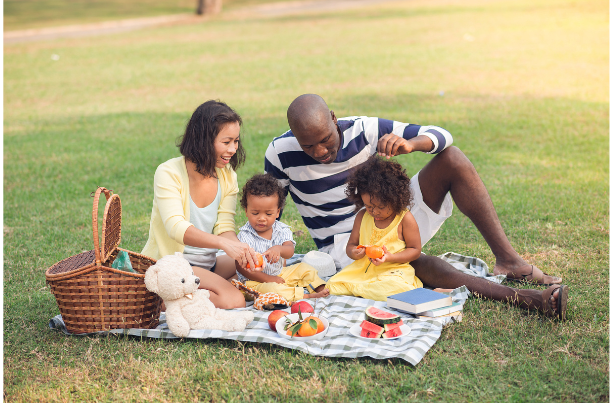
A little preparation goes a long way.
Choose a safe location away from busy roads and other hazards.
Always keep young children within sight, especially in crowded parks or unfamiliar outdoor spaces.
Use sun protection suitable for your family and keep everyone hydrated.
If your child has allergies, asthma, or another medical condition, carry any medication or supplies recommended by their healthcare professional.
You do not need to worry about every possible thing that could happen.
Just cover the basics so you can relax once you are there.
Let the Day Be Imperfect
This may be one of the most useful picnic tips of all.
Something probably will not go according to plan.
A sandwich will fall.
Someone will announce they hate the snack they specifically asked you to pack.
Your toddler might spend more time collecting sticks than eating.
The children may argue over the same ball even though you brought several other activities.
None of these things mean the picnic failed.
Family outings are not supposed to look like advertisements.
Real children get dirty, change their minds, become tired, and make messes.
The goal is not to control every moment.
It is to create space for your family to be together.
Remember That You Are Part of the Picnic Too
Parents often spend outings making sure everyone else is comfortable.
We unpack the food, open containers, wipe hands, find lost shoes, refill water bottles, take photographs, settle disagreements, and answer seventeen questions about snacks.
It is easy to reach the end of the day and realize you barely sat down.
So once everyone is safe and settled, sit with them.
Eat something while it is still yours.
Watch your children play.
Let yourself enjoy the breeze.
You deserve to be part of the memory rather than only the person organizing it.
Your children will benefit from seeing you relax and enjoy family time too.
Looking for more realistic parenting advice, family activities, and simple ideas for creating meaningful moments with your children? Visit Little One Haven for warm, practical guidance designed for everyday family life.
Frequently Asked Questions About Family Picnics
What are some easy family picnic ideas?
What activities can kids do at a picnic?
What is the best food to take on a family picnic?
How do you make a picnic fun for toddlers?
How can I make a picnic special without spending much money?
Final Thoughts
So, what are some ideas for a family picnic? There are dozens of possibilities, but you do not need to try them all.
Pick one comfortable location, bring food your family actually likes, add one or two activities, and leave enough unplanned time for children to explore.
A family picnic can be bubbles and sandwiches at the neighborhood park.
It can be pancakes in the backyard on Saturday morning.
It can be a scavenger hunt, a birthday lunch, a sunset dinner, or simply lying on a blanket together while your children point out shapes in the clouds.
The most meaningful part is not how much you planned.
It is that for a little while, everyone had somewhere to slow down and be together.
There may be grass stains, spilled juice, half-eaten sandwiches, and a tired child by the end of the day.
That is okay.
Those imperfect little details are often part of the memory too.
So pack what you need, leave perfection at home, and enjoy your family exactly as they are in this season of life.
Trusted Resources
- American Academy of Pediatrics (AAP) – Why Playing Outside Is Important for Kids
- CDC – Physical Activity Benefits for Children
Disclaimer
This article is for general educational and informational purposes only. Always supervise young children during outdoor activities and eating, prepare foods in age-appropriate sizes, follow safe food-storage practices, provide suitable sun protection and hydration, and consider your child’s allergies, medical needs, and developmental abilities when planning a family picnic.
About the Author
Geeta Yogi writes warm, practical, parent-friendly content about family activities, toddler life, outdoor play, child development, and everyday parenting. She focuses on sharing realistic ideas that help families spend meaningful time together without making simple outings feel complicated or stressful.