

There’s something about being out in public when your toddler suddenly melts down that instantly puts you on edge. One moment everything feels fine, and the next, you’re trying to calm a crying, overwhelmed little human while people walk by. Whether it happens in a grocery store, at the park, or while you’re waiting in line, those big emotions can feel like a lot, for both of you.
If you’ve ever found yourself wondering how to handle toddler tantrums in public without feeling flustered or judged, please know in this. Truly, every parent goes through moments like these. It may feel intense in the moment, but it’s a very normal part of toddlerhood.
Let’s walk through this together, slowly and gently, just like one mom sitting beside you, sharing what she’s learned along the way
Why Toddler Tantrums Happen (Especially in Public)
Before we even think about how to handle it, it really helps to understand what’s going on inside your little one in that moment.
Toddlers are still learning how to manage their emotions. They feel everything so deeply, excitement, frustration, tiredness, but they don’t yet have the words or self-control to express those feelings calmly. Experts at Mayo Clinic explain toddler tantrums as a normal part of child development, especially when toddlers struggle to express frustration, tiredness, or disappointment. So when something feels too big, it often comes out as a tantrum.
Now add a busy, noisy place into the mix, bright lights, unfamiliar faces, lots of sounds, and it can quickly become overwhelming for them.
Some of the most common reasons behind these moments are:
- Too much stimulation (noise, crowds, lights)
- Hunger or being overly tired
- Frustration when they can’t have or do something
- Feeling rushed or out of control
When you start to look at it this way, something shifts a little in your heart. It stops feeling like your child is “misbehaving” on purpose… and starts to feel more like they’re asking for help in the only way they know how.
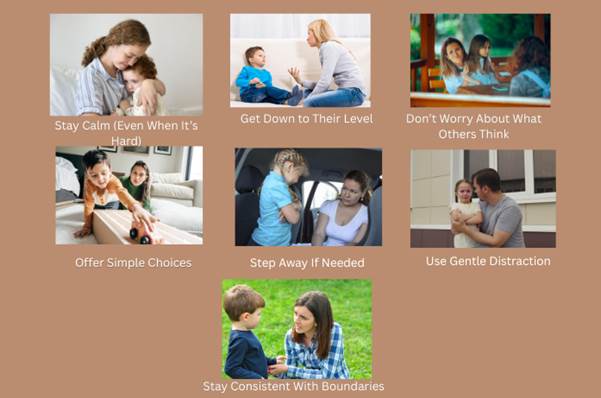
How to Handle Toddler Tantrums in Public (Calm & Easy Tips)
Handling those sudden public meltdowns isn’t about getting everything “right.” It’s not about being the perfect parent in front of others. It’s simply about staying as calm, connected, and present as you can, even when things feel a little chaotic.
1. Stay Calm (Even When It’s Hard)
I know… this one can feel really tough in the moment.
When your toddler is crying loudly or lying on the floor, your first reaction might be a mix of panic, embarrassment, or even frustration. That’s completely natural. But in that moment, your child doesn’t need a perfect response, they need a calm one.
Try to take a slow, steady breath. Soften your voice instead of raising it. Even a quiet reminder to yourself like, This is just a moment, it will pass,” can help you stay grounded.
Your calm presence becomes a kind of safe space for your child. When everything feels overwhelming to them, your steady energy quietly tells them, “You’re okay. I’m here.
According to UNICEF’s guide on handling temper tantrums, staying calm and emotionally present helps children feel safe while they work through overwhelming emotions.
2. Get Down to Their Level
In the middle of a tantrum, something as simple as changing your position can make a big difference.
Instead of standing over your child, try gently crouching down so you’re at their eye level. It instantly feels less overwhelming for them and more comforting, like you’re with them, not above them.
In a soft, calm voice, you can say things like:
- “I see you’re really upset.”
- “That feels so hard right now, doesn’t it?”
You don’t need long explanations or perfect words. Just being there, close and gentle, helps your child feel understood.
And often, when a child feels truly seen and heard, those big emotions slowly begin to soften.
3. Don’t Worry About What Others Think
This one doesn’t come easy, and honestly, it takes a little time to grow into.
When you’re figuring out how to handle a toddler tantrum in public, it can feel like all eyes are on you. You might wonder what people are thinking, or feel a quiet pressure to “fix it” quickly. That feeling is so real, and so many of us have been there.
But here’s the gentle truth, most people aren’t judging you the way you think. Many of them are parents too, or have been in similar moments. And even if someone does judge, that doesn’t define you or your parenting.
In that moment, your child needs you more than the opinions around you matter.
So try to bring your focus back to your little one, their feelings, their needs, their comfort. This isn’t a performance. It’s a real, honest parenting moment.
And you’re not failing in it… you’re showing up exactly where it matters most
4. Offer Simple Choices
Sometimes, underneath all that frustration, your toddler is simply trying to feel a little bit of control.
Their world is still very small, and so many decisions are made for them. So when things don’t go their way, those feelings can come out all at once.
In moments like this, offering small, simple choices can really help. It gives them a sense of independence without overwhelming them.
You might gently ask:
- “Do you want to walk, or would you like to hold my hand?”
- “Should we sit here for a minute, or step outside for some fresh air?”
These little options can shift their focus just enough to break the intensity of the moment. And more importantly, it helps them feel heard and involved, which often brings a bit of calm back into the situation.
Bottom of Form
5. Step Away If Needed
Sometimes, the best thing you can do in that moment is simply pause.
If everything around your toddler feels too loud, too busy, or too overwhelming, it’s completely okay to step away for a bit. You don’t have to push through it or handle it right there in the middle of the chaos.
Gently take your child to a quieter corner, step outside for some fresh air, or even sit in the car for a few minutes. You’ll often notice how quickly things begin to settle once the environment feels calmer.
When you’re thinking about the best way to handle toddler tantrums in public, it doesn’t always have to be a perfect response. Sometimes, it’s just about creating a little space where both you and your child can breathe again.
6. Use Gentle Distraction
Once the intensity of the tantrum begins to ease, even just a little, you can gently guide your child’s attention somewhere else.
At this stage, their emotions are starting to settle, and a soft distraction can help them move forward without pressure.
You might say something simple like:
- “Look at that bird over there!”
- “Can you help me find the apples?”
Keep your tone light and natural, almost like you’re inviting them into a small, calm moment with you.
It may not work right away, and that’s okay. Sometimes it takes a few gentle tries. But slowly, you’ll notice their focus begin to shift, and those big feelings will start to fade into something more manageable.
7. Stay Consistent With Boundaries
Staying calm doesn’t mean saying “yes” to everything just to stop the tears.
There will be moments when your toddler is upset simply because you’ve said no, and that’s okay. It’s a part of growing and learning. In those moments, what matters most is how you hold that boundary.
If you’re dealing with repeated resistance or strong-willed behavior, learning how to handle stubborn child behavior can help you respond in a calmer and more effective way.
You can be firm and gentle at the same time.
For example, you might softly say,
“I know you really want that toy. It looks fun. But we’re not buying it today.”
You’re not dismissing their feelings, you’re acknowledging them while still staying consistent.
Over time, this helps your child understand something very important: their feelings are always okay, even if the answer doesn’t change. And that kind of understanding builds trust, little by little.
What NOT to Do During a Public Tantrum
Sometimes, in the middle of all that noise and emotion, it’s not just about knowing what to do, it’s also about gently understanding what might not help in that moment.
When things feel overwhelming, we as parents can react quickly without even realizing it. And that’s okay… it happens to all of us. But becoming aware of these small reactions can make a big difference over time.
Avoid Shouting or Punishing
When your toddler is crying loudly or completely overwhelmed, it’s natural to feel your own emotions rising too. You might feel the urge to raise your voice just to bring things under control.
But in that moment, shouting can actually make things harder for your child. It can add more fear and confusion to what they’re already feeling inside.
What your little one truly needs right then isn’t correction, it’s connection.
Even if you keep your voice soft and your words simple, your calm presence helps them feel safe. And when a child feels safe, it becomes much easier for those big emotions to slowly settle.
Avoid Giving In Just to Stop the Crying
In those moments, especially when you feel eyes on you, it can be really tempting to just give in so the crying stops quickly.
And honestly, every parent feels that pressure at some point.
But when it becomes a pattern, your toddler may start to understand that crying is the way to get what they want. Over time, this can make tantrums happen more often, not less.
Instead, try to stay gentle but steady. You can acknowledge their feelings while still holding your boundary. It may take a little longer in the moment, but it helps your child learn something much more important in the long run.
Avoid Ignoring Completely
Sometimes, in the middle of a tantrum, it might feel easier to just ignore it and hope it passes quickly.
And while giving a little space can be helpful, completely ignoring your child’s emotions can make them feel alone in that moment.
Your toddler isn’t just being difficult, they’re overwhelmed and looking for reassurance, even if it doesn’t seem like it.
Instead, try to stay close and present. You don’t have to say much or fix everything right away. Just being there, calmly, lets your child know they’re not alone, and that quiet presence can be very comforting.
Gentle Ways to Prepare Before Going Out
Sometimes a little preparation can make a big difference.
1. Plan Around Their Routine
If you can, try to step out when your toddler is well-rested and has had something to eat. It may seem like a small thing, but it makes a big difference.
A tired or hungry toddler has a lot less patience, and even little things can quickly turn into big emotions.
When their basic needs are met, they’re naturally more calm, cooperative, and able to handle new environments a little better.
2. Bring Comfort Items
A little piece of home can go a long way when you’re out and about.
Bringing along your toddler’s favorite toy, a familiar snack, or even a small blanket can help them feel safe in new or busy places. These simple things can be surprisingly comforting when everything around them feels different.
Sometimes, just holding something familiar is enough to calm their nerves and prevent those big emotions from building up.
3. Set Simple Expectations
Before stepping into a store or any busy place, it can really help to gently tell your toddler what’s going to happen.
You might say something simple like,
“We’re going to buy groceries, and then we’ll go home.”
It doesn’t need to be long or detailed. Just a clear, calm explanation.
Toddlers feel more secure when they know what to expect. It gives them a small sense of understanding and control, which can make transitions smoother and reduce the chances of those sudden emotional moments.
When Tantrums Feel Overwhelming
There will be days when nothing seems to work, and those days can feel really heavy.
Days when the tantrum goes on longer than you expected. Days when you feel tired, unsure of what to do next, or even a little defeated inside.
And in those moments, I just want to gently remind you of something important…
You’re not doing anything wrong.
Learning how to handle toddler tantrum in public situations doesn’t happen overnight. It takes time, patience, and a lot of trial and error, for both you and your child.
Some days will feel easier, and others might feel messy. But with each moment, you’re both learning, growing, and finding your way together. And that truly matters more than getting everything “right.”
Building Emotional Strength Over Time
With time, you start to see that every tantrum carries a small lesson within it.
Your child isn’t just reacting, they’re learning, little by little:
- how to express what they feel
- how to calm themselves down
- how to trust that you’ll be there, even in their hardest moments
And quietly, without even realizing it, you’re learning too:
- how to stay patient when things feel intense
- how to pause and respond instead of reacting quickly
- how to guide your child with love, even on the tough days
This is what real parenting looks like. Not perfect, not always easy, but full of growth, connection, and meaning in the most everyday moments
A Gentle Reminder for You, Mama
If you’re doing your best to understand how to handle toddler temper tantrums in public, please take a moment to give yourself a little grace.
You’re already doing something right.
Because you care, deeply.
Because you’re trying to stay patient, even when it’s not easy.
Because you keep showing up for your child, even on the days that feel exhausting.
And that matters more than you may realize.
Parenting isn’t about getting everything perfect. It’s about being there, again and again, with love in your heart, even in the middle of the mess.
FAQs
1. Why do toddlers throw tantrums in public?
Toddlers often have tantrums in public because they feel overwhelmed, tired, hungry, or unable to express their emotions. Busy environments can make their feelings even stronger.
2. How should I react when my toddler has a meltdown outside?
Stay calm, get down to their level, and speak gently. Focus on comforting your child instead of worrying about what others think.
3. Is it okay to ignore a toddler tantrum in public?
Completely ignoring is not helpful. It’s better to stay close and present, offering comfort and reassurance while giving them a little space to calm down.
4. Should I give in to stop a tantrum quickly?
It may stop the crying in the moment, but giving in regularly can encourage more tantrums. It’s better to stay calm and consistent with your boundaries.
5. How can I prevent tantrums when going out?
You can reduce tantrums by planning around naps and meals, bringing comfort items, and setting simple expectations before leaving home.
Final Thoughts: You’re Doing Better Than You Think
Handling toddler tantrums in public isn’t about stopping them from happening altogether. It’s about learning, slowly and gently, how to move through those moments with calm, confidence, and a lot of compassion, for your child and for yourself.
Some days will feel easy and smooth. Other days might feel a little messy and overwhelming.
But through all of it, your child is learning something truly important, that even in their biggest emotions, they are safe with you.
So the next time your toddler has a meltdown in the middle of a store or a busy place, pause for a moment.
Take a deep breath.
Hold their tiny hand.
And quietly remind yourself…
You are exactly the parent your child needs
If this guide brought you a little comfort or clarity, you can always find more gentle, real-life parenting support here: little one haven.