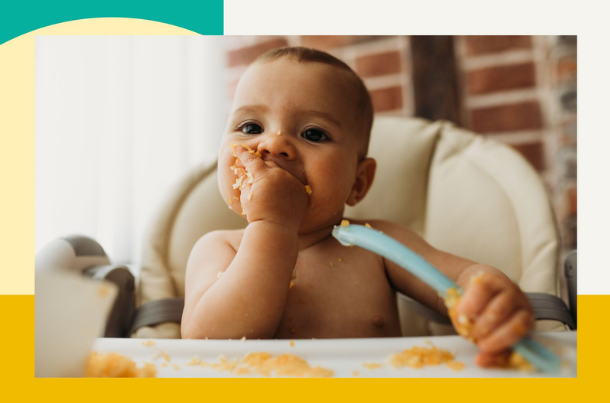
When do babies use a spoon? It’s a question that often comes up when your little one starts grabbing yours halfway through a meal. You offer them the handle, hoping a little food might reach their mouth. Instead, the spoon turns upside down, porridge lands on their lap, and they look delighted with the whole experience.
Those determined attempts can be lovely to watch, even when the cleanup takes longer than breakfast.
Babies can explore a spoon when they start solids around 6 months and are developmentally ready. Some begin using one themselves around 10 to 12 months, while independent scooping and eating usually take longer. The CDC includes trying a spoon as an 18-month milestone and eating with one by 2 years.
There’s plenty of learning between holding a spoon and finishing a meal with it. Here’s what that process can look like and how to support it without making mealtimes stressful.
When Do Babies Use a Spoon? Understanding the Timeline
Using a spoon sounds like one skill, but it involves several separate steps. Your baby needs to hold the handle, get food onto the spoon, keep it balanced, and bring it to their mouth.
They may manage one part long before another. A child who happily eats from a spoon you’ve loaded may still find scooping frustrating.
It helps to distinguish early attempts from more reliable self-feeding. Both matter, but they do not happen at the same time. Age ranges describe a developing skill, while milestone checklists help you decide what to discuss with your child’s clinician.
Around 6 Months: Getting Familiar With the Spoon
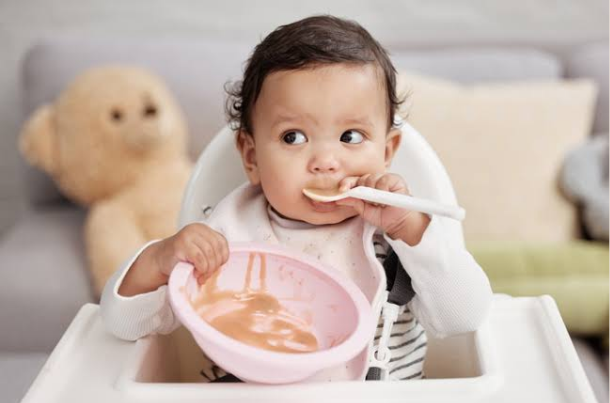
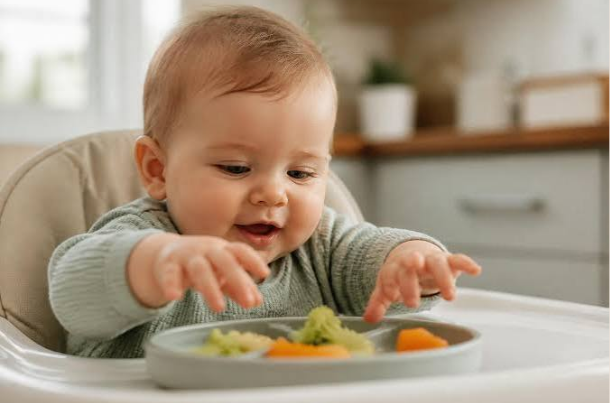
Once your baby is ready for solid foods, you can offer an appropriate spoon during supervised meals. They might turn it over, mouth it, tap it against the tray, or wave it around.
At this stage, simply holding the utensil can be part of joining in. You don’t need to expect them to scoop or guide every mouthful successfully.
Readiness for solids matters more than interest in a spoon alone. NHS guidance describes three signs appearing together around 6 months: staying seated with steady head control, coordinating food toward the mouth, and swallowing rather than pushing it back out.
Around 10 to 12 Months: Early Self-Feeding Attempts
The CDC notes that babies may begin using a spoon themselves around this age.
You might load a small amount of food and let your baby bring it toward their mouth. Some bites will arrive. Others may end up on their cheek, bib, or the floor.
Try to notice the movement they’re managing rather than only the food they spill. Holding the spoon steady for a moment or bringing the correct end upward can be progress.
By 18 Months: Trying to Use It
Trying to use a spoon appears on the CDC’s 18-month checklist.
Your toddler may dip it into a bowl, collect a little food, and attempt a bite. They may then put the spoon down and use their fingers because that feels easier.
You can continue offering opportunities without insisting that every mouthful happens the same way.
By 2 Years: Eating With a Spoon
The CDC lists eating with a spoon as a 2-year milestone.
This does not mean spotless eating or never needing help. Some foods remain harder to manage, and a tired toddler may be less coordinated than usual.
If your child isn’t developing the skill, discuss it with their clinician. You can appreciate their efforts and ask for support at the same time.
A Quick Look at the Stages
| Stage | What you might see | A useful kind of support |
|---|---|---|
| Starting solids around 6 months, when ready | Holding, mouthing, or turning a spoon | Offer a suitable utensil during closely supervised meals. |
| Around 10–12 months | Bringing a preloaded spoon toward the mouth | Add a small amount of manageable food and allow time. |
| By 18 months | Trying to use the spoon, including dipping or scooping | Keep offering chances and help with the difficult step. |
| By 2 years | Eating with a spoon, with spills still possible | Support independence and discuss a missing skill with the clinician. |
The stages overlap. A child may use a spoon for one food and fingers for another. Milestones are not a requirement to finish every meal independently or a substitute for developmental screening.
Why Learning Can Look So Messy
Imagine trying to carry something slippery on a small, shallow surface while your hand is still learning where to go. That is a lot of what your baby is working out.
They may tilt their wrist too early or lift the spoon before collecting food. They might also use the handle end because they haven’t yet connected its shape with its purpose.
Avoid correcting every attempt. Your baby needs chances to explore, and you need a meal that remains manageable.
Offer a little help when useful, then leave room for another try. You don’t have to choose between doing everything for them and expecting them to manage alone.
Choosing a Spoon Your Baby Can Hold
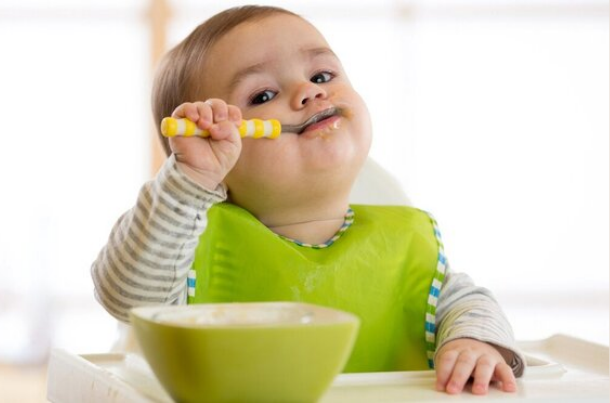
Start with a spoon designed for your child’s age and stage. Look for a small bowl, smooth edges, and a handle that sits comfortably in their hand.
Inspect it regularly for cracks, loose parts, or damage. Follow the manufacturer’s care instructions and replace it when necessary.
You don’t need a drawer full of specialist products. A simple utensil may work well, and a different design is worth considering only if it addresses a difficulty you’ve noticed.
If holding utensils is consistently hard, ask a clinician or occupational therapist about suitable adaptations rather than buying repeatedly on guesswork.
Check that the utensil is intended for eating, not a toy with detachable decorations. Keep it within the meal routine and put it away afterward. An adult-sized spoon or a different handle is not automatically the solution to a child’s difficulty; start with what they can manage comfortably.
Simple Ways to Help Your Baby Practice
Begin with one manageable change rather than trying every suggestion at once. For example, offer a preloaded spoon at a meal your child usually enjoys. Keep helping them obtain enough food while the new movement develops.
Let Them Join In From the Start
If your baby reaches for the spoon, offer a clean one they can hold while you remain close.
They may spend the first few meals examining it. That doesn’t make the opportunity pointless. They’re becoming familiar with something they see you use.
Keep watching, and don’t allow them to crawl, walk, or play elsewhere with the utensil in their mouth.
Offer a Preloaded Spoon
A small amount of food on the spoon lets your baby practice the journey from tray to mouth without first needing to scoop.
Hand it over by the handle or place it where they can reach it easily. Then give them time.
If most of the food falls off, reload a little when they’re interested. Avoid piling on a large mouthful in the hope that more will arrive.
Keep a Second Spoon Available
Sometimes one spoon for your baby and another for assistance makes the meal easier. The NHS includes holding a separate spoon as an option during spoon-feeding.
Continue watching for interest and fullness. Don’t use the second utensil to sneak food in while your baby is distracted.
You can help them eat while still respecting their pace.
Show Them During Your Meal
Sit together when possible and let your child see you eating. You might slowly scoop a bite, bring it to your mouth, and then carry on normally.
There’s no need for a running lesson. A simple “I’m having some yogurt” is enough.
Your baby may copy immediately, watch quietly, or remain interested in their own food. Shared meals offer an example without requiring a particular response.
Give Them a Moment Before Stepping In
When your baby is concentrating, pause. They may be working out how to adjust their grip or get the spoon past their chin.
If they become frustrated, offer help rather than letting the struggle continue indefinitely.
Try saying, “Would you like some help?” while holding the bowl steady or reloading the spoon. You’re supporting the attempt without taking over the entire meal.
Notice which step is difficult: getting food onto the spoon, turning it the right way, or reaching the mouth. Helping with that one step may be enough. Avoid gripping their hand and moving it through repeated bites when they pull away or resist.
Foods That Can Make Early Attempts Easier
Thin soup may spill before the spoon reaches the mouth. A soft food that holds together can make those first attempts less frustrating.
Depending on your child’s age, dietary needs, and foods already introduced, you might offer thick porridge, mashed vegetables, soft mashed lentils, or plain pasteurized full-fat yogurt.
Check that the food is an appropriate texture and temperature. Avoid making it excessively thick or sticky simply so it stays on the spoon.
Keep variety in the wider diet, including appropriate iron-rich foods. If allergies or swallowing difficulties are involved, follow your child’s individual feeding advice.
Do not keep a child on smooth purées only because they are easier to load onto a spoon. Offer a range of textures appropriate to their development, with professional guidance when needed. Spoon learning and learning to manage food textures are related parts of eating, but they are not the same skill.
What If Your Baby Prefers Their Fingers?
That’s okay. Fingers give your child another way to eat while utensil skills are developing.
Your baby might use a spoon for a few bites, then scoop with their hand. A toddler may do the same when hungry or impatient.
Continue offering safely prepared finger foods alongside suitable spoon foods. The CDC encourages opportunities to explore utensils while recognizing finger-feeding as part of development.
Avoid making spoon use a condition for eating. If your child can safely feed themselves with their hands, allow that while you keep providing relaxed opportunities to try the utensil.
For more ways to combine finger foods, preloaded spoons, and responsive help, explore our guide to baby self-feeding. You’ll find practical ideas for giving your baby more opportunities to participate while keeping meals manageable.
Making the Mess Easier to Live With
A little preparation can take pressure off both of you.
Serve a small amount at a time, use a washable bib if your baby tolerates one, and keep a cloth nearby. Choose a surface that is reasonably easy to clean.
You don’t have to wipe their face after every bite, but you can help if food feels uncomfortable or gets near their eyes.
If throwing takes over, respond calmly: “The spoon stays on the tray.” Offer it back when appropriate, or check whether your child has finished eating.
You’re allowed to find the cleanup tiring. Encouraging independence doesn’t require enjoying every splash.
Keep Cleanup Calm
If food on the hands or face bothers your child, offer a gentle wipe or a pause instead of insisting they tolerate it for practice. If they seem comfortable, you can wait until the end of the meal for a fuller cleanup.
You can also make a small portion available for self-feeding while helping with the rest. Learning does not require covering the whole tray with food or accepting a level of mess that makes every meal unmanageable.
Follow Hunger and Fullness Cues
Learning works best when eating still feels comfortable.
Offer food when your baby is interested, allow pauses, and stop when they show they’ve had enough. Closing the mouth, turning away, or losing interest can be useful signals.
NHS guidance recommends waiting for a baby to open their mouth and avoiding pressure to eat.
Don’t delay needed milk feeds to make your baby more motivated to practice. Breast milk or infant formula remains their main drink throughout the first year, alongside complementary foods.
If you’re concerned about how little food reaches their mouth, offer responsive assistance and ask for nutritional guidance.
Food play is not a replacement for adequate intake. If your child routinely cannot get enough food to their mouth, tires during meals, or seems unable to manage what is offered, seek assessment rather than expecting more practice to solve it. You can keep mealtimes gentle while taking a feeding concern seriously.
Keep Every Meal Safe
Your child should be alert, securely seated upright, and closely supervised throughout eating. Don’t offer food while they’re lying down, walking around, or travelling in a moving vehicle.
A spoon does not remove choking risk. Prepare foods appropriately and avoid hazards such as whole nuts, whole grapes, hard raw vegetables, and thick spoonfuls of nut butter.
Learn choking first aid appropriate to your child’s age before an emergency happens. If your child cannot breathe, cry, or cough effectively, act immediately and call emergency services. Do not put your fingers into their mouth unless you can clearly see and safely remove an object.
Gagging and choking are different. Gagging may be noisy while a baby moves food forward, but a blocked airway can be quiet. Do not use sound alone to decide what is happening; learn how to recognize ineffective breathing and follow age-appropriate first-aid guidance.
Repeated coughing, choking, distress, or difficulty managing textures needs professional assessment. Don’t assume it is something your child simply has to practice through.
When to Ask for Extra Support
Bring up concerns if your child isn’t trying a spoon around 18 months or isn’t eating with one around 2 years. These are developmental checkpoints, rather than diagnoses.
Ask sooner if your child has difficulty grasping objects, consistently uses one side much less, experiences pain, or loses an established skill.
Poor growth, restricted intake, and meals that are regularly distressing also deserve attention.
Describe what happens: “She can hold the spoon but struggles to bring it to her mouth,” or “He manages finger foods but coughs with several textures.” Specific examples help the clinician understand what support may be useful.
Depending on the concern, the team may assess hand skills, posture, nutrition, or swallowing and refer to a feeding specialist, occupational therapist, or speech and language therapist. Ask which part of the meal to support at home and what changes should prompt an earlier review.
If your baby was born prematurely or has an existing developmental or feeding condition, discuss an individualized timeline. Advice about when to start solids should account for readiness and medical history, rather than simply copying another child’s schedule.
Frequently Asked Questions
When do babies start using a spoon themselves?
How can I help my baby learn to use a spoon?
What do early spoon-feeding attempts usually look like?
When can babies feed themselves with a spoon?
Should I correct which hand my child uses?
Is it okay to help finish the meal?
Can I offer a spoon before my baby can scoop?
Does using fingers mean my toddler is behind?
How long should we practice spoon use each day?
What if my child coughs repeatedly when eating from a spoon?
Final Thoughts
Some meals will bring a proud little spoonful straight to the mouth. Others will end with yogurt in unexpected places and your child happily eating with their fingers. Both can be part of learning.
Keep offering opportunities, help when needed, and let safety and nourishment guide you. There’s no need to rush toward tidy, independent eating.
Your child is learning through ordinary meals, and you’re discovering what support works for them. Patience, practical help, and room for imperfect attempts can make this stage easier to share.
For the next meal, choose one small opportunity: offer a preloaded spoon, steady the bowl, or sit together and demonstrate. Follow your child’s interest and comfort, and ask their healthcare professional for guidance if feeding or development concerns arise.
For more practical tips on feeding, baby development, and everyday parenting, explore Little One Haven. Find gentle ideas to support your family, one meal and one small discovery at a time.
Resources
NHS: Your Baby’s First Solid Foods
CDC: Fingers, Spoons, Forks, and Cups
CDC: When, What, and How to Introduce Solid Foods
Disclaimer
This article is for general educational and baby-feeding information only and does not replace individualized medical, feeding, nutrition, developmental, or swallowing advice. Introduce solids according to your baby’s developmental readiness and healthcare guidance, keep your child upright and closely supervised during meals, and prepare foods in an age-appropriate way. Repeated coughing, choking, distress, difficulty managing textures, poor growth, or restricted intake should be discussed with a qualified healthcare or feeding professional. Seek emergency help immediately if your child cannot breathe, cry, or cough effectively. Do not force spoon use, force food into a closed mouth, or rely on practice alone when feeding or developmental concerns are present.