

You’re not alone if you’ve found yourself wondering how to change stubborn child behavior without turning every day into a power struggle. Those moments when your child refuses to listen, pushes back on everything, or melts down over the smallest things can feel overwhelming. It’s easy to question yourself and wonder if you’re doing something wrong.
But here’s something gentle and important to remember, stubbornness in children isn’t always a bad thing. Often, it’s a sign that your child has a strong sense of self. They’re learning to make choices, express their feelings, and understand the world in their own way.
Learning how to change stubborn child behavior begins with understanding that your child needs guidance, not pressure.
The goal isn’t to “fix” your child. It’s to guide them with patience, calmness, and connection.
So if you’re in the middle of this phase right now, take a deep breath. You’re not failing. You’re learning alongside your child, and that’s where real growth begins
Understanding Stubborn Child Behavior
Before we rush to change our child’s behavior, it helps to pause and gently understand what’s really going on underneath it.
A stubborn child isn’t usually trying to be “difficult.” Most of the time, they’re simply trying to make sense of their feelings and the world around them. What we see as resistance often has a deeper reason behind it.
Sometimes, your child is:
- Trying to feel a sense of control in a world where most decisions are made for them
- Experiencing big emotions they don’t yet have the words to explain
- Testing boundaries (which is actually a healthy and normal part of development)
- Learning how to be independent in their own unique way
And in many cases, especially with child behavior issues like stubborn speech, the struggle isn’t about refusing, it’s about not knowing how to express what they truly need. That frustration can come out as silence, arguing, or saying “no” to everything.
When you look at it this way, stubbornness starts to feel less like defiance and more like communication.
So instead of asking, “How do I stop this behavior?”
Try gently asking, “What is my child trying to tell me right now?”
When you look deeper, how to change stubborn child behavior becomes less about control and more about understanding what your child is trying to communicate.
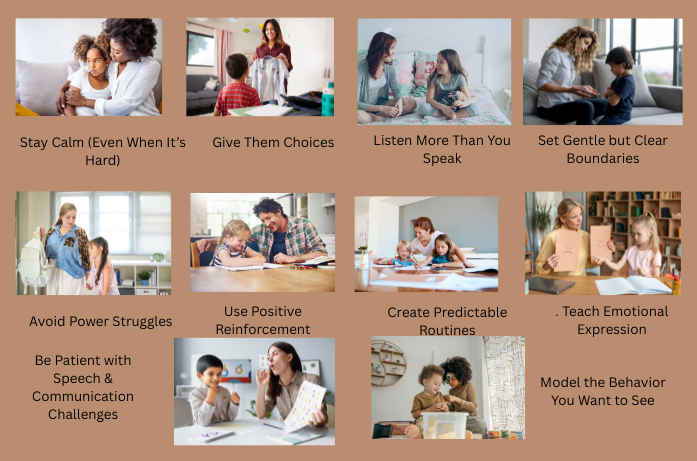
How to Change Stubborn Child Behavior (With Calm & Connection)
With a strong-willed child, pushing harder often leads to more resistance. But when you shift from control to connection, things slowly begin to change.
Instead of reacting quickly, pause and connect first. Get down to their level, speak gently, and let them feel understood. A child who feels heard is more likely to cooperate.
It’s not about winning the moment, it’s about building trust over time. And that trust is what truly helps guide their behavior
1. Stay Calm (Even When It’s Hard)
This one sounds simple, but in real moments, it can feel anything but easy. When your child keeps saying “no” or refuses to listen, it’s natural to feel frustrated and react quickly. But children often reflect what they feel from us. When we stay calm, it helps them feel safe enough to calm down too.
You don’t have to be perfect. Just pause for a moment. Take a breath before you respond.
Even something as gentle as,
“I can see you’re upset. Let’s figure this out together,”
can soften the situation and bring you both back to connection
Staying calm is one of the most important first steps in how to change stubborn child behavior in everyday parenting moments.
2. Give Them Choices
Many strong-willed children push back simply because they feel like they have no control. And honestly, when everything is decided for them, it can feel overwhelming.
A small shift can make a big difference here.
Instead of saying,
“Wear this now,”
you can gently offer,
“Do you want to wear the blue shirt or the red one?”
It may seem simple, but giving choices helps your child feel seen and involved. They’re still following your guidance, just with a little sense of independence.
This works so well in everyday moments, getting dressed, mealtimes, even bedtime. When children feel they have a say, the resistance often softens on its own
3. Listen More Than You Speak
It’s so easy to jump in and correct our child right away. But sometimes, what they really need isn’t correction, it’s to be heard.
When you slow down and truly listen, you may realize there’s something deeper going on. Maybe they’re tired, feeling overwhelmed, or simply not understanding what you’re asking.
This becomes even more important when communication is a little harder for them. In situations like child behavior issues with stubborn speech or IEP-related challenges, frustration can build up quickly because they can’t always express what they need.
Try to gently come closer. Kneel down, meet their eyes, and softly say,
“Tell me what you’re feeling.”
That small moment of connection can open a door. Because more than anything, your child wants to feel understood, and when they do, their behavior often begins to soften
4. Set Gentle but Clear Boundaries
Love and limits always go together. Children need to feel your warmth, but they also need clear guidance to feel safe and secure.
It’s not about being strict—it’s about being calm and consistent.
Instead of reacting with,
“Stop being stubborn!”
you can softly say,
“I understand you don’t want to stop playing, but it’s time for dinner now.”
This way, you’re acknowledging their feelings while still holding your boundary.
Over time, when boundaries are repeated with calmness and patience, children begin to understand what’s expected. And more importantly, they start to feel safe within those limits
5. Avoid Power Struggles
Not every moment has to turn into a battle, even if it feels that way sometimes.
These moments often feel similar to situations like toddler tantrums in public, where children become overwhelmed and struggle to express themselves. Learning how to handle toddler tantrums in public can help parents respond more calmly in such situations.
When your child pushes back, it can be tempting to prove a point or “win” the situation. But gently pausing and asking yourself, “Is this really worth the struggle?” can change how you respond.
Some things truly matter, and those are worth holding your ground on. But for the smaller things, letting go a little can protect your peace and your connection with your child.
Often, stubborn behavior grows stronger when it’s met with more resistance. But when you respond with calm flexibility, without turning it into a fight, that intensity slowly begins to fade.
You’re not giving in, you’re choosing connection over conflict
6. Use Positive Reinforcement
Children truly light up when they feel seen and appreciated.
It’s easy to focus on what’s going wrong, but the real magic happens when you start noticing the little things they’re doing right. Those small moments matter more than we realize.
You might gently say,
“I loved how you listened just now,”
or
“You tried so hard, I’m really proud of you.”
These simple words build their confidence and make them want to try again.
For children who struggle to express themselves, especially in situations like stubborn speech or other communication challenges, this kind of encouragement can make a big difference. It helps them feel safe, understood, and more willing to cooperate.
Over time, those small positive moments start to grow into lasting changes
7. Create Predictable Routines
Children feel much more at ease when their day has a gentle rhythm. When they know what’s coming next, it removes a lot of the uncertainty that can lead to frustration or resistance.
It doesn’t have to be anything complicated. Even a simple flow like, wake up, brush, breakfast, play, rest, can bring a sense of calm to their day.
When transitions become familiar, children don’t feel suddenly rushed or confused. And that often means fewer power struggles and less stubborn behavior.
It’s not about strict schedules, it’s about creating a sense of comfort and predictability that helps your child feel secure
8. Teach Emotional Expression
Sometimes what looks like stubbornness is really just feelings that are stuck inside with no way to come out.
Young children don’t always have the words to explain what they’re feeling, so it shows up as refusal, anger, or silence. That’s where your gentle guidance can really help.
You can softly name their emotions by saying,
“Are you feeling angry?”
or
“Did that make you feel sad?”
And it helps even more when you model it yourself. Something as simple as,
“I’m feeling a bit tired today, so I’m going to take a deep breath,”
shows them that feelings are normal and manageable.
Over time, your child begins to understand their emotions instead of acting them out. And little by little, those big reactions turn into better ways of expressing what’s inside
9. Be Patient with Speech & Communication Challenges
Sometimes, what looks like stubborn behavior is actually your child trying to cope with something that feels hard for them, like expressing their thoughts or understanding what’s being asked.
When communication doesn’t come easily, children can feel frustrated very quickly. That frustration might show up as refusing to listen, avoiding responses, or reacting strongly to simple instructions.
But this isn’t about being “difficult.” It’s often about needing a little more time, a little more patience, and a different kind of support.
In situations like stubborn speech or other communication challenges, gentle guidance makes a big difference. Give them space to respond, use simple words, and reassure them that it’s okay to take their time.
And if your child is working toward goals like IEP-related speech support, remember, progress may be slow, but it’s meaningful. Every small step forward matters.
Your patience becomes their comfort, and that comfort helps them open up in their own time
10. Model the Behavior You Want to See
Children are always watching us, more than we sometimes realize. They learn not just from our words, but from how we respond, how we handle stress, and how we treat others.
When you stay calm, speak gently, and handle situations with patience, your child slowly begins to mirror that behavior. It may not happen instantly, but those little moments add up over time.
And yes, there will be days when you feel frustrated, that’s completely normal. What matters is coming back, showing them how to handle those feelings in a healthy way.
It’s not about being perfect. It’s about being mindful of what you’re showing them every day. Because in the end, your actions become their guide
When Stubbornness Feels Overwhelming
Some days will feel really heavy.
Days when your child says “no” to everything…
Days when even small moments turn into big struggles…
Days when you’re just tired and wondering if you’re getting it right.
In those moments, pause gently and remind yourself, this isn’t failure.
Your child is learning so many things at once, how to feel, how to express, how to understand limits, and how to be their own little person. And that’s not easy for them… or for you.
It’s okay to take a step back.
It’s okay to breathe.
Sometimes, instead of fixing the moment, just hold your child close. And if you can, give yourself that same kindness too.
Because you’re not just handling behavior… you’re raising a human with love, patience, and care, and that truly matters
Gentle Daily Practices That Help
Sometimes, it’s the smallest, everyday moments that create the biggest change.
Start the day with connection
Even a few quiet minutes together, cuddles, a smile, or simple conversation, can help your child feel secure and start the day on a positive note.
Use calm words during conflict
In tough moments, your tone carries more weight than the actual words. A soft, steady voice can calm things down faster than anything else.
Keep expectations age-appropriate
Little ones are still learning. When we adjust our expectations to their age and abilities, it reduces frustration for both of you.
Celebrate small wins
Notice the little efforts, when they try, when they listen, when they calm down. Progress doesn’t have to be perfect to be meaningful.
These gentle habits may seem small, but over time, they build trust, understanding, and a calmer connection between you and your child
A Little Reminder About “Stubborn Kids”
Sometimes, the words we use shape how we see our children.
What we often call “stubborn” can also be something much more beautiful. It can be a sign that your child is strong-willed, determined, confident, and learning to stand on their own.
These aren’t flaws, they’re qualities that, with gentle guidance, can grow into real strengths.
Your child isn’t trying to be difficult. They’re learning how to feel deeply and express themselves in the only way they know right now.
And with your patience, your calm presence, and your love… they will slowly learn how to balance those big feelings.
You’re not raising a “difficult child.”
You’re raising a strong one, and that’s something truly special
FAQs
1. Why is my child so stubborn?
Stubborn behavior in children is often a sign of independence, strong will, or difficulty expressing emotions. It’s usually not about being “difficult” but about trying to communicate their needs.
2. How do you discipline a stubborn child calmly?
The best way is to stay calm, set clear boundaries, and use gentle communication. Avoid shouting or forcing, and focus more on connection, understanding, and consistency.
3. Is stubborn behavior normal in children?
Yes, it is completely normal. Many children go through phases of stubbornness as they learn independence, emotions, and decision-making.
4. How can I reduce power struggles with my child?
You can reduce power struggles by giving choices, staying flexible in small matters, and focusing on connection instead of control. Not every situation needs to become a battle.
5. When should I worry about my child’s behavior?
If stubborn behavior is extreme, constant, or affecting daily life (like school, communication, or relationships), it may be helpful to seek guidance from a child specialist or counselor.
Final Thoughts: Growing Together, One Day at a Time
If you’ve been wondering how to change stubborn child behavior, the truth is, it doesn’t shift all at once. It softens slowly, through patience, understanding, and the connection you build every single day.
There will be messy moments.
There will be days full of big emotions.
But in between, there will also be quiet little changes, the moments when your child listens a bit more, calms down a little faster, or reaches for you instead of pushing away.
On the days when everything feels overwhelming, just pause for a moment.
Look at your child…
The way they come to you when they need comfort.
The way they still trust you, even after a hard moment.
And in that pause, you may feel something very soft but very real
You don’t have to be perfect.
You just have to be there.
Because in your child’s eyes, you are already the safe place they need
If this journey of parenting feels overwhelming sometimes, just know, you’re not alone.
For more gentle guidance and real-life parenting support, visit Little One Haven
Resources
• UNICEF – Handling Temper Tantrums
• Mayo Clinic – Toddler Tantrums Guide
• HealthyChildren.org – Ages & Stages Development
• HealthyChildren.org – Communication & Discipline