

Parenting is filled with so many sweet, heart-melting moments, but there are also those long, tiring days when your patience feels like it’s running on empty. Maybe your child isn’t listening, emotions are high, and before you know it, your voice gets louder than you intended. And afterward, that quiet feeling of guilt settles in.
If you’ve been there, you’re not alone; so many of us moms have. Figuring out how to discipline a child without shouting is something we learn slowly, through real-life moments, not perfection.
The comforting truth is this: it is possible to guide your child with calmness, love, and understanding. And when you begin to respond this way, you’ll notice a gentle shift: your child doesn’t just react to your words; they start to truly understand them.

Why Shouting Doesn’t Work the Way We Hope
In those heated moments, shouting can feel like the fastest way to make everything stop. It gets your child’s attention right away, and sometimes it even seems to “work” for a moment.
But over time, it often leaves something behind: a little fear, a little confusion, or a quiet distance between you and your child.
The hard part is that when we raise our voice, children don’t always understand why their behavior wasn’t okay. Instead, they tend to focus on how loud and intense the moment felt.
That’s where discipline without yelling gently changes the approach. It’s no longer about stopping behavior through fear or control, but about helping your child learn, understand, and grow in a way that feels safe and respectful.
This is why learning how to discipline a child without shouting can feel so important, especially when you want your child to listen without feeling scared or disconnected.
How to Discipline a Child Without Shouting
Choosing a calm approach doesn’t mean you’re ignoring misbehavior or letting things slide. It simply means you’re responding in a way that helps your child learn while still feeling safe, understood, and loved.
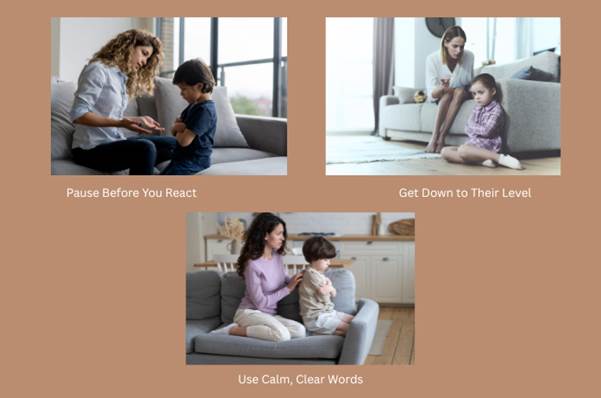
1. Pause Before You React
When emotions start to rise, yours or your child’s, try to give yourself a small moment before responding. Even a quiet pause of a few seconds can change how the situation unfolds.
You might gently remind yourself:
“I can handle this calmly.”
It may seem like a tiny step, but that pause creates space between reaction and response. Instead of speaking out of frustration, you’re choosing your words with care.
And honestly, this is one of the simplest calm parenting strategies that makes a real difference in everyday moments.
This small pause is often the first step in how to discipline a child without shouting, because it helps you respond with calmness instead of reacting from stress.
2. Get Down to Their Level
Instead of calling out instructions from across the room, try walking over to your child and gently coming down to their eye level. It may feel like a small effort, but it makes a big emotional difference.
When you look into their eyes and speak softly, your child feels noticed, not just corrected. They can sense your presence, your attention, and your care in that moment.
This simple shift often helps them listen more openly, without resistance or fear. It turns a moment of correction into a moment of connection.
And truly, this is one of those quiet yet powerful, respectful parenting methods you can use every single day.
3. Use Calm, Clear Words
When children are upset or acting out, long lectures usually don’t help; they often just tune them out. What they really need in that moment is simple, clear guidance they can understand.
Instead of saying something like,
“Stop being so naughty!”
You can gently say,
“I can’t let you hit. Hitting hurts.”
See the difference? One feels confusing, while the other helps your child understand exactly what’s not okay and why.
When you use calm, simple words, your child can begin to connect their actions with real consequences. And over time, this becomes a strong foundation for learning right from wrong.
This gentle approach is at the heart of positive discipline techniques, where teaching always comes before reacting.
If you want to learn more about setting boundaries in a respectful way, this guide on how to say no without hurting your child can help you communicate more clearly while still maintaining connection.
Understanding the Reason Behind Behavior
Before we rush to correct our child’s behavior, it really helps to pause and gently ask ourselves, “What’s going on underneath this?” Because most of the time, misbehavior isn’t just about being naughty; it’s a way of communicating something they don’t yet have the words for.
Sometimes, children act out because:
- They’re simply tired or hungry
- They’re craving your attention
- They feel overwhelmed by big emotions
- Or they don’t yet know how to express what they’re feeling
When you start looking at behavior this way, everything begins to shift. Instead of reacting with frustration, you respond with understanding.
And honestly, when you understand the reason behind what your child is doing, your response becomes calmer, more patient, and far more effective.
The CDC’s positive parenting tips also encourage parents to respond with consistency, emotional support, and age-appropriate guidance to help children learn healthy behavior over time.
This is truly at the heart of meaningful child behavior management tips, guiding your child with empathy, not just correction.
4. Set Gentle but Firm Boundaries
Children actually feel more secure when they know where the limits are. It may not always look like it in the moment, especially when they push back, but clear boundaries help them understand what’s safe and acceptable.
The beautiful thing is, you don’t have to choose between being kind and being firm; you can be both at the same time.
For example, you might say gently,
“I know you’re upset, but we don’t throw toys.”
Here, you’re acknowledging their feelings while still holding the boundary. You’re not ignoring their emotions, but you’re also not allowing hurtful behavior.
Over time, this teaches your child that it’s okay to feel big emotions, but there are safe ways to express them.
This kind of balanced approach is at the heart of gentle parenting discipline, where love and limits go hand in hand.
When parents understand how to discipline a child without shouting, boundaries become less about control and more about teaching children what is safe, kind, and respectful.
5. Offer Choices Instead of Commands
Sometimes, what looks like stubbornness is really your child’s way of saying, “I want a little control too.” And honestly, that’s a very natural feeling.
Instead of giving direct commands all the time, try offering small, simple choices. For example:
“Do you want to clean up now or in two minutes?”
Both options still lead to the same outcome, but your child feels included in the decision. That small sense of independence can reduce resistance and make cooperation feel easier for them.
It’s a gentle shift, but it works beautifully in everyday moments. And truly, this is one of those practical, calm parenting strategies that can make your day feel a little smoother and more connected.
How to Handle Child Misbehavior Calmly
Let’s be honest, parenting doesn’t happen in perfect, quiet moments. It happens in the middle of mess, noise, tears, and big emotions (from both you and your child). That’s why learning how to handle child misbehavior calmly isn’t about theory; it’s about what you do in those real, everyday situations.
In real life, how to discipline a child without shouting often begins with slowing down, noticing your child’s emotions, and choosing words that guide instead of shame.
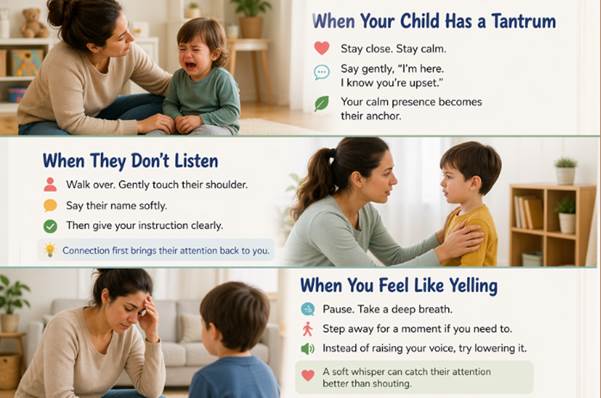
When Your Child Has a Tantrum
Tantrums can feel overwhelming, especially when you’re already tired. But in those moments, your child doesn’t need you to “fix” everything right away; they need to feel safe.
Try to stay close. Stay calm.
You can gently say,
“I’m here. I know you’re upset.”
Your calm presence becomes their anchor. Over time, this teaches them that even big emotions are okay and that they’re not alone in handling them. This is how emotional safety and trust quietly grow.
When They Don’t Listen
It’s so tempting to repeat instructions louder and louder, hoping they’ll finally listen. But often, what works better is connection first.
Walk over. Gently touch their shoulder. Say their name softly.
Then give your instructions clearly.
That small moment of connection helps bring their attention back to you. And once they feel that connection, they’re much more likely to respond. It’s a simple shift, but it can completely change how your child reacts.
When You Feel Like Yelling
Let’s be real for a moment: every parent reaches this point sometimes.
When you feel that urge building up inside, pause.
Take a deep breath.
Step away for a moment if you need to.
And instead of raising your voice, try lowering it.
It might sound surprising, but sometimes even a whisper can catch your child’s attention more effectively than shouting. It pulls them in, rather than pushing them away.
And in that moment, you’re not just managing behavior… you’re modeling calmness in a way your child will slowly learn to follow.
If you’re trying to create calmer parenting habits at home, the 28-Day No Yelling Parenting Challenge shares gentle strategies that help parents respond with more patience and connection.
Teaching Kids Boundaries Calmly
Boundaries often get misunderstood as being strict or controlling, but in reality, they’re a gentle way of guiding your child. They help children understand what’s safe, what’s okay, and what’s not, all while feeling secure and supported.
Make Expectations Clear
Children respond so much better when they know what’s expected of them. Instead of only pointing out what they’re doing wrong, try showing them what they can do.
For example, instead of saying,
“Don’t run!”
You can calmly say,
“Walk slowly inside the house.”
This gives them clear direction without confusion. It feels guiding rather than correcting.
When you communicate this way, you’re not just stopping behavior; you’re teaching it. And honestly, this is one of the most gentle and effective ways of teaching kids boundaries calmly, helping your child learn with clarity and confidence.
Be Consistent
Consistency may not always feel easy, especially on busy or tiring days, but it quietly builds a strong sense of trust for your child.
When rules keep changing, children can feel confused and unsure about what’s expected. One day something is allowed, the next day it’s not, and that can be overwhelming for them.
But when you respond in a calm and consistent way, even if it takes time, your child begins to understand the pattern. They start to know what’s okay and what isn’t, without needing constant reminders.
And in that steady, predictable environment, they feel more secure… because they know they can rely on you.
Follow Through with Gentle Consequences
When a boundary is crossed, what matters most is how you respond afterward. Instead of reacting with anger, try to stay calm and simply follow through with what you’ve already said.
For example, you might gently say,
“If you throw the toy again, we’ll put it away.”
And if it happens again, calmly remove the toy, without raising your voice or adding extra punishment.
This kind of response helps your child see the connection between their actions and the outcome. It’s not about making them feel bad; it’s about helping them understand responsibility safely.
Over time, this approach builds awareness, not fear. And that’s what makes it such an important part of discipline without yelling, where learning comes from guidance, not pressure.
The Power of Connection Over Control
One of the most beautiful shifts in parenting happens when you begin to see this simple truth… connection comes before correction.
When your child feels close to you, emotionally safe, understood, and loved, they don’t just have to listen; they actually want to. That sense of connection gently encourages cooperation in a way control never can.
It doesn’t have to be anything big or complicated. Often, it’s found in the smallest everyday moments:
- sitting down to play for a few minutes
- truly listening when they tell you a story
- sharing a little laugh
These quiet moments fill your child’s emotional cup. And when that cup feels full, you’ll often notice fewer struggles and less misbehavior.
Because at the heart of it all, children don’t just need rules; they need connection.
Practical Daily Discipline Tips
Sometimes, parenting shifts don’t come from big changes; they come from small, everyday moments handled a little differently. You don’t need a perfect system or strict rules. Just a bit of awareness, a little patience, and a gentle approach can slowly shape your child’s behavior in a meaningful way.
Here are some simple, real-life ways you can begin today:
These small habits can make how to discipline a child without shouting feel more realistic, even on the days when parenting feels messy and overwhelming.
Stay Calm First
This one isn’t always easy, especially on busy or exhausting days. But your calmness really does guide the moment. When a child is upset or acting out, they often “borrow” your emotional state. If you stay steady, your child feels safer and slowly begins to settle too. It’s not about being perfectly calm every time; it’s about trying, again and again.
Keep Instructions Simple
In emotional moments, long explanations usually don’t work. Children can feel overwhelmed when there are too many words. A short, clear sentence like “Let’s put the toys back” is often more effective than a long lecture. Simple words make it easier for your child to understand what you expect.
Acknowledge Feelings
Sometimes, children don’t need immediate correction; they need to feel seen. Even a gentle line like “I can see you’re upset” can make a big difference. When children feel understood, their emotions soften, and they become more open to listening and cooperating.
Model Behavior
Children learn far more from what we do than what we say. The way you speak, handle frustration, or solve problems quietly teaches them how to do the same. When you respond with patience or kindness, you’re showing them exactly how to behave, without needing to say much at all.
Repair After Tough Moments
There will be times when you lose patience. It happens to every parent. What truly matters is what you do after. Taking a moment to reconnect and saying, “I’m sorry I raised my voice,” teaches your child something powerful: that mistakes are okay, and relationships can be repaired with honesty and care.
And often, it’s these small, real, imperfect moments that build the strongest connection. Not perfection, just presence, effort, and love.
When Gentle Discipline Feels Hard
There will be days that stretch your patience more than you expected. Days when you feel tired, touched out, and just emotionally drained. On those days, staying calm can feel really, really hard.
And in those moments, gentle parenting might not feel gentle at all… it might feel impossible.
But here’s something I want you to hold onto softly…
You don’t have to be perfect.
You don’t have to get it right every single time.
You just have to keep trying, little by little, moment by moment.
Even the smallest efforts toward handling child misbehavior calmly matter more than you think. The way you pause, the way you soften your voice, the way you choose connection even once in a tough day… it all adds up.
Over time, these small, imperfect efforts create something beautiful, a calmer home, a stronger bond, and a child who feels safe learning through it all.
A Gentle Reminder for You, Mama
Right now, you’re raising a little human who is still figuring out big things: how to handle emotions, how to understand boundaries, how to make sense of the world around them.
And in the middle of all that… you’re learning too.
There’s no manual, no perfect way to do this. Just real moments, real feelings, and a lot of love guiding you through.
Every time you choose calm instead of shouting,
every time you pause before reacting,
every time you gently guide instead of trying to control…
You’re creating something truly meaningful.
You’re building a relationship where your child feels safe, understood, and deeply loved. A bond rooted in trust and respect that will stay with them far beyond these early years.
And that, mama, is something really beautiful.
Final Thoughts: Discipline with Love, Not Fear
Learning how to discipline a child without shouting isn’t about becoming a perfect parent. It’s about becoming a present one, showing up with patience, even on the hard days.
A calm voice might not always feel as powerful as a loud one in the moment. It may even feel like it’s not working right away. But slowly, gently, it builds something much deeper… your child’s trust.
So on the days when everything feels messy, loud, and overwhelming, just pause for a moment.
Take a breath.
Look at your child.
And remind yourself softly…
You’re not just correcting behavior.
You’re shaping a heart.
You’re guiding a growing mind.
You’re building a bond that will stay with them for life.
And you’re doing it in the most meaningful way possible, with love.
If you’d like more gentle, real-life parenting support and tips, you can always explore more here: littelonehaven
Because sometimes, a little guidance and reassurance can make this journey feel a bit lighter.